R.M.S. Maitai
Why dive here
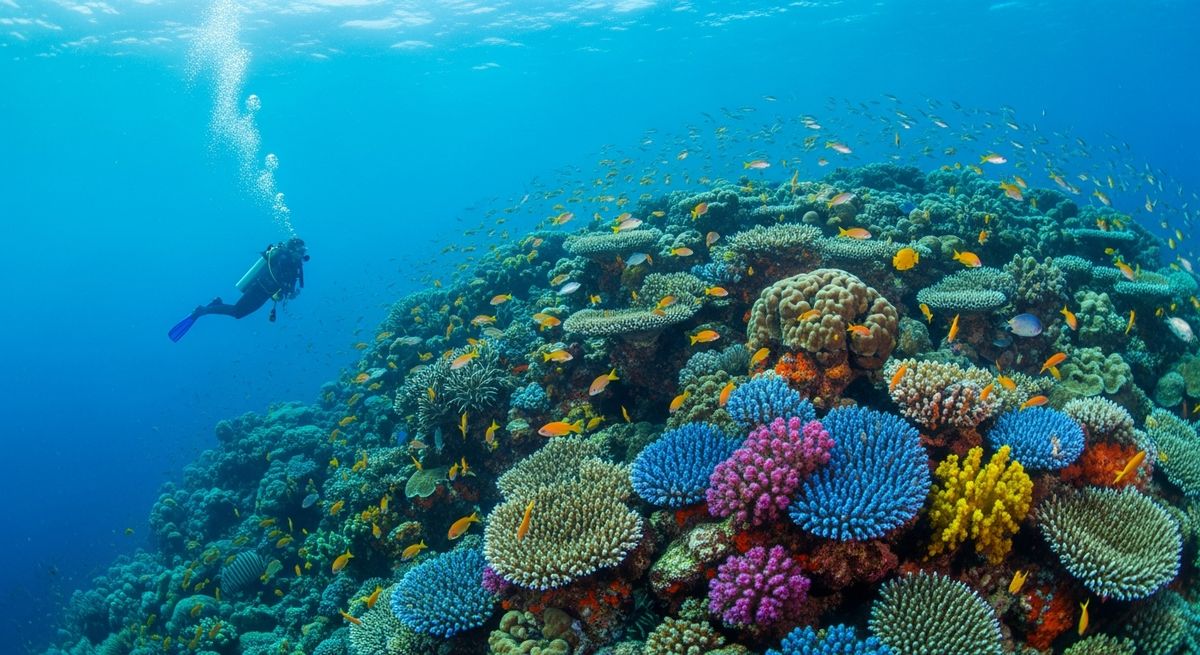
With 134+ marine species recorded in the area - including humpback whales and pufferfish - R.M.S. Maitai offers some of Rarotonga's richest reef diving. Water ranges 24-28°C, warmest February, March, April.
Diving the R.M.S. Maitai is a proper history lesson, but one you can swim through. This isn’t a pristine, intact ship; she ran aground on Christmas Day 1916, and over a century of Rarotongan surf has really taken its toll. What’s left is scattered across the reef, a kind of archaeological puzzle in 10 to 17 metres. We love how the reef has just swallowed the remains – it’s a living wreck. The engine block is the star, poking out of the water like a permanent monument, but below, you’ll find bits of superstructure, the rudder, and a surprisingly intact driveshaft. Look closely at the boilers; they’re caked in coral, and we’ve spotted tiny Arc-eye Hawkfish perched like sentinels. The Midget Chromis hover in clouds over the coral-encrusted metal, and those Red Squirrelfish always seem to be darting into the shadows. Visibility averages around 21 metres, which gives you a good sense of the sheer size of the wreck's footprint. It’s an easy dive, good for anyone comfortable navigating a bit of surge, and our pick for a second dive of the day when you want something a bit different.
Typical R.M.S. Maitai Dive Profile
Illustrative profile based on site depth and type. Actual dive profiles vary - always follow your dive computer and training.
Nearest Dive Centres to R.M.S. Maitai
Dive shops near R.M.S. Maitai
Cook Island Divers
Pacific Divers
Adventure Cook Islands
Chantal's Concierge on the Beach
Reviews for R.M.S. Maitai
Conditions
Ocean conditions, forecast and tides for R.M.S. Maitai
R.M.S. Maitai Ocean Conditions
Monthly averages for R.M.S. Maitai, sourced from Open-Meteo marine data - nearest station: Open-Meteo marine grid (-21.2, -159.82) (1km away)
October Averages
Sea Temperature
24°C
76°F · Range: 23.3–26°C
Air Temperature
22°C
72°F
Wind Speed
9.54 m/s
18.5 knots
Atmospheric Pressure
1016.5 hPa
Based on 4 years of monitoring data · Data sources: Open-Meteo marine data
Plan & book
Ways to dive Rarotonga, from day trips to liveaboards.
Day trips & courses
via GetYourGuideGuided dives, courses and snorkel trips with instant booking.
Find dive trips in RarotongaPlaces to stay
via Booking.comHotels and dive resorts near Rarotonga.
Search stays in RarotongaDive insurance
Most travel insurance excludes or limits scuba. Check what you need before you go.
Dive insurance explainedPartner links: we may earn a commission if you book, at no extra cost to you. How we make money
Where to Stay near R.M.S. Maitai
Prices from Booking.com. We may earn a commission at no extra cost to you.