Rutaki Passage
Why dive here
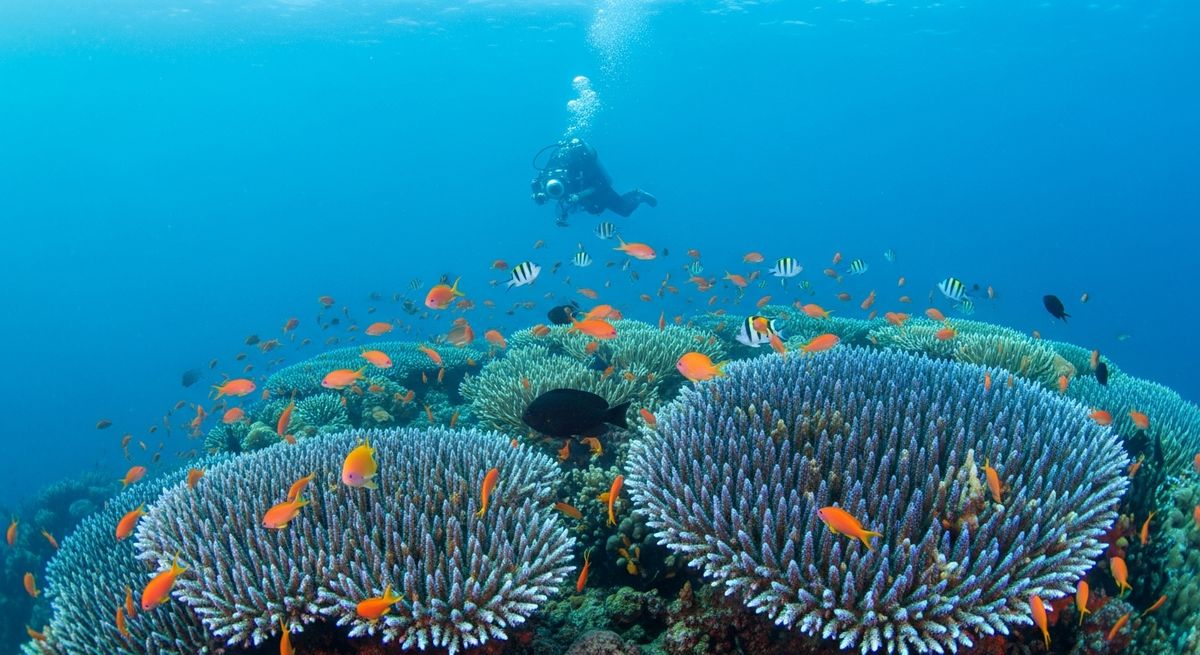
With 134+ marine species recorded in the area - including humpback whales and pufferfish - Rutaki Passage offers some of Rarotonga's richest reef diving. Water ranges 24-28°C, warmest February, March, April.
Rutaki Passage on Rarotonga isn't your average drift dive. It's more like descending into a blue canyon, with those narrow, vertical walls dropping straight down from just below the surface. We love the feeling of being swallowed by the reef here. Visibility averages around 22 metres, but inside the passage itself, it can drop to 10 or 15 metres, which just adds to the atmosphere – a little spooky, in the best way. Keep an eye out for the resident moray eels peeking from crevices; we often spot undulated morays here. At the passage entrance, large schools of manini and threadfin gather, a silvery, pulsing cloud. If you're lucky, and we often have been, you'll see whitetip reef sharks patrolling, or an eagle ray glide by in the deeper sections. This dive is best suited for those comfortable with a bit of current and who appreciate a dramatic, topographical experience rather than just endless corals. It’s an exciting dive that feels very much like exploring the island's true foundations.
Nearest Dive Centres to Rutaki Passage
Dive shops near Rutaki Passage
Adventure Cook Islands
Cook Island Divers
Chantal's Concierge on the Beach
Pacific Divers
Reviews for Rutaki Passage
Conditions
Ocean conditions, forecast and tides for Rutaki Passage
Rutaki Passage Ocean Conditions
Monthly averages for Rutaki Passage, sourced from Open-Meteo marine data - nearest station: Open-Meteo marine grid (-21.2, -159.82) (1km away)
October Averages
Sea Temperature
24°C
76°F · Range: 23.3–26°C
Air Temperature
22°C
72°F
Wind Speed
9.54 m/s
18.5 knots
Atmospheric Pressure
1016.5 hPa
Based on 4 years of monitoring data · Data sources: Open-Meteo marine data
Plan & book
Ways to dive Rarotonga, from day trips to liveaboards.
Day trips & courses
via GetYourGuideGuided dives, courses and snorkel trips with instant booking.
Find dive trips in RarotongaPlaces to stay
via Booking.comHotels and dive resorts near Rarotonga.
Search stays in RarotongaDive insurance
Most travel insurance excludes or limits scuba. Check what you need before you go.
Dive insurance explainedPartner links: we may earn a commission if you book, at no extra cost to you. How we make money
Where to Stay near Rutaki Passage
Prices from Booking.com. We may earn a commission at no extra cost to you.