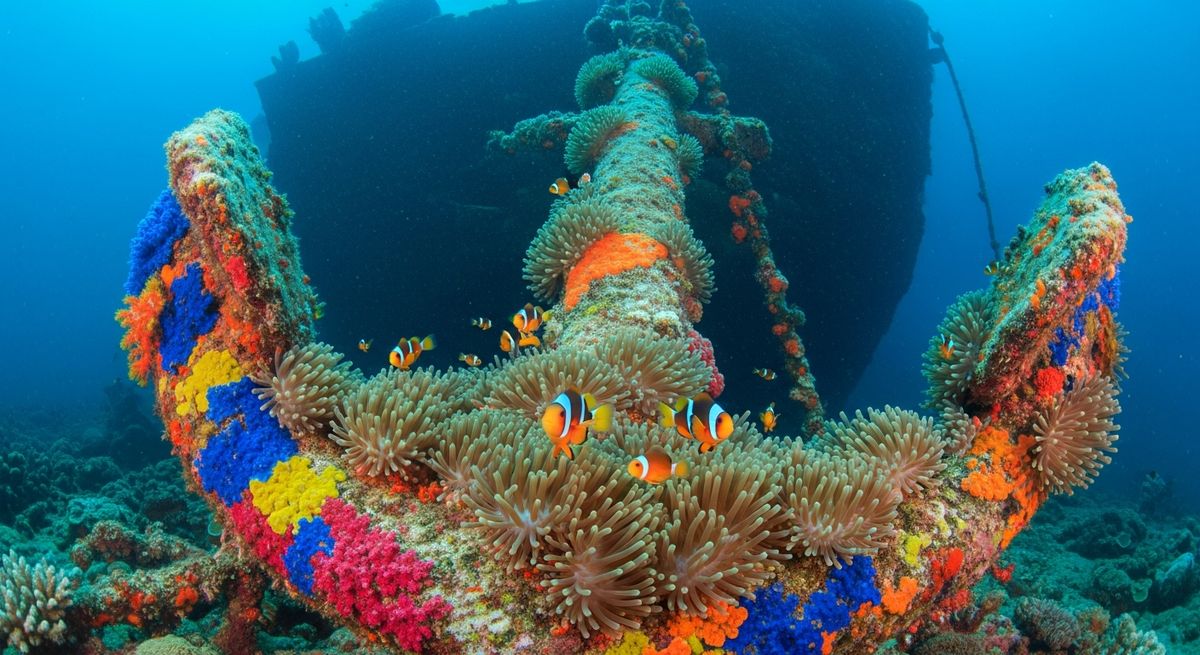
Sunset Lava Tubes
Why dive here
With 134+ marine species recorded in the area - including humpback whales and pufferfish - Sunset Lava Tubes offers some of Rarotonga's richest wreck diving. Water ranges 24-28°C, warmest February, March, April.
The Sunset Lava Tubes are a bit of a local secret, tucked away on Rarotonga's leeward side. It's not about big pelagics here; it’s about the light. We love slipping into the main cavern, which starts at about 18 meters, and watching the sunbeams pierce through the cracks in the overhead. They paint the walls in a shifting kaleidoscope of blue and gold – it’s genuinely beautiful. This isn't a deep dive, maxing out around 18m, but the exploration factor is high. There are several smaller tunnels branching off, each with its own exit point, so you can really noodle around. Keep an eye out for the little things on the walls: we’ve found cowries, nudibranchs, and even a few sleepy scorpionfish tucked into crevices. The staghorn coral patches inside the tubes are also surprisingly vibrant. Visibility can vary, often around 11 meters, so it’s not always gin-clear, but that just adds to the atmospheric feel of the caverns. It’s an easy overhead environment, perfect for divers comfortable in enclosed spaces but not looking for anything too challenging.
Safety Notes
Wreck site - avoid penetration without wreck diving certification. Watch for sharp metal and entanglement hazards.
Nearest Dive Centres to Sunset Lava Tubes
Dive shops near Sunset Lava Tubes
Cook Island Divers
Adventure Cook Islands
Chantal's Concierge on the Beach
Pacific Divers
Reviews for Sunset Lava Tubes
Conditions
Ocean conditions, forecast and tides for Sunset Lava Tubes
Sunset Lava Tubes Ocean Conditions
Monthly averages for Sunset Lava Tubes, sourced from Open-Meteo marine data - nearest station: Open-Meteo marine grid (-21.2, -159.82) (1km away)
October Averages
Sea Temperature
24°C
76°F · Range: 23.3–26°C
Air Temperature
22°C
72°F
Wind Speed
9.54 m/s
18.5 knots
Atmospheric Pressure
1016.5 hPa
Based on 4 years of monitoring data · Data sources: Open-Meteo marine data
Plan & book
Ways to dive Rarotonga, from day trips to liveaboards.
Day trips & courses
via GetYourGuideGuided dives, courses and snorkel trips with instant booking.
Find dive trips in RarotongaPlaces to stay
via Booking.comHotels and dive resorts near Rarotonga.
Search stays in RarotongaDive insurance
Most travel insurance excludes or limits scuba. Check what you need before you go.
Dive insurance explainedPartner links: we may earn a commission if you book, at no extra cost to you. How we make money
Where to Stay near Sunset Lava Tubes
Prices from Booking.com. We may earn a commission at no extra cost to you.