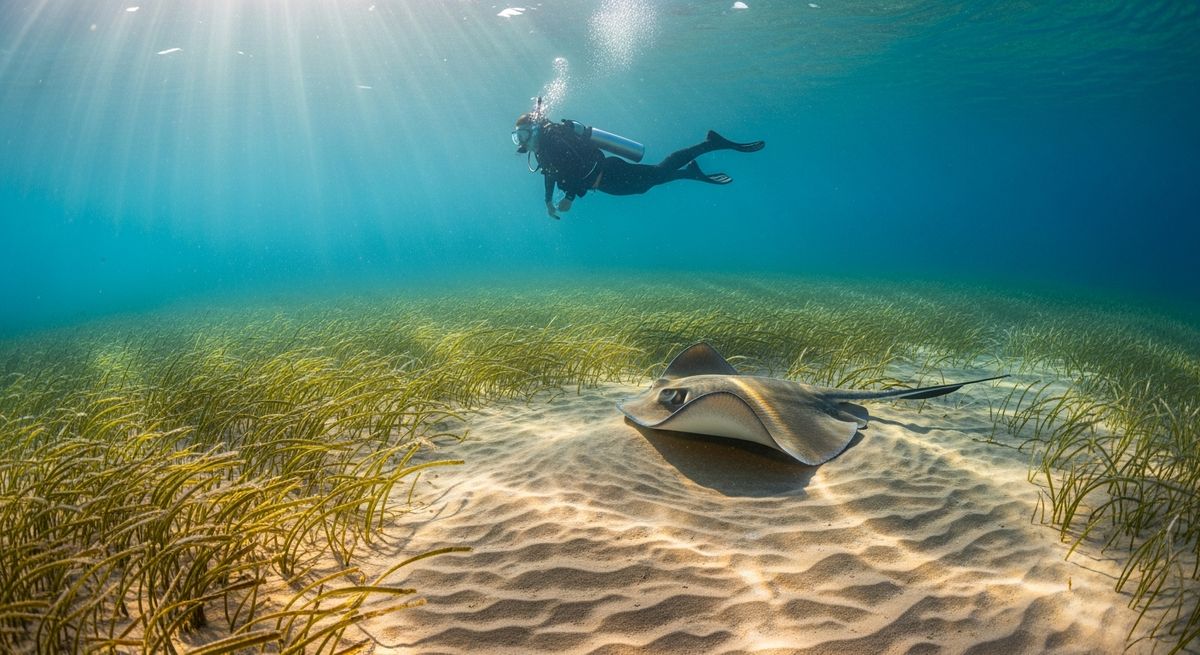
Les jumeaux
Protected Area
Pointe Vénus
Why dive here
With 135+ marine species recorded in the area - including humpback whales, sperm whales, spinner dolphins and pufferfish - Les jumeaux offers some of Moorea & Tahiti's richest diving. Water ranges 27-29°C, warmest February, March, April.
Les Jumeaux, or 'The Twins,' off Moorea is one of our favourites for a relaxed drift. It’s not about huge pelagics here; it's about the intricate reef, the sheer abundance of fish life, and the unique topography. We love the feeling of gliding over the two coral peaks that give the site its name, often with a gentle push from the current. The real highlight, for us, is the "cathedral" - an overhang crammed with sleeping whitetip reef sharks. We’ve counted up to eight tucked into the crevices, completely unbothered by us watching. The light plays beautifully through the coral here, casting shadows that make the sharks even more mysterious. Keep an eye out for staghorn and cauliflower corals, they’re particularly healthy. The reef is just buzzing with activity; scissortail sergeants and whitespot damsels dart everywhere, and we often spot longnose butterflyfish picking through the coral. Visibility averages 17 metres, which is decent, but good conditions really make a difference to the colours. This spot is perfect for divers who appreciate a slow pace and love spotting the smaller details alongside the sleeping sharks. Ideal for intermediate divers comfortable with a drift, but generally pretty mellow.
Nearest Dive Centres to Les jumeaux
Dive shops near Les jumeaux
Moorea Blue Diving
NEMOZ DIVING
Iaora Diving
Scubapiti
Moorea Deep Blue
Moorea Fun Dive
Reviews for Les jumeaux
Conditions
Ocean conditions, forecast and tides for Les jumeaux
Les jumeaux Ocean Conditions
Monthly averages for Les jumeaux, sourced from Open-Meteo marine data + Copernicus Marine (EU) - nearest station: Open-Meteo marine grid (-17.58, -149.62) (1km away)
October Averages
Sea Temperature
27°C
81°F · Range: 26.2–28.2°C
Current Speed
15 cm/s
Direction: SW (233.1°)
Chlorophyll-a
0.048 mg/m³
Very clear (oligotrophic)
Salinity
36.14 PSU
Based on 4 years of monitoring data · Data sources: Open-Meteo marine data + Copernicus Marine (EU)
Plan & book
Ways to dive Moorea & Tahiti, from day trips to liveaboards.
Day trips & courses
via GetYourGuideGuided dives, courses and snorkel trips with instant booking.
Find dive trips in Moorea & TahitiPlaces to stay
via Booking.comHotels and dive resorts near Moorea & Tahiti.
Search stays in Moorea & TahitiDive insurance
Most travel insurance excludes or limits scuba. Check what you need before you go.
Dive insurance explainedPartner links: we may earn a commission if you book, at no extra cost to you. How we make money
Where to Stay near Les jumeaux
Prices from Booking.com. We may earn a commission at no extra cost to you.