L’ile bleue/Blue Island
Protected Area
Pointe Vénus
Why dive here
With 135+ marine species recorded in the area - including humpback whales, sperm whales, spinner dolphins and pufferfish - L’ile bleue/Blue Island offers some of Moorea & Tahiti's richest diving. Water ranges 27-29°C, warmest February, March, April.
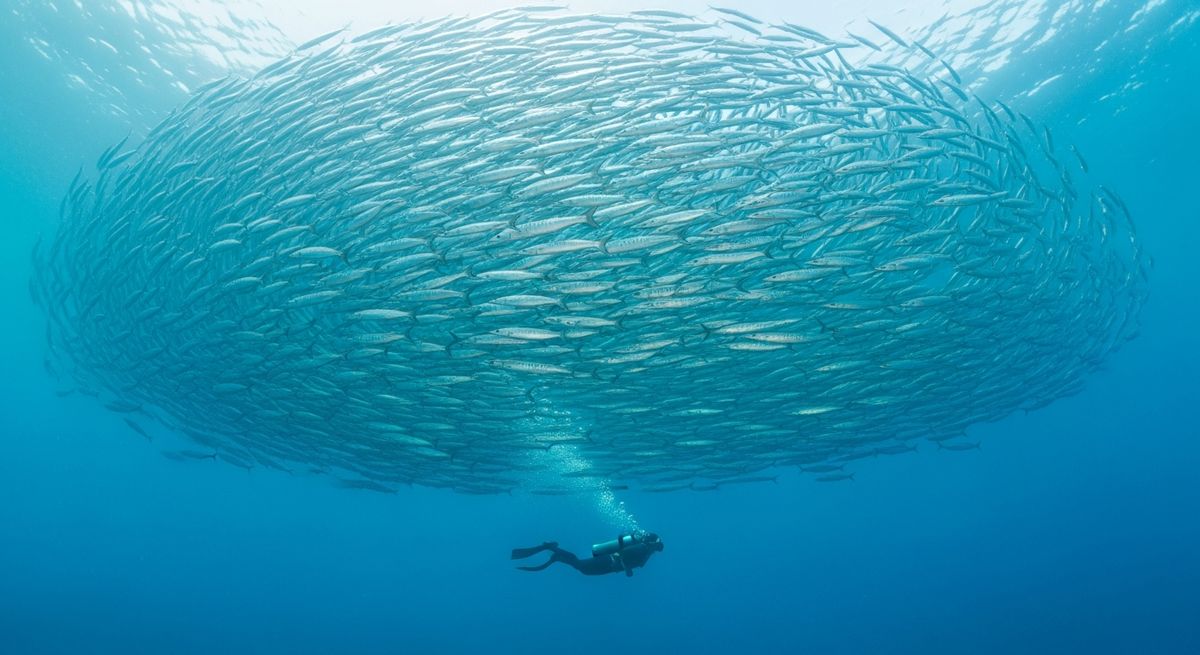
Blue Island, or L’ile bleue, is one of those sites that feels like you've stumbled onto a secret. It’s an isolated peak just outside Cook’s Bay, and you'll often find us heading here on days when the visibility is really singing, otherwise it’s a bit of a gamble. The dive starts with a swim out into the open blue, a lovely, slightly disorienting feeling, before the coral canyon starts to emerge from the haze. We love the canyon itself; it’s a shallow, intricate labyrinth, maximum 16m, packed with huge anemones and their resident clownfish. Keep an eye out for the big schools of jacks swirling around the edges – they can be truly mesmerising. If you're comfortable drifting a bit deeper into the blue, maybe 25-30m, you might spot white-tip sharks cruising past, and we've had some lovely encounters with hawksbill turtles here too. It’s a pretty easy dive once you’re in the reef, but that initial blue water swim means it's best for divers who are comfortable with some open water exposure.
Nearest Dive Centres to L’ile bleue/Blue Island
Dive shops near L’ile bleue/Blue Island
Moorea Blue Diving
Iaora Diving
NEMOZ DIVING
Scubapiti
Moorea Deep Blue
Moorea Fun Dive
Reviews for L’ile bleue/Blue Island
Conditions
Ocean conditions, forecast and tides for L’ile bleue/Blue Island
L’ile bleue/Blue Island Ocean Conditions
Monthly averages for L’ile bleue/Blue Island, sourced from Open-Meteo marine data + Copernicus Marine (EU) - nearest station: Open-Meteo marine grid (-17.58, -149.62) (1km away)
October Averages
Sea Temperature
27°C
81°F · Range: 26.2–28.2°C
Current Speed
15 cm/s
Direction: SW (233.1°)
Chlorophyll-a
0.048 mg/m³
Very clear (oligotrophic)
Salinity
36.14 PSU
Based on 4 years of monitoring data · Data sources: Open-Meteo marine data + Copernicus Marine (EU)
Plan & book
Ways to dive Moorea & Tahiti, from day trips to liveaboards.
Day trips & courses
via GetYourGuideGuided dives, courses and snorkel trips with instant booking.
Find dive trips in Moorea & TahitiPlaces to stay
via Booking.comHotels and dive resorts near Moorea & Tahiti.
Search stays in Moorea & TahitiDive insurance
Most travel insurance excludes or limits scuba. Check what you need before you go.
Dive insurance explainedPartner links: we may earn a commission if you book, at no extra cost to you. How we make money
Where to Stay near L’ile bleue/Blue Island
Prices from Booking.com. We may earn a commission at no extra cost to you.