Tahi Nui
Protected Area
Pointe Vénus
Why dive here
With 135+ marine species recorded in the area - including humpback whales, sperm whales, spinner dolphins and pufferfish - Tahi Nui offers some of Moorea & Tahiti's richest diving. Water ranges 27-29°C, warmest February, March, April.
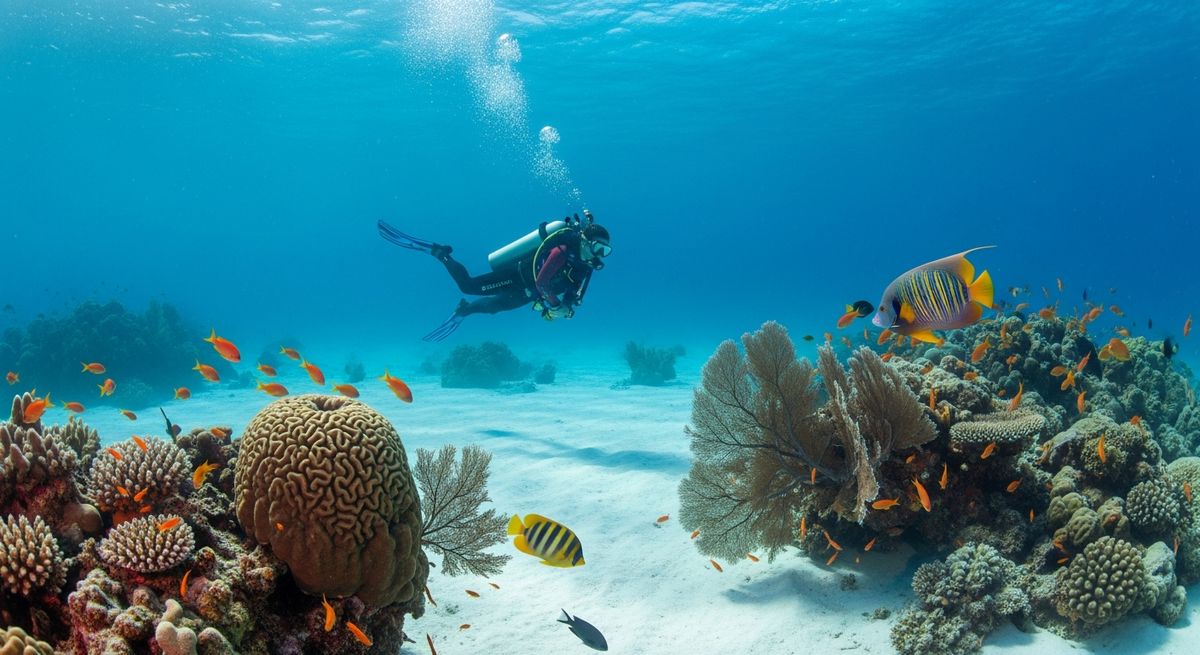
Tahi Nui is our pick for a wreck dive in Moorea that actually feels like a wreck dive. Forget a few scattered planks; this is a proper boat, resting upright on a sandy bottom at 23 metres. We love dropping down and seeing the deck come into view, the mast still reaching for the surface, now completely encrusted in coral. The ship itself is a spectacle of growth. You’ll find peppered squirrelfish darting into shadowed nooks and schools of iridescent bicolor chromis shimmering over the railings. Look closely for dew-drop cowries clinging to the older coral growth. Our favourite part? The stern, where a stunning colony of rose-shaped corals has taken hold, a vibrant pink against the darker hull. It’s an easy dive, current-wise, but offers enough to explore that you'll want a second look. Ideal for open water divers comfortable with depth, it’s a wonderful example of how quickly nature reclaims and transforms. We often see humphead unicornfish patrolling the perimeter, and on a good day, the occasional turtle will glide by, making a pass over the deck. Visibility is usually a good 20 metres, so you get a wide view of the wreck as you descend.
Nearest Dive Centres to Tahi Nui
Dive shops near Tahi Nui
Activiseas
Fluid Plongée
Eleuthera Plongée
Dive and Sea
Tahiti nui diving center
Tahiti Plongee Passion
Reviews for Tahi Nui
Conditions
Ocean conditions, forecast and tides for Tahi Nui
Tahi Nui Ocean Conditions
Monthly averages for Tahi Nui, sourced from Open-Meteo marine data + Copernicus Marine (EU) - nearest station: Open-Meteo marine grid (-17.58, -149.62) (1km away)
October Averages
Sea Temperature
27°C
81°F · Range: 26.2–28.2°C
Current Speed
15 cm/s
Direction: SW (233.1°)
Chlorophyll-a
0.048 mg/m³
Very clear (oligotrophic)
Salinity
36.14 PSU
Based on 4 years of monitoring data · Data sources: Open-Meteo marine data + Copernicus Marine (EU)
Plan & book
Ways to dive Moorea & Tahiti, from day trips to liveaboards.
Day trips & courses
via GetYourGuideGuided dives, courses and snorkel trips with instant booking.
Find dive trips in Moorea & TahitiPlaces to stay
via Booking.comHotels and dive resorts near Moorea & Tahiti.
Search stays in Moorea & TahitiDive insurance
Most travel insurance excludes or limits scuba. Check what you need before you go.
Dive insurance explainedPartner links: we may earn a commission if you book, at no extra cost to you. How we make money
Where to Stay near Tahi Nui
Prices from Booking.com. We may earn a commission at no extra cost to you.