Yamagiri Maru
Why dive here
With 195+ marine species recorded in the area - including barracuda, blacktip reef sharks, eagle rays, grey reef sharks and whitetip reef sharks - Yamagiri Maru offers some of Chuuk (Truk) Lagoon's richest wreck diving. Water ranges 29-30°C, warmest August, October, November.
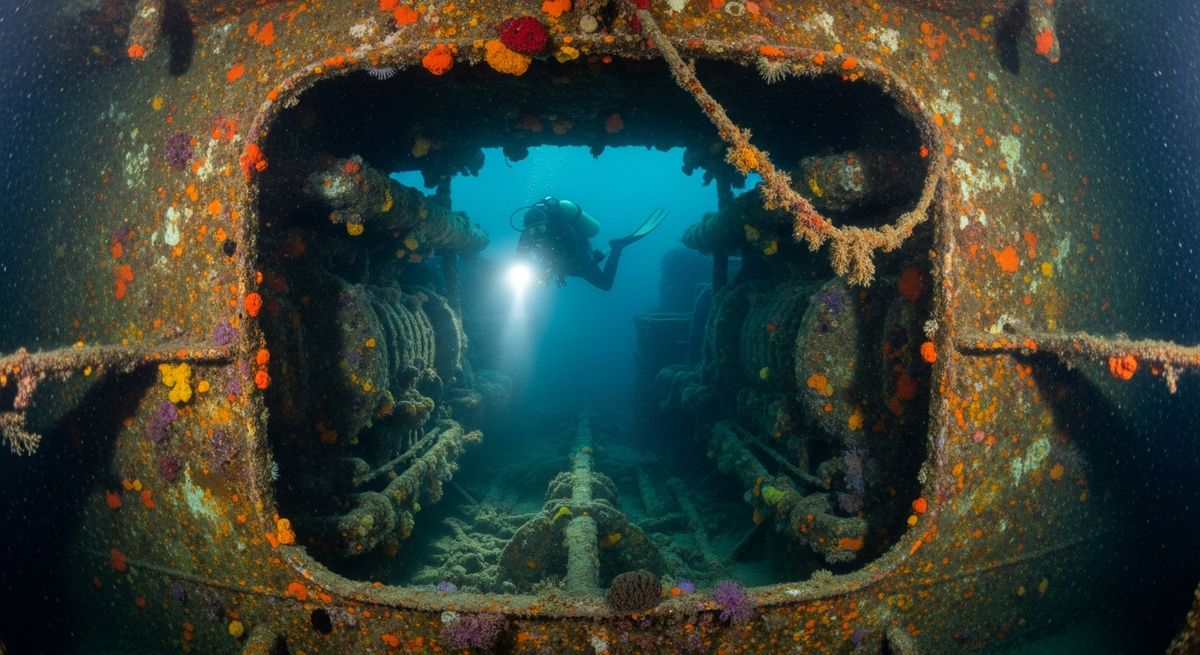
The Yamagiri Maru, for us, is one of those Chuuk wrecks that just hits different. It’s got an almost eerie, melancholic feel to it, lying on its starboard side, cut in half by a torpedo. We love pushing into the stern section’s cavernous hold, which is full of Type 96 140mm shells, big enough to make you feel tiny. The light filters in through openings, creating these dramatic shafts that highlight the rusted metal and the schools of glassfish swirling around the ordinance. The bow section is a different beast entirely, much more collapsed and overgrown, but it’s where you often find the bigger pelagics cruising by – we’ve seen grey reef sharks here a few times, just ghosting past the hull. The sheer scale of the ship, even in its broken state, is a powerful reminder of its wartime role. It’s a dive for those who appreciate the history as much as the corals that now soften its edges, a truly immersive experience that leaves you thinking long after you surface.
Safety Notes
Wreck site - avoid penetration without wreck diving certification. Watch for sharp metal and entanglement hazards.
Nearest Dive Centres to Yamagiri Maru
Dive shops near Yamagiri Maru
View all dive centres in Chuuk (Truk) LagoonReviews for Yamagiri Maru
Conditions
Ocean conditions, forecast and tides for Yamagiri Maru
Yamagiri Maru Ocean Conditions
Monthly averages for Yamagiri Maru, sourced from Open-Meteo marine data - nearest station: Open-Meteo marine grid (7.41, 151.84) (2km away)
October Averages
Sea Temperature
30°C
86°F · Range: 29.3–31.4°C
Air Temperature
28°C
82°F
Wind Speed
6.4 m/s
12.4 knots
Atmospheric Pressure
1009.4 hPa
Based on 4 years of monitoring data · Data sources: Open-Meteo marine data
Plan & book
Ways to dive Chuuk (Truk) Lagoon, from day trips to liveaboards.
Day trips & courses
via GetYourGuideGuided dives, courses and snorkel trips with instant booking.
Find dive trips in Chuuk (Truk) LagoonPlaces to stay
via Booking.comHotels and dive resorts near Chuuk (Truk) Lagoon.
Search stays in Chuuk (Truk) LagoonDive insurance
Most travel insurance excludes or limits scuba. Check what you need before you go.
Dive insurance explainedPartner links: we may earn a commission if you book, at no extra cost to you. How we make money
Where to Stay near Yamagiri Maru
Prices from Booking.com. We may earn a commission at no extra cost to you.