Chunnel - KwaZulu-Natal

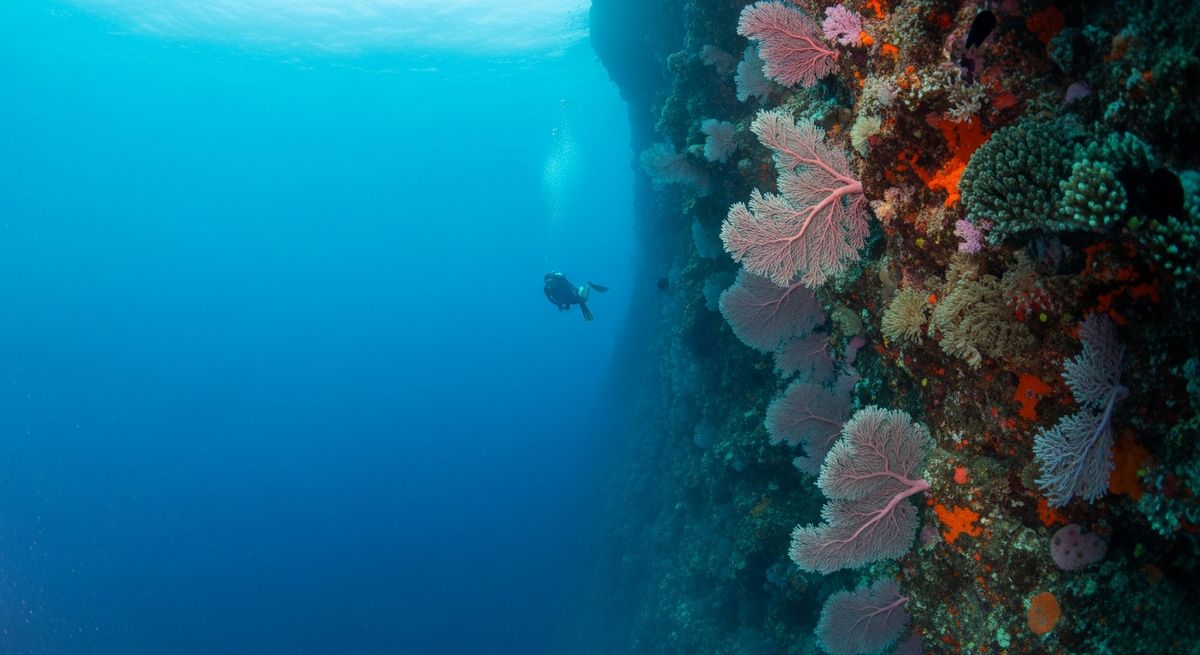
Grand Mal Wall is a site we’ve always enjoyed for its sheer variety, especially considering its fairly shallow max depth of 19m. The top of the reef starts just shy of 2m, then drops off into a proper wall, laced with overhangs and ledges. We love drifting along here, poking into the holes where lobsters often tuck themselves away, sometimes sharing space with a lionfish or two. The real draw for us, though, is the chance to spot those huge tarpon that cruise the deeper edges. We’ve had a few incredible encounters with 2m+ silver kings here; it’s not guaranteed, but definitely adds an extra buzz to the dive. Even without them, you’ll find plenty to hold your attention. Look out for slipperies and barber fish darting through the corals. We’d suggest keeping an eye on your depth here; it’s easy to get absorbed in the shallower parts, hunting for cowfish or spotting a well-camouflaged frogfish if you’re lucky. Visibility averages around 14m, which is decent enough for the wall structure. It’s a good spot for divers who appreciate a mix of macro and the occasional larger pelagic, without needing to go particularly deep.

Location
KwaZulu-Natal, South Africa, Indian Ocean & East Africa
Coordinates
-30.261600, 30.826600
Type
wall

Marine Protected Area: Aliwal Shoal Marine Protected Area

Best Time to Dive in KwaZulu-Natal

The warmest water temperatures in KwaZulu-Natal occur in January, averaging 27.0°C. The coolest conditions are in December at 27.0°C.

Monthly Water Temperatures

  • January: 27.0°C (air: 24.4°C)
  • February: 27.0°C (air: 24.6°C)
  • March: 27.0°C (air: 24.0°C)
  • April: 27.0°C (air: 21.7°C)
  • May: 27.0°C (air: 20.1°C)
  • June: 27.0°C (air: 18.2°C)
  • July: 27.0°C (air: 17.5°C)
  • August: 27.0°C (air: 18.2°C)
  • September: 27.0°C (air: 19.3°C)
  • October: 27.0°C (air: 20.3°C)
  • November: 27.0°C (air: 21.8°C)
  • December: 27.0°C (air: 23.2°C)

Nearby Dive Sites in KwaZulu-Natal

Nearest Dive Centres to Chunnel

Marine Life in KwaZulu-Natal

Home to 495 recorded species including 400 reef fish, 41 sharks & rays, 19 hard corals, 9 sea snails & nudibranchs, 7 whales & dolphins, 7 crabs & lobsters.

Notable Species

Recommended Packing List for Chunnel

Based on average water temperature of 27.0°C.

  • Shorty or Rashguard - warm 27°C water needs minimal exposure protection
  • Mask - essential for every dive
  • Fins
  • BCD - buoyancy compensator
  • Regulator - your most safety-critical piece of gear
  • Dive Computer - tracks depth, time, and NDL
  • Surface Marker Buoy (SMB) - essential for boat pickups
  • Dive Torch - useful for crevices and colour at depth
  • Underwater Camera - capture your diving memories

Frequently Asked Questions

What is the maximum depth for scuba diving within the Chunnel, and are there any specific sections that are deeper?
The maximum depth for scuba diving within the Chunnel dive site is 16 meters. While the site features a pinnacle, an overhang, and the famous Chunnel Cave, the provided information does not indicate any specific sections that are deeper than this overall maximum. This makes the site accessible for many divers.
What kind of marine life or unique underwater structures can divers expect to encounter when exploring the Chunnel dive site?
Divers exploring the Chunnel can expect to encounter three main unique underwater structures: a pinnacle that spirals rapidly upwards, an overhang providing shelter, and the famous Chunnel Cave. The site is also rich in marine life, including the majestic sand tiger shark during the winter months, along with potato bass, turtles, shoals of snapper, and gangs of patrolling batfish throughout the year.
How challenging is it to dive the Chunnel, and what level of diving experience or technical skills are required?
Diving the Chunnel is considered to be of intermediate difficulty. This suggests that divers should possess a foundational level of experience beyond basic open water certification to comfortably navigate its features like the pinnacle and Chunnel Cave. The provided data does not specify any particular technical skills or advanced certifications as mandatory.
What is the best time of year to dive the Chunnel, considering factors like water temperature, visibility, and accessibility?
The data indicates that the sand tiger shark is present at the Chunnel during the winter months, making this an ideal time for divers interested in encountering these magnificent creatures. Average visibility is consistently good at 14 meters throughout the year. However, specific details regarding optimal water temperature or seasonal accessibility beyond the presence of sharks are not provided in the available information.
What specific diving certifications or specialized training are necessary to legally and safely dive in the Chunnel?
The provided data does not explicitly state specific diving certifications or specialized training necessary to legally and safely dive the Chunnel. However, given its "intermediate" difficulty rating, divers should ideally possess a foundational level of experience beyond basic open water certification. No advanced or specialized training is mentioned as a requirement for this site.
What are the typical currents and underwater conditions like inside the Chunnel, and how do they impact a dive?
The provided data does not offer specific details regarding the typical currents or other underwater conditions, such as surge or water temperature, within the Chunnel. However, divers can generally expect good underwater clarity, with an average visibility of 14 meters. Without further information on currents, their specific impact on a dive cannot be determined from the available context.