Cowrie
Protected Area
Aliwal Shoal Marine Protected Area
Why dive here
With 490+ marine species recorded in the area - including barracuda, blue sharks, bull sharks, eagle rays and great white sharks - Cowrie offers some of KwaZulu-Natal's richest reef diving. Water ranges 21-26°C, warmest January, February, March.
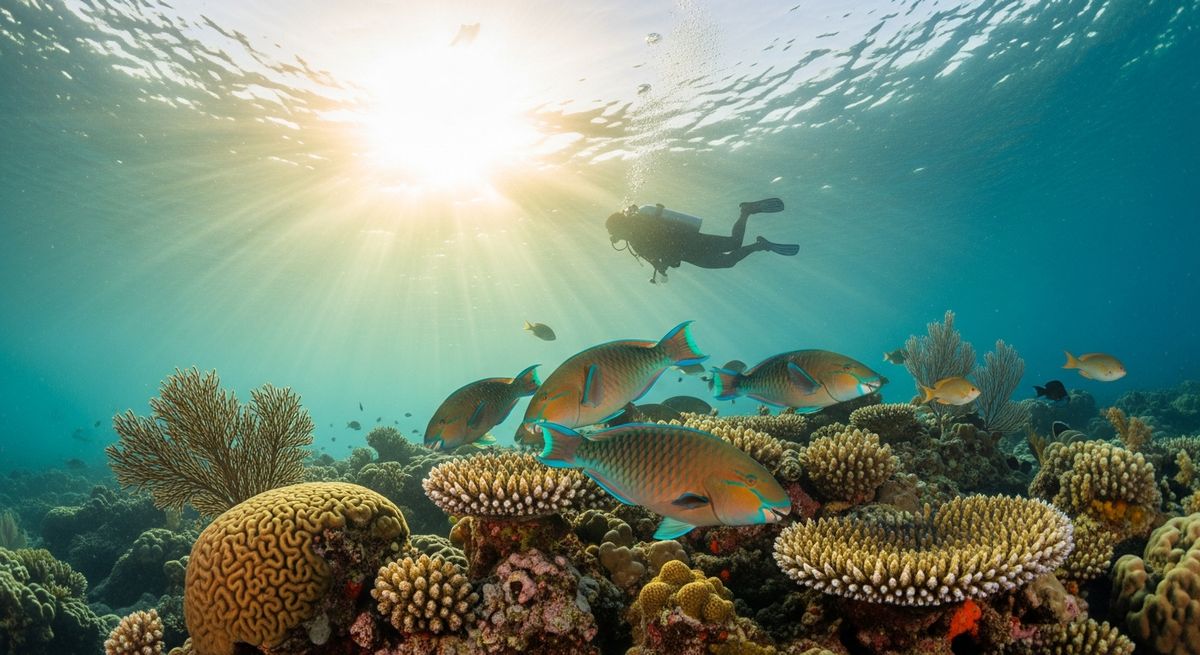
Cowrie, tucked into the southern reefs of Aliwal Shoal, is one of our favourite Indian Ocean wall dives. Drop down, and you hit the reef at 20 metres, then it slopes away to 27, a lovely depth for a decent bottom time. We love the inside edge here; it’s a mosaic of coves and ledges, perfect for poking around with a torch. It’s a macro photographer’s dream, honestly. We’ve spent whole dives just hypnotised by the colours, watching Halfmoon triggerfish flit in and out of the crevices. Look closely and you’ll find Japanese Pinecone-fish tucked away, or a Goldbar wrasse weaving through corals. We’ve even spotted Flapnose Rays settling into the sand here. The current can pick up, so it’s best suited for divers comfortable with a drift, but the rewards are worth it – those bronze whalers cruise by sometimes, a real adrenaline shot. We’d suggest going early in the morning for the best light on the wall.
Nearest Dive Centres to Cowrie
Dive shops near Cowrie
MISS BEHAVIN’S MERMAIDS
ScubaXcursion
Aliwal Shoal Adventures - Ocean Warriors
Blue Ocean Dive Resort
Reviews for Cowrie
Conditions
Ocean conditions, forecast and tides for Cowrie
Cowrie Ocean Conditions
Monthly averages for Cowrie, sourced from Open-Meteo marine data - nearest station: Open-Meteo marine grid (-30.31, 30.76) (42km away)
October Averages
Sea Temperature
22°C
71°F · Range: 21–22.7°C
Air Temperature
20°C
68°F
Wind Speed
7.64 m/s
14.9 knots
Atmospheric Pressure
1017.9 hPa
Based on 4 years of monitoring data · Data sources: Open-Meteo marine data
Plan & book
Ways to dive KwaZulu-Natal, from day trips to liveaboards.
Day trips & courses
via GetYourGuideGuided dives, courses and snorkel trips with instant booking.
Find dive trips in KwaZulu-NatalPlaces to stay
via Booking.comHotels and dive resorts near KwaZulu-Natal.
Search stays in KwaZulu-NatalDive insurance
Most travel insurance excludes or limits scuba. Check what you need before you go.
Dive insurance explainedPartner links: we may earn a commission if you book, at no extra cost to you. How we make money
Where to Stay near Cowrie
Prices from Booking.com. We may earn a commission at no extra cost to you.