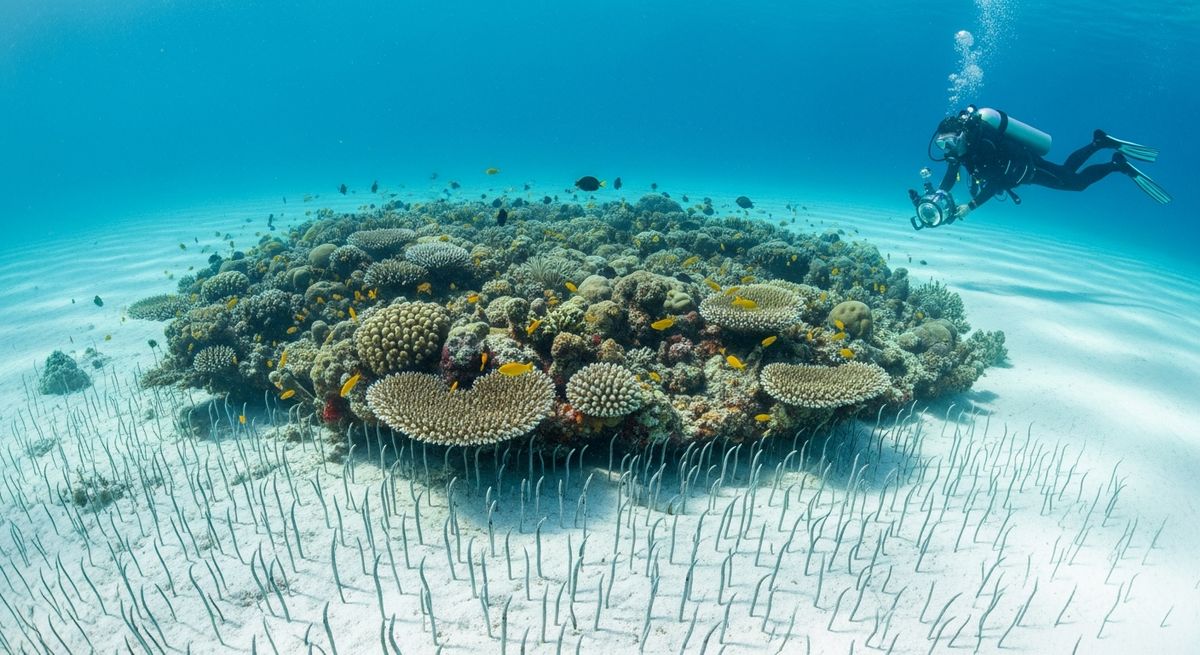
Landers
Protected Area
Aliwal Shoal Marine Protected Area
Why dive here
With 490+ marine species recorded in the area - including barracuda, blue sharks, bull sharks, eagle rays and great white sharks - Landers offers some of KwaZulu-Natal's richest reef diving. Water ranges 21-26°C, warmest January, February, March.
Landers is one of those spots where you just drop in and let the current carry you. It's a proper playground, an intricate maze of gullies and crevices carved into the reef, especially around the 20-meter mark. We love poking into every nook and cranny here; it’s where you’ll find those tiny Ringneck Blennies peeking out or a Blotched Fantail Ray tucked into the sand. The coral itself isn't always the big draw; it’s more about the sheer volume of reef fish. You'll swim through schools of Blacktail Chromis and see Bristle-toothed Surgeonfish everywhere. Keep an eye out for the Garrick hunting the smaller fry. For us, the highlight is often those unexpected encounters – a Blacktip shark cruising by in the blue, or the chance of a Whale Shark if the season is right. Visibility can be a bit variable, around 14 meters on average, but that just adds to the adventure. It's a great drift dive for anyone who enjoys exploring a dynamic reef system rather than just one static spot.
Nearest Dive Centres to Landers
Dive shops near Landers
MISS BEHAVIN’S MERMAIDS
ScubaXcursion
Aliwal Shoal Adventures - Ocean Warriors
Blue Ocean Dive Resort
Reviews for Landers
Conditions
Ocean conditions, forecast and tides for Landers
Landers Ocean Conditions
Monthly averages for Landers, sourced from Open-Meteo marine data - nearest station: Open-Meteo marine grid (-30.31, 30.76) (42km away)
October Averages
Sea Temperature
22°C
71°F · Range: 21–22.7°C
Air Temperature
20°C
68°F
Wind Speed
7.64 m/s
14.9 knots
Atmospheric Pressure
1017.9 hPa
Based on 4 years of monitoring data · Data sources: Open-Meteo marine data
Plan & book
Ways to dive KwaZulu-Natal, from day trips to liveaboards.
Day trips & courses
via GetYourGuideGuided dives, courses and snorkel trips with instant booking.
Find dive trips in KwaZulu-NatalPlaces to stay
via Booking.comHotels and dive resorts near KwaZulu-Natal.
Search stays in KwaZulu-NatalDive insurance
Most travel insurance excludes or limits scuba. Check what you need before you go.
Dive insurance explainedPartner links: we may earn a commission if you book, at no extra cost to you. How we make money
Where to Stay near Landers
Prices from Booking.com. We may earn a commission at no extra cost to you.