AURORA
Protected Area
Richards Bay Game Reserve
Why dive here
With 558+ marine species recorded in the area - including barracuda, blacktip reef sharks, blue sharks, blue-spotted stingrays and bull sharks - AURORA offers some of Sodwana Bay's richest wreck diving. Water ranges 23-28°C, warmest January, February, March.
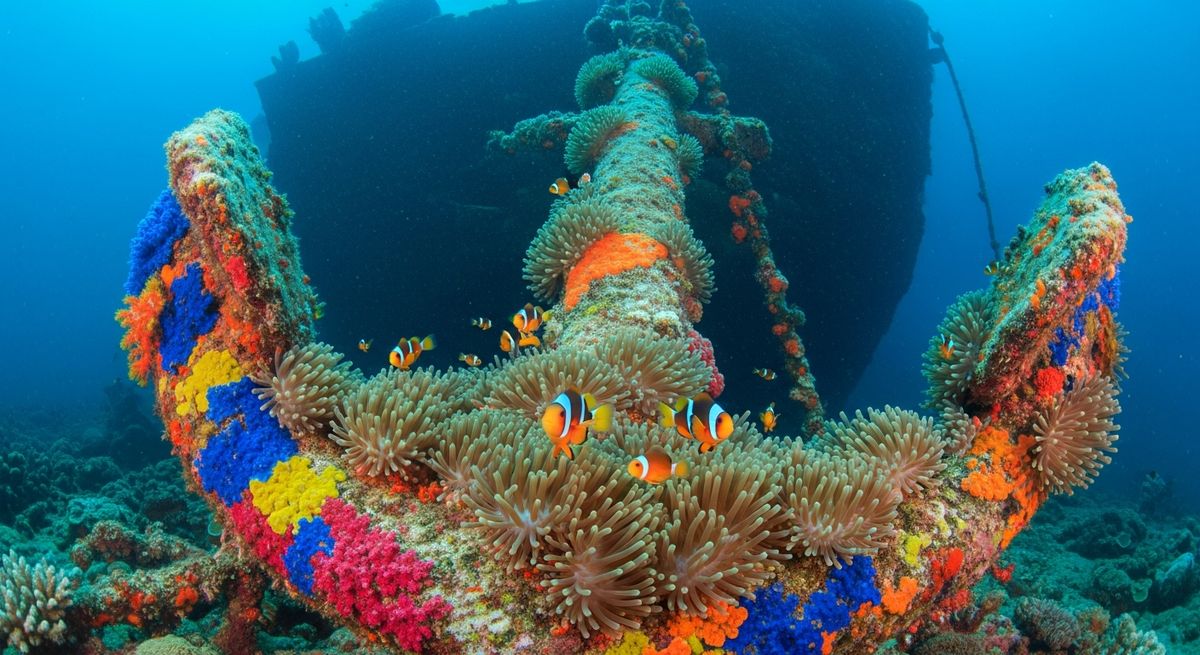
The Aurora, a fishing trawler that went down in 1975, is one of those wrecks that just feels *right* for a dive. It sits upright at just 11 metres, making it perfect for newer divers or anyone wanting a relaxed second dive. We love that you can really take your time here. You’ll find the bridge largely intact, a favourite haunt for big schools of glassfish that shimmer in the shafts of sunlight. Look closely in the nooks and crannies for moray eels – we’ve often spotted honeycomb and geometric morays peeking out. The cargo hold is open, and sometimes you’ll see the resident potato bass lurking inside, a truly enormous fish. We always suggest bringing a torch, not just for the darker spots, but to really make the colours of the soft corals pop. It’s an easy site to navigate, and the generally mild currents mean you can spend a full hour exploring every corner. A great spot for macro enthusiasts too, with plenty of nudibranchs and flatworms clinging to the metalwork.
Typical AURORA Dive Profile
Illustrative profile based on site depth and type. Actual dive profiles vary - always follow your dive computer and training.
Safety Notes
Wreck site - avoid penetration without wreck diving certification. Watch for sharp metal and entanglement hazards.
Always perform a 3-minute safety stop at 5m before surfacing.
AURORA Wreck History
Year Sunk
1975
Vessel Type
fishing vessel
Cause
unknown
In October 1975, the fishing vessel Aurora, under the command of Skipper Petrus Viviers, met her end in the warm waters off Sodwana Bay. Her final voyage from Durban was reportedly plagued by persistent engine trouble. According to a crewman's report, the vessel was left drifting helplessly at the mercy of the Indian Ocean currents before she ultimately sank. The exact cause of the sinking after she began to drift remains unclear, but her fate was sealed by the initial mechanical failure.
Lying in just 11 meters of water, the Aurora is now a fantastic artificial reef and one of Sodwana's more accessible wreck sites. Its shallow depth makes it an ideal dive for all certification levels, from beginners to seasoned photographers looking for long bottom times in excellent light. Over the decades, the wreck has been thoroughly colonized by vibrant corals and is now home to a dense population of reef fish. Divers can expect to be surrounded by schools of snapper, fusiliers, and angelfish, and should keep an eye out for moray eels and scorpionfish hiding within the wreck's structure.
Reviews for AURORA
Conditions
Ocean conditions, forecast and tides for AURORA
AURORA Ocean Conditions
Monthly averages for AURORA, sourced from Open-Meteo marine data - nearest station: Open-Meteo marine grid (-27.53, 32.7) (0km away)
October Averages
Sea Temperature
23°C
73°F · Range: 22.3–24.5°C
Air Temperature
22°C
71°F
Wind Speed
7.35 m/s
14.3 knots
Atmospheric Pressure
1017.9 hPa
Based on 4 years of monitoring data · Data sources: Open-Meteo marine data
Plan & book
Ways to dive Sodwana Bay, from day trips to liveaboards.
Day trips & courses
via GetYourGuideGuided dives, courses and snorkel trips with instant booking.
Find dive trips in Sodwana BayPlaces to stay
via Booking.comHotels and dive resorts near Sodwana Bay.
Search stays in Sodwana BayDive insurance
Most travel insurance excludes or limits scuba. Check what you need before you go.
Dive insurance explainedPartner links: we may earn a commission if you book, at no extra cost to you. How we make money
Where to Stay near AURORA
Prices from Booking.com. We may earn a commission at no extra cost to you.