The British Sergeant
Protected Area
Little Sober Island
Why dive here
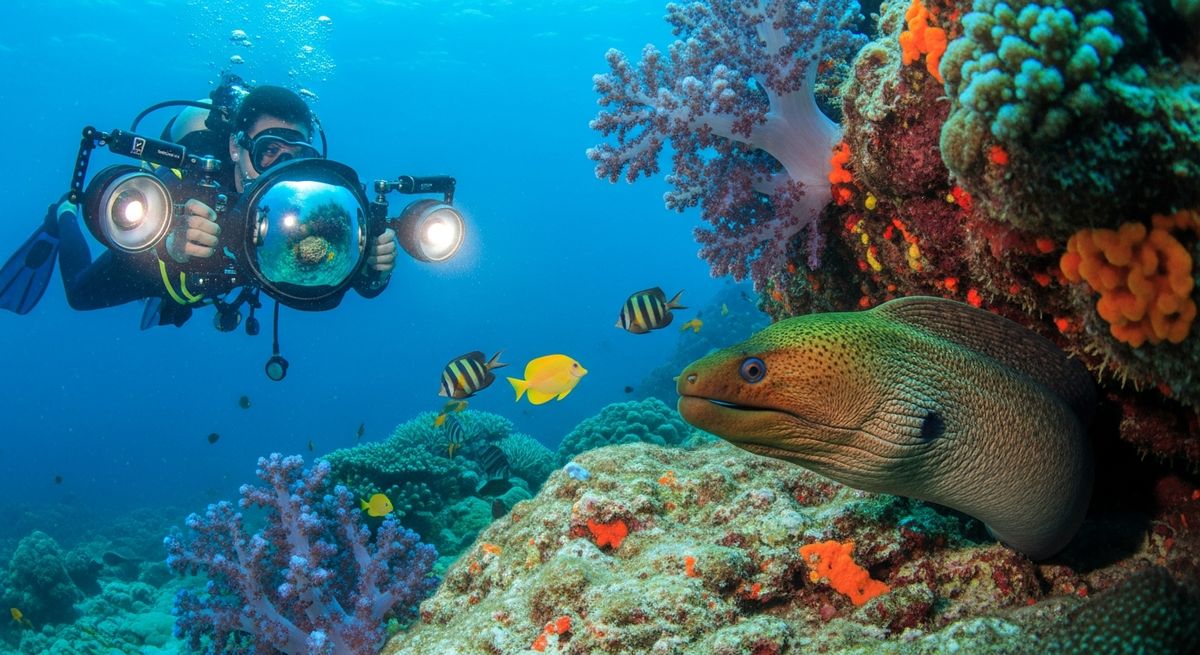
With 254+ marine species recorded in the area - including barracuda, dolphins, sea turtles, sperm whales and spinner dolphins - The British Sergeant offers some of Trincomalee & East Coast's richest diving. Water ranges 27-30°C, warmest April, May, October.
The British Sergeant is a solid wreck dive off Trincomalee, an honest wartime casualty from 1942. We've always found it a pretty approachable wreck, settling at 26 meters, making it a good choice for divers new to deeper wrecks without being overwhelming. The ship broke into two distinct sections during its sinking, so you can clearly make out the bow and stern, which is a nice feature for navigation and exploring. The real draw here is the cavern amidships; it’s genuinely impressive, a huge space that gives you a real sense of the ship’s scale. It’s not about spotting rare creatures, but more about the history and the sheer bulk of the vessel itself.
Typical The British Sergeant Dive Profile
Illustrative profile based on site depth and type. Actual dive profiles vary - always follow your dive computer and training.
Safety Notes
Depth of 26m - Advanced Open Water certification recommended.
Always perform a 3-minute safety stop at 5m before surfacing.
Nearest Dive Centres to The British Sergeant
Dive shops near The British Sergeant
Epic Ocean Adventures
Coco Diving Trincomalee
Sri Lanka Dive School
Poseidon Diving Centre
Dive For You
International Diving School Trincomalee
Reviews for The British Sergeant
Conditions
Ocean conditions, forecast and tides for The British Sergeant
The British Sergeant Ocean Conditions
Monthly averages for The British Sergeant, sourced from Open-Meteo marine data - nearest station: Open-Meteo marine grid (8.53, 81.23) (31km away)
October Averages
Sea Temperature
30°C
85°F · Range: 27.5–30.3°C
Air Temperature
27°C
81°F
Wind Speed
4.73 m/s
9.2 knots
Atmospheric Pressure
1009 hPa
Based on 4 years of monitoring data · Data sources: Open-Meteo marine data
Plan & book
Ways to dive Trincomalee & East Coast, from day trips to liveaboards.
Day trips & courses
via GetYourGuideGuided dives, courses and snorkel trips with instant booking.
Find dive trips in Trincomalee & East CoastPlaces to stay
via Booking.comHotels and dive resorts near Trincomalee & East Coast.
Search stays in Trincomalee & East CoastDive insurance
Most travel insurance excludes or limits scuba. Check what you need before you go.
Dive insurance explainedPartner links: we may earn a commission if you book, at no extra cost to you. How we make money
Where to Stay near The British Sergeant
Prices from Booking.com. We may earn a commission at no extra cost to you.