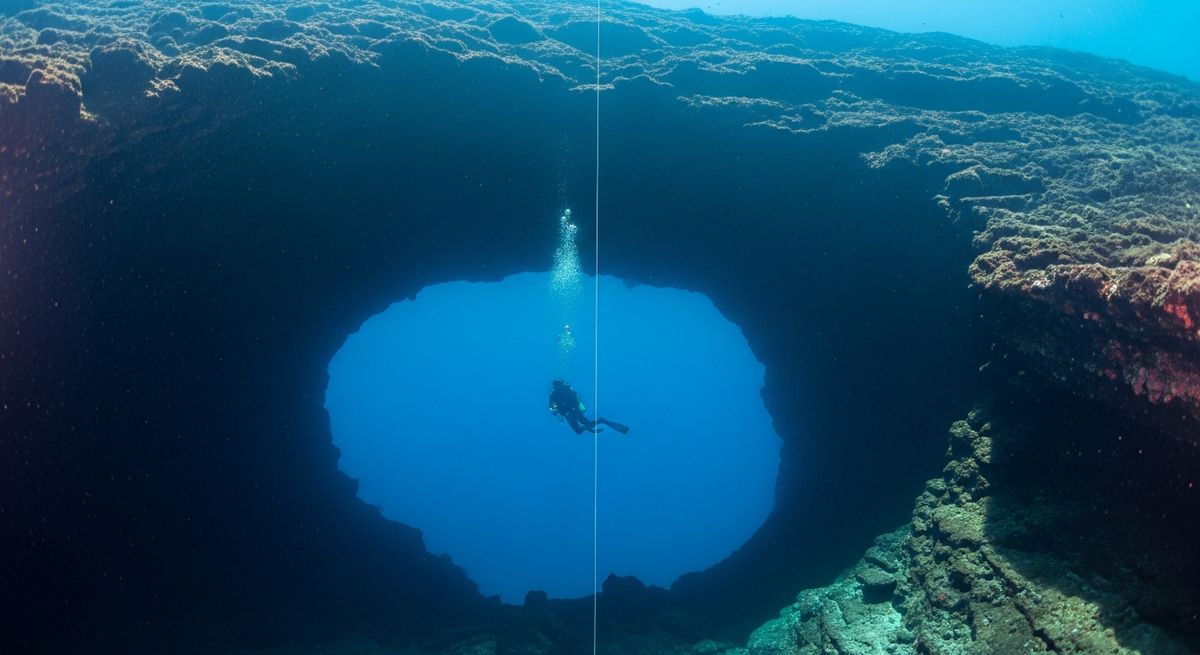
Levenbank
Protected Area
Maziwe Island
Why dive here
With 312+ marine species recorded in the area - including barracuda, blue-spotted stingrays, dolphins, eagle rays and hammerhead sharks - Levenbank offers some of Zanzibar & Pemba's richest cave diving. Water ranges 26-30°C, warmest February, March, April.
Levenbank is for those days when you crave a bit of an adventure, a proper bluewater drift. It's out in the open Indian Ocean, a true pinnacle rising from the depths. We love dropping in on the deep side, sometimes letting the current carry us gently down to that 35-meter mark, watching the profile of the reef emerge. The pinnacle itself is a riot of colour, coated in sponges and a mix of hard and soft corals. You'll encounter plenty of the usual suspects here, big morays peeking from crevices, groupers lurking, and schools of barracuda and batfish swirling in the blue. Our favourite moments are often finding those intricate little shells like the Prickly Spotted Drupe or the Golden-Yellow Cone tucked into the coral. Visibility is usually good, around 20 meters, which lets you appreciate the scale of the place. We'd suggest checking the tides; a good drift makes the dive. This is definitely one for the experienced diver who appreciates a dynamic dive and the thrill of being offshore.
Safety Notes
Overhead environment - never enter without proper cave/cavern training, redundant equipment, and a guideline.
Nearest Dive Centres to Levenbank
Dive shops near Levenbank
EGYPTIAN ZANZI LIMITID
Spanish Dancer Divers
Awesome Ocean Diving Center
SSI Freediving
ScubaCaribe Zanzibar
Zanzibar Watersports @ Kendwa Rocks
Reviews for Levenbank
Conditions
Ocean conditions, forecast and tides for Levenbank
Levenbank Ocean Conditions
Monthly averages for Levenbank, sourced from Open-Meteo marine data - nearest station: Open-Meteo marine grid (-5.98, 39.4) (10km away)
October Averages
Sea Temperature
27°C
81°F · Range: 25.9–28.4°C
Air Temperature
26°C
79°F
Wind Speed
4.72 m/s
9.2 knots
Atmospheric Pressure
1013.8 hPa
Based on 4 years of monitoring data · Data sources: Open-Meteo marine data
Plan & book
Ways to dive Zanzibar & Pemba, from day trips to liveaboards.
Day trips & courses
via GetYourGuideGuided dives, courses and snorkel trips with instant booking.
Find dive trips in Zanzibar & PembaPlaces to stay
via Booking.comHotels and dive resorts near Zanzibar & Pemba.
Search stays in Zanzibar & PembaDive insurance
Most travel insurance excludes or limits scuba. Check what you need before you go.
Dive insurance explainedPartner links: we may earn a commission if you book, at no extra cost to you. How we make money
Where to Stay near Levenbank
Prices from Booking.com. We may earn a commission at no extra cost to you.