Pange North
Protected Area
Chumbe Island Coral Park (CHICOP)
Why dive here
With 312+ marine species recorded in the area - including barracuda, blue-spotted stingrays, dolphins, eagle rays and hammerhead sharks - Pange North offers some of Zanzibar & Pemba's richest reef diving. Water ranges 26-30°C, warmest February, March, April.
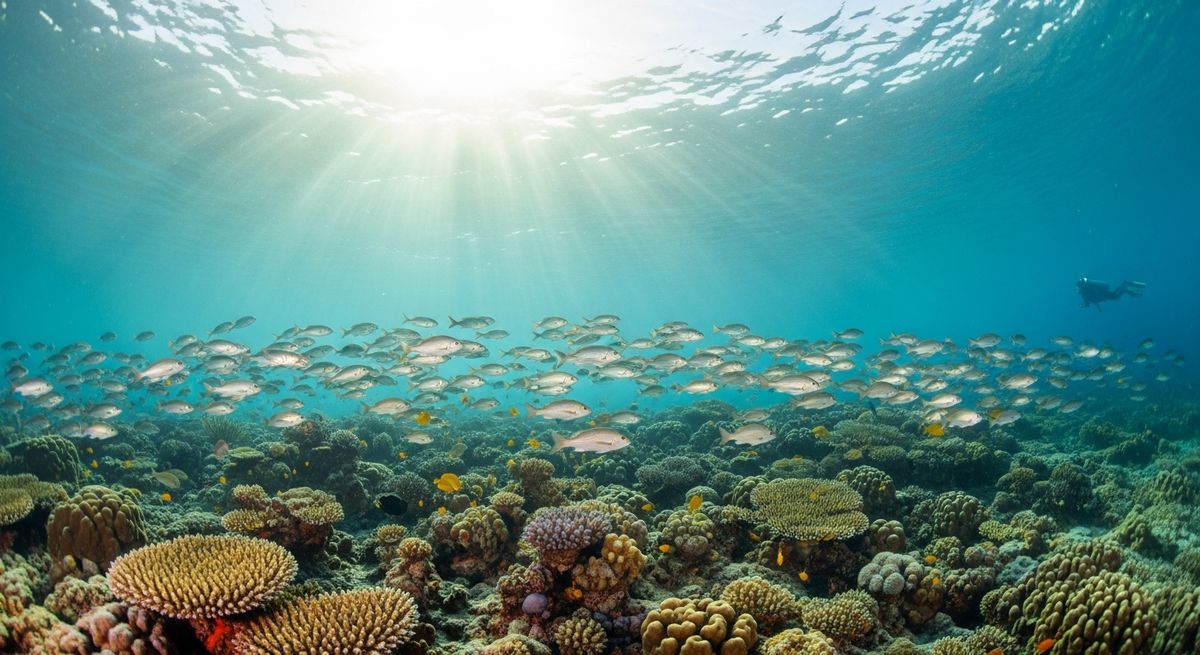
Pange North always delivers. It’s a shallow, gently sloping reef, never deeper than 13 metres, which means we can spend a good chunk of bottom time just drifting along, soaking it all in. The corals here are lovely, plenty of varied formations, and we especially love the way the big fan corals sway with the mild surge. During the day, you’ll spot those vibrant Ring-tailed Surgeonfish darting through the water, and we’ve had some cracking encounters with curious Undulated Morays poking their heads out from the reef. Keep an eye out for the Flashlight Fish in the darker corners too, their bioluminescent glow is something else. But Pange North truly shines after dark; it's our absolute favourite night dive in the area. The whole place transforms. We’ve watched octopuses unfurl from crevices and patrol the sandy patches, and the number of crabs and shrimp that emerge from their daytime hideouts is incredible. The visibility averages around 11 metres, which is perfectly fine for a relaxed, critter-focused exploration. It’s a site that suits everyone, from newer divers wanting to build confidence to experienced macro hunters looking for something different.
Nearest Dive Centres to Pange North
Dive shops near Pange North
Bawe Diving Center
Fumba Water Sports
Cool Zanzibar Water Sports
Scuba Blue Zanzibar
Bluewavediving-Zanzibar
Scubafish Dive Center Ltd
Reviews for Pange North
Conditions
Ocean conditions, forecast and tides for Pange North
Pange North Ocean Conditions
Monthly averages for Pange North, sourced from Open-Meteo marine data - nearest station: Open-Meteo marine grid (-5.98, 39.4) (10km away)
October Averages
Sea Temperature
27°C
81°F · Range: 25.9–28.4°C
Air Temperature
26°C
79°F
Wind Speed
4.72 m/s
9.2 knots
Atmospheric Pressure
1013.8 hPa
Based on 4 years of monitoring data · Data sources: Open-Meteo marine data
Plan & book
Ways to dive Zanzibar & Pemba, from day trips to liveaboards.
Day trips & courses
via GetYourGuideGuided dives, courses and snorkel trips with instant booking.
Find dive trips in Zanzibar & PembaPlaces to stay
via Booking.comHotels and dive resorts near Zanzibar & Pemba.
Search stays in Zanzibar & PembaDive insurance
Most travel insurance excludes or limits scuba. Check what you need before you go.
Dive insurance explainedPartner links: we may earn a commission if you book, at no extra cost to you. How we make money
Where to Stay near Pange North
Prices from Booking.com. We may earn a commission at no extra cost to you.