TABORA - Zanzibar & Pemba

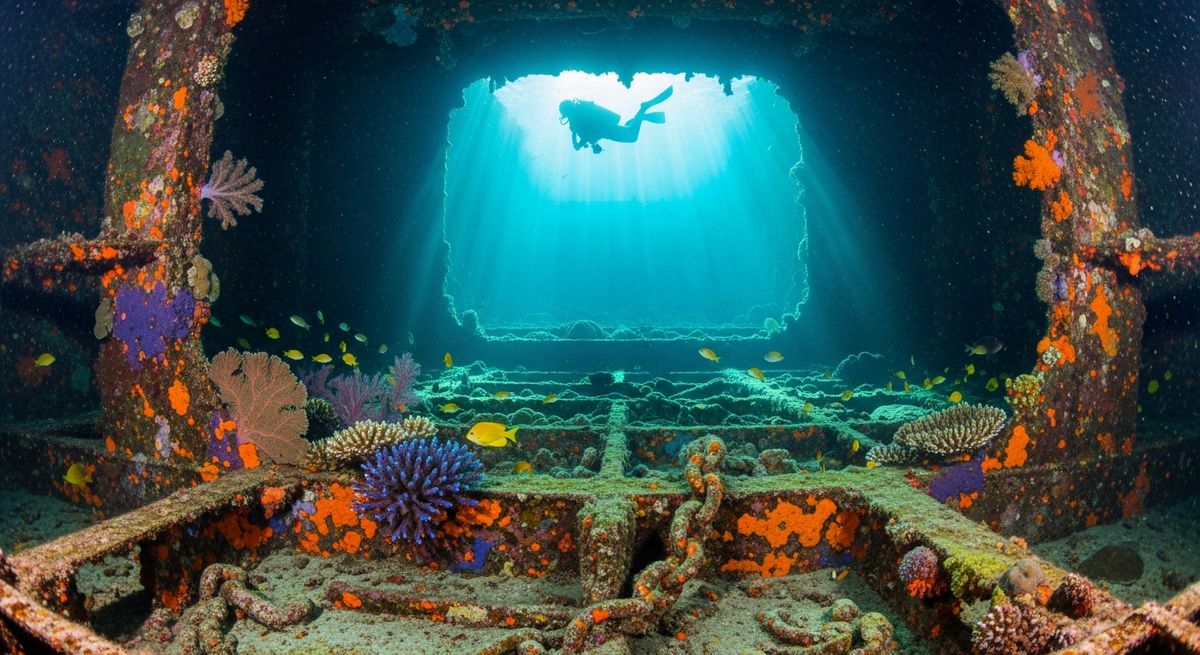
The Tabora, a German steamship sunk in 1914, lies in a manageable 10 meters of water, making it a good wreck dive for those new to the experience. We often find the visibility here decent, giving us clear views of the 142-meter hull. It’s not a vibrant coral garden, but the wreck itself is quite impressive, with its structure still largely intact. Look for schools of snapper darting in and out of the hold, and we’ve seen some decent-sized groupers making their home in the deeper sections. It's an interesting piece of history, colonised by some curious reef fish, rather than a spectacular marine life hotspot.

Location
Zanzibar & Pemba, Tanzania, Indian Ocean & East Africa
Coordinates
-6.840833, 39.296390
Type
wreck
Maximum Depth
10m

Marine Protected Area: Dar es Salaam

Best Time to Dive in Zanzibar & Pemba

The warmest water temperatures in Zanzibar & Pemba occur in January, averaging 28.1°C. The coolest conditions are in December at 28.1°C.

Monthly Water Temperatures

  • January: 28.1°C (air: 27.5°C)
  • February: 28.1°C (air: 27.9°C)
  • March: 28.1°C (air: 27.7°C)
  • April: 28.1°C (air: 26.1°C)
  • May: 28.1°C (air: 26.1°C)
  • June: 28.1°C (air: 25.4°C)
  • July: 28.1°C (air: 24.8°C)
  • August: 28.1°C (air: 24.9°C)
  • September: 28.1°C (air: 25.4°C)
  • October: 28.1°C (air: 26.2°C)
  • November: 28.1°C (air: 26.7°C)
  • December: 28.1°C (air: 27.3°C)

Nearby Dive Sites in Zanzibar & Pemba

Nearest Dive Centres to TABORA

Marine Life in Zanzibar & Pemba

Home to 331 recorded species including 266 reef fish, 14 sea snails & nudibranchs, 10 seagrass & algae, 8 hard corals, 8 sharks & rays, 7 sea cucumbers.

Notable Species

Recommended Packing List for TABORA

Based on average water temperature of 28.1°C.

  • Shorty or Rashguard - warm 28°C water needs minimal exposure protection
  • Mask - essential for every dive
  • Fins
  • BCD - buoyancy compensator
  • Regulator - your most safety-critical piece of gear
  • Dive Computer - tracks depth, time, and NDL
  • Surface Marker Buoy (SMB) - essential for boat pickups
  • Dive Torch - useful for crevices and colour at depth
  • Underwater Camera - capture your diving memories

Frequently Asked Questions

What is the typical depth range for scuba diving at Tabora?
The Tabora wreck is located at a consistent depth of 10m. This relatively shallow depth makes it accessible for many divers, offering a comfortable profile for exploring the historic vessel. It's an excellent site for those looking for a shallower wreck experience.
What kind of marine life and underwater topography can divers expect to see at Tabora?
The Tabora dive site is primarily a fascinating wreck dive, featuring the remains of a 142.9m x 16.5m steam ship vessel that sank in 1914. While specific marine life isn't detailed in the provided data, wrecks typically become artificial reefs over time, attracting various marine life. Divers can expect to explore the impressive hull and superstructure of this historic vessel, which forms the main underwater topography.
How difficult are the dives at Tabora, and is it suitable for beginner or advanced divers?
Dives at the Tabora wreck are classified as intermediate difficulty. This means it is suitable for divers with some experience beyond entry-level certification. While not typically recommended for absolute beginners, it offers an exciting and manageable challenge for those looking to explore a historic wreck at 10m depth.
What is the best time of year to dive at Tabora for optimal conditions and marine encounters?
The provided data does not specify the best time of year to dive at Tabora for optimal conditions or marine encounters. For general information on diving seasons and conditions in Tanzania, please refer to our When to Dive section. Local dive operators in Zanzibar & Pemba can also provide up-to-date seasonal advice.
Are there any specific diving certifications required or highly recommended for diving at Tabora?
Given the intermediate difficulty and the nature of a wreck dive at Tabora, a certification beyond Open Water Diver, such as Advanced Open Water or a Wreck Diver specialty, would be highly recommended. This ensures divers have the necessary skills and experience for safely exploring the 10m deep wreck. Always dive within your certification limits and comfort zone.
What are the usual current conditions and visibility like at the Tabora dive site?
The provided data does not include specific information regarding the usual current conditions or visibility at the Tabora dive site. It's always advisable to check with local dive operators in Zanzibar & Pemba for real-time conditions before planning your dive. They can provide the most accurate and current information for a safe and enjoyable experience.