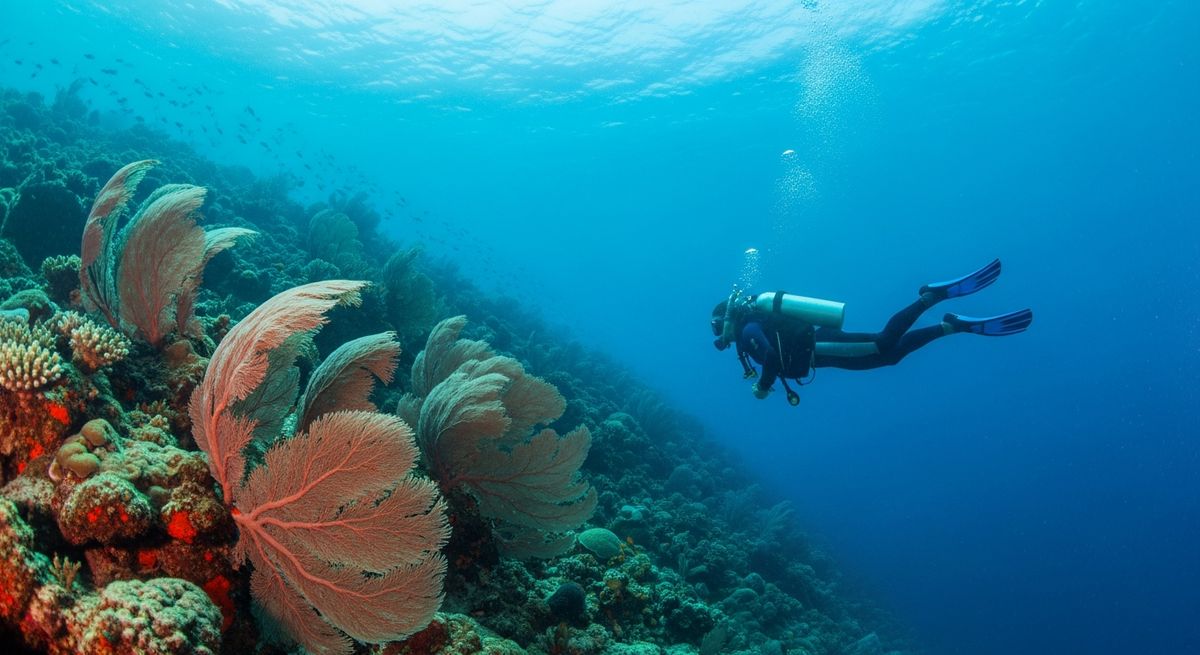
The Big Wall
Why dive here
With 312+ marine species recorded in the area - including barracuda, blue-spotted stingrays, dolphins, eagle rays and hammerhead sharks - The Big Wall offers some of Zanzibar & Pemba's richest drift diving. Water ranges 26-30°C, warmest February, March, April.
The Big Wall delivers exactly what the name promises: a serious vertical drop. We love the sheer scale of it, plunging from a comfortable 24 metres down to a hazy 60 metres or more. It’s less about a frantic search for tiny critters and more about soaking in the grandeur of the ocean. We always make a point of checking out the small caves and overhangs carved into the wall. That’s where you’ll often find lobsters tucked away and sometimes a stingray resting on the sandy ledges. Keep an eye out for Titan triggerfish; they’re often patrolling the wall, looking for an easy meal. If you hit it between June and September, there's a real chance of spotting hammerhead sharks cruising out in the blue. We'd suggest this site for confident divers who appreciate dramatic topography and don’t mind a bit of current, as it can get lively here.
Typical The Big Wall Dive Profile
Illustrative profile based on site depth and type. Actual dive profiles vary - always follow your dive computer and training.
Safety Notes
Depth of 25m - Advanced Open Water certification recommended.
Drift dive - carry a surface marker buoy (SMB) and stay with your group. Brief the current direction before entry.
Always perform a 3-minute safety stop at 5m before surfacing.
Nearest Dive Centres to The Big Wall
Dive shops near The Big Wall
Mnemba Island Lodge
Dive Point Zanzibar
TGI
One Ocean Zanzibar
Scubafish Dive Center Ltd
Ocean Dive
Reviews for The Big Wall
Conditions
Ocean conditions, forecast and tides for The Big Wall
The Big Wall Ocean Conditions
Monthly averages for The Big Wall, sourced from Open-Meteo marine data - nearest station: Open-Meteo marine grid (-5.98, 39.4) (10km away)
October Averages
Sea Temperature
27°C
81°F · Range: 25.9–28.4°C
Air Temperature
26°C
79°F
Wind Speed
4.72 m/s
9.2 knots
Atmospheric Pressure
1013.8 hPa
Based on 4 years of monitoring data · Data sources: Open-Meteo marine data
Plan & book
Ways to dive Zanzibar & Pemba, from day trips to liveaboards.
Day trips & courses
via GetYourGuideGuided dives, courses and snorkel trips with instant booking.
Find dive trips in Zanzibar & PembaPlaces to stay
via Booking.comHotels and dive resorts near Zanzibar & Pemba.
Search stays in Zanzibar & PembaDive insurance
Most travel insurance excludes or limits scuba. Check what you need before you go.
Dive insurance explainedPartner links: we may earn a commission if you book, at no extra cost to you. How we make money
Where to Stay near The Big Wall
Prices from Booking.com. We may earn a commission at no extra cost to you.