The Great Northern
Protected Area
Chumbe Island Coral Park (CHICOP)
Why dive here
With 312+ marine species recorded in the area - including barracuda, blue-spotted stingrays, dolphins, eagle rays and hammerhead sharks - The Great Northern offers some of Zanzibar & Pemba's richest wreck diving. Water ranges 26-30°C, warmest February, March, April.
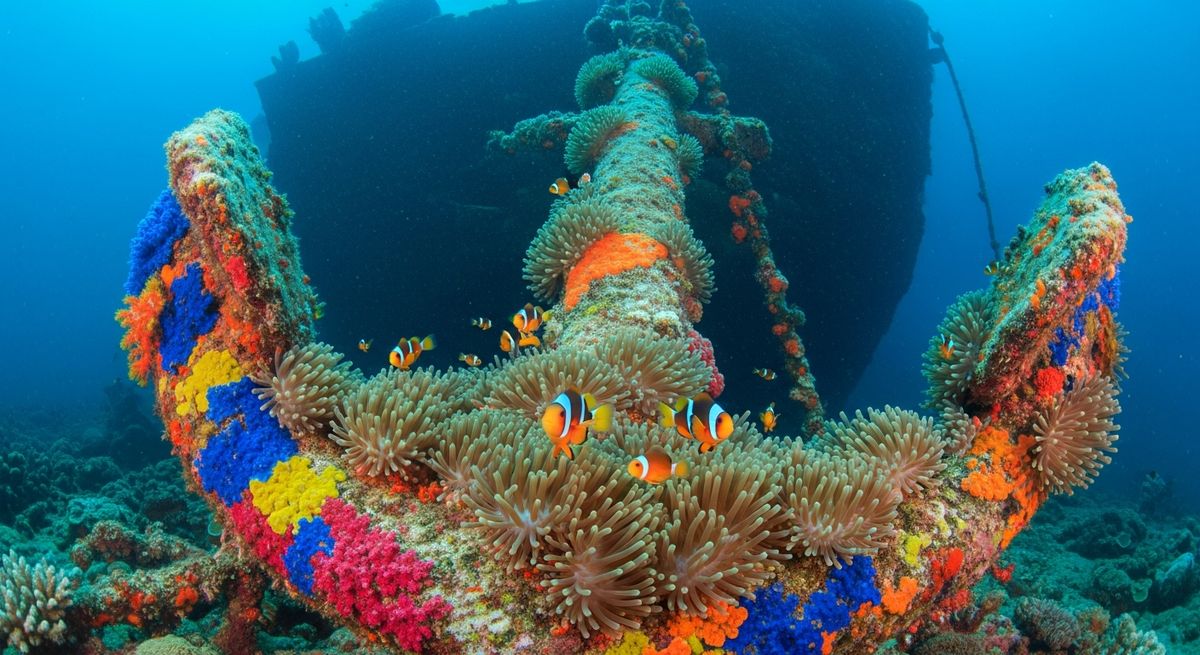
The Great Northern is one of our favourite wreck dives, especially for something so accessible. She went down on New Year’s Eve, 1902, so there’s over a century of growth on her hull now, sitting in the sand at a max of 13m. We’ve had dives here with visibility touching 20m, but 10-15m is more common, painting the scene in a soft, ethereal light. You’re not going deep, but that just means more bottom time to explore the nooks and crannies. We regularly spot those slender alligator pipefish darting amongst the twisted metal, and the peacock-tail anemone shrimp are always a delight – keep your eyes peeled for their iridescent colours. The corals here, particularly the soft varieties, have really taken hold, creating these vibrant patches against the dark wreck. We’ve spent whole safety stops just watching the bicolour parrotfish graze the reef, their crunching audible if you listen closely. It’s a photographer’s dream, particularly for macro, and the gentle conditions make it perfect for newer wreck divers or anyone who just wants a relaxed, fascinating dive.
Safety Notes
Wreck site - avoid penetration without wreck diving certification. Watch for sharp metal and entanglement hazards.
Nearest Dive Centres to The Great Northern
Dive shops near The Great Northern
Bawe Diving Center
Fumba Water Sports
Cool Zanzibar Water Sports
Scuba Blue Zanzibar
Scubafish Dive Center Ltd
Ocean Dive
Reviews for The Great Northern
Conditions
Ocean conditions, forecast and tides for The Great Northern
The Great Northern Ocean Conditions
Monthly averages for The Great Northern, sourced from Open-Meteo marine data - nearest station: Open-Meteo marine grid (-5.98, 39.4) (10km away)
October Averages
Sea Temperature
27°C
81°F · Range: 25.9–28.4°C
Air Temperature
26°C
79°F
Wind Speed
4.72 m/s
9.2 knots
Atmospheric Pressure
1013.8 hPa
Based on 4 years of monitoring data · Data sources: Open-Meteo marine data
Plan & book
Ways to dive Zanzibar & Pemba, from day trips to liveaboards.
Day trips & courses
via GetYourGuideGuided dives, courses and snorkel trips with instant booking.
Find dive trips in Zanzibar & PembaPlaces to stay
via Booking.comHotels and dive resorts near Zanzibar & Pemba.
Search stays in Zanzibar & PembaDive insurance
Most travel insurance excludes or limits scuba. Check what you need before you go.
Dive insurance explainedPartner links: we may earn a commission if you book, at no extra cost to you. How we make money
Where to Stay near The Great Northern
Prices from Booking.com. We may earn a commission at no extra cost to you.