Tumbatu Lagoon
Protected Area
Maziwe Island
Why dive here
With 312+ marine species recorded in the area - including barracuda, blue-spotted stingrays, dolphins, eagle rays and hammerhead sharks - Tumbatu Lagoon offers some of Zanzibar & Pemba's richest reef diving. Water ranges 26-30°C, warmest February, March, April.
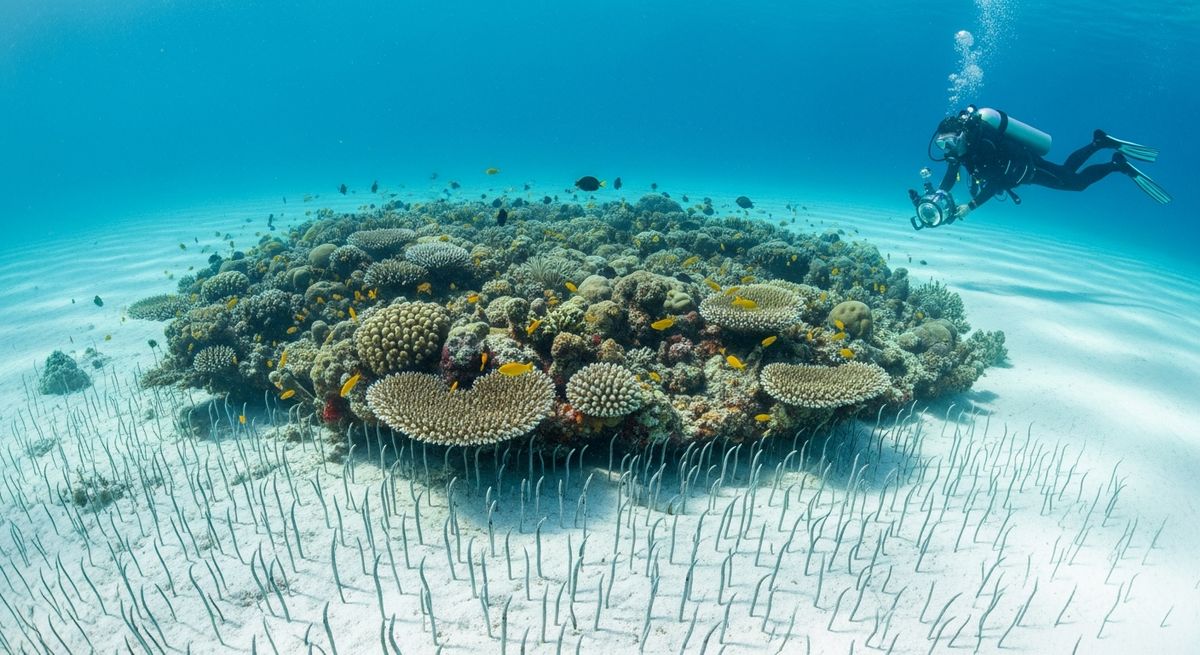
Tumbatu Lagoon often gets overlooked for the flashier spots, but we think that's a mistake. The reef wall on the west side of Tumbatu Island is just ridiculously healthy for Zanzibar. You drop in and it’s an immediate hit of hard corals, big plateaus stretching out, a proper landscape rather than just scattered heads. We love drifting along this wall, letting the gentle push of the water carry us past thick stands of staghorn and brain corals, always keeping an eye out for green turtles munching away. It's not about big pelagics here, though a manta ray isn't unheard of. Tumbatu is all about the small stuff done well. We’ve spent whole dives just combing the coral for Snakehead Cowries, their shells glossy and perfect, or watching peacock shrimp dart into their burrows. The maximum depth is only 16m, which means plenty of bottom time and lots of light penetration, making those colours really pop. Visibility averages around 11m, which is good enough to appreciate the intricate reef life. It’s a perfect spot for divers who prefer a relaxed drift and getting up close with the reef's residents, rather than a frantic search for giants.
Typical Tumbatu Lagoon Dive Profile
Illustrative profile based on site depth and type. Actual dive profiles vary - always follow your dive computer and training.
Nearest Dive Centres to Tumbatu Lagoon
Dive shops near Tumbatu Lagoon
Zanzibar Watersports @ Kendwa Rocks
ScubaCaribe Zanzibar
Awesome Ocean Diving Center
SSI Freediving
Spanish Dancer Divers
EGYPTIAN ZANZI LIMITID
Reviews for Tumbatu Lagoon
Conditions
Ocean conditions, forecast and tides for Tumbatu Lagoon
Tumbatu Lagoon Ocean Conditions
Monthly averages for Tumbatu Lagoon, sourced from Open-Meteo marine data - nearest station: Open-Meteo marine grid (-5.98, 39.4) (10km away)
October Averages
Sea Temperature
27°C
81°F · Range: 25.9–28.4°C
Air Temperature
26°C
79°F
Wind Speed
4.72 m/s
9.2 knots
Atmospheric Pressure
1013.8 hPa
Based on 4 years of monitoring data · Data sources: Open-Meteo marine data
Plan & book
Ways to dive Zanzibar & Pemba, from day trips to liveaboards.
Day trips & courses
via GetYourGuideGuided dives, courses and snorkel trips with instant booking.
Find dive trips in Zanzibar & PembaPlaces to stay
via Booking.comHotels and dive resorts near Zanzibar & Pemba.
Search stays in Zanzibar & PembaDive insurance
Most travel insurance excludes or limits scuba. Check what you need before you go.
Dive insurance explainedPartner links: we may earn a commission if you book, at no extra cost to you. How we make money
Where to Stay near Tumbatu Lagoon
Prices from Booking.com. We may earn a commission at no extra cost to you.