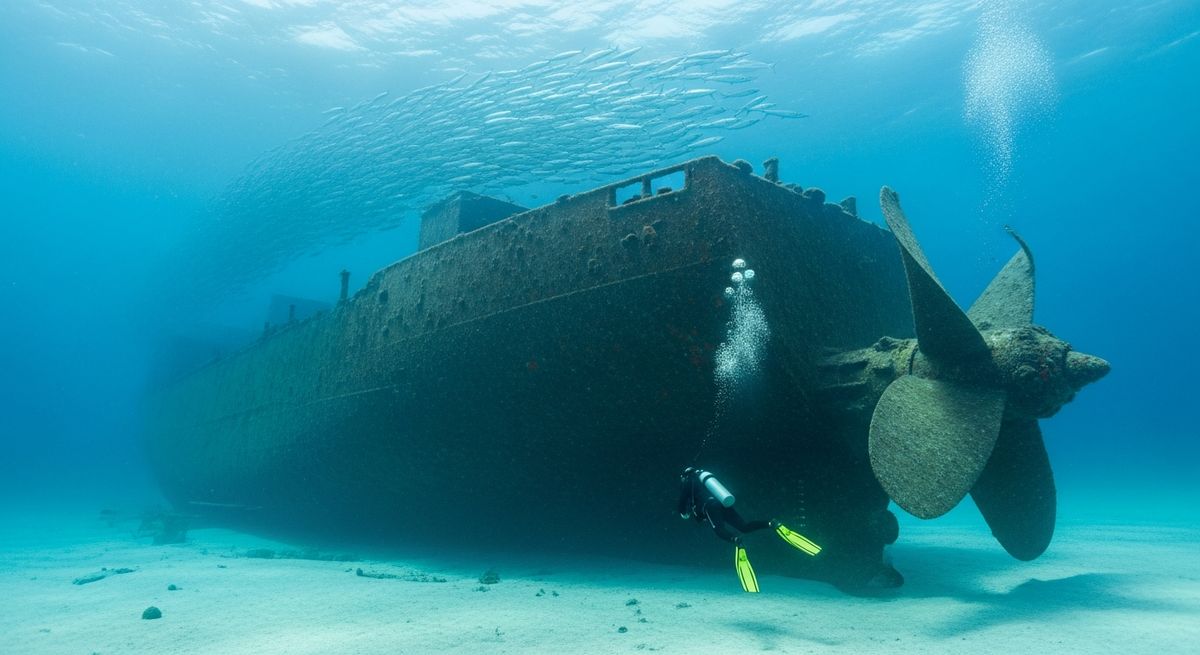
COSTA CONCORDIA
Why dive here
With 213+ marine species recorded in the area - including blue sharks, dolphins, great white sharks, hammerhead sharks and mobula rays (devil rays) - COSTA CONCORDIA offers some of Corsica's richest wreck diving. Water ranges 15-28°C, warmest July, August, September.
Okay, let's clear something up right away: if you’re heading to Corsica looking to dive the Costa Concordia, you're a decade too late. The ship was refloated, dismantled, and scrapped years ago. We know the database might still flag it, but that particular wreck experience is long gone. However, Corsica still offers plenty of fascinating dives. The Mediterranean often surprises people who expect barren seascapes. Instead, you'll find ancient wrecks, dramatic drop-offs, and vibrant rocky reefs. For a real taste of Corsican wreck diving, we’d steer you towards sites around the Lavezzi Islands or the Scandola Nature Reserve. You might not get a modern cruise liner, but you'll certainly find wrecks with a bit more history and, importantly, ones that are actually still there to dive.
Typical COSTA CONCORDIA Dive Profile
Illustrative profile based on site depth and type. Actual dive profiles vary - always follow your dive computer and training.
Safety Notes
Wreck site - avoid penetration without wreck diving certification. Watch for sharp metal and entanglement hazards.
Nearest Dive Centres to COSTA CONCORDIA
Dive shops near COSTA CONCORDIA
ZERO MENO DIVING CENTER
ARGENTARIO - OBI DIVING
BLUE DOLPHIN DIVING CENTER
ARGENTARIO DIVERS SRL
ACQUASPORT di Mazzi Stefano & C.S.n.c.
Reviews for COSTA CONCORDIA
Conditions
Ocean conditions, forecast and tides for COSTA CONCORDIA
COSTA CONCORDIA Ocean Conditions
Monthly averages for COSTA CONCORDIA, sourced from Open-Meteo marine data - nearest station: Open-Meteo marine grid (42.38, 9.55) (2km away)
October Averages
Sea Temperature
22°C
72°F · Range: 20.1–24.6°C
Air Temperature
18°C
64°F
Wind Speed
5.12 m/s
10.0 knots
Atmospheric Pressure
1017.2 hPa
Based on 4 years of monitoring data · Data sources: Open-Meteo marine data
Plan & book
Ways to dive Corsica, from day trips to liveaboards.
Day trips & courses
via GetYourGuideGuided dives, courses and snorkel trips with instant booking.
Find dive trips in CorsicaPlaces to stay
via Booking.comHotels and dive resorts near Corsica.
Search stays in CorsicaDive insurance
Most travel insurance excludes or limits scuba. Check what you need before you go.
Dive insurance explainedPartner links: we may earn a commission if you book, at no extra cost to you. How we make money
Where to Stay near COSTA CONCORDIA
Prices from Booking.com. We may earn a commission at no extra cost to you.