IONION (PROBABLY)
Protected Area
CHERSONISOS GRAMVOUSAS KAI NISIDES IMERI KAI AGRIA GRAMVOUSA, PONTIKONISI KAI THALASSIA ZONI
Why dive here
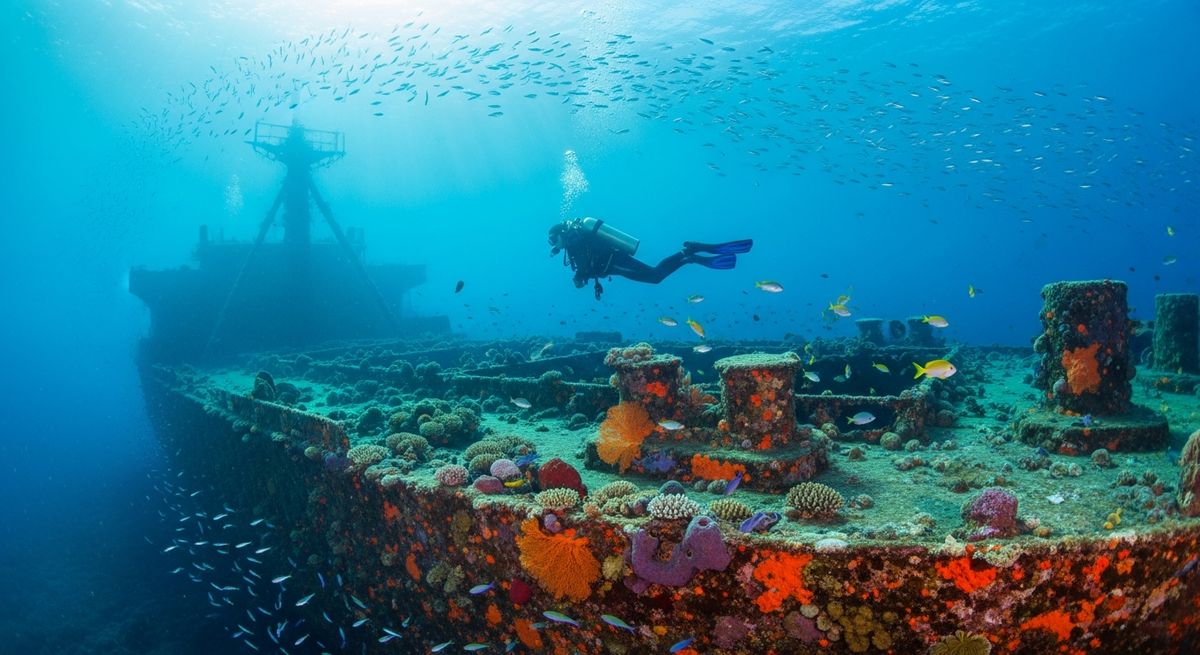
IONION (PROBABLY) is a wreck dive where divers can encounter sea turtles. Water ranges 17-27°C, warmest July, August, September.
The Ionion (Probably) is one of our favourite easy wreck dives in Crete, and a site that makes for a surprisingly good second dive. Lying in just 5m of water, this Roll-on/Roll-off ferry sank back in '92, and the decades have been kind to it. We love the way the shallow depth lets sunlight flood the wreck, illuminating the big cargo holds and open vehicle decks. You can spend a whole bottom time just gliding over the skeletal superstructure, watching schools of damselfish flit through the old passenger areas. It’s a great spot for newer divers to experience a proper wreck without any depth anxieties, and for photographers, the ambient light is fantastic, especially mid-morning. Look closely at the hull plates for nudibranchs, and keep an eye out for octopus tucked into crevices. The wreck is pretty broken up in places, but the sheer scale of it still impresses. We'd suggest going on a day with minimal surface chop to really appreciate the visibility.
Typical IONION (PROBABLY) Dive Profile
Illustrative profile based on site depth and type. Actual dive profiles vary - always follow your dive computer and training.
Safety Notes
Wreck site - avoid penetration without wreck diving certification. Watch for sharp metal and entanglement hazards.
Nearest Dive Centres to IONION (PROBABLY)
Dive shops near IONION (PROBABLY)
Sapounakis Kissamos Diving Center
Fundive
FUN DIVE DIVING CENTER
Stalos Dive Center
Chania Diving
Chania Diving Center
Reviews for IONION (PROBABLY)
Conditions
Ocean conditions, forecast and tides for IONION (PROBABLY)
IONION (PROBABLY) Ocean Conditions
Monthly averages for IONION (PROBABLY), sourced from Open-Meteo marine data + Copernicus Marine (EU) - nearest station: Open-Meteo marine grid (35.42, 24.79) (35km away)
October Averages
Sea Temperature
24°C
75°F · Range: 22.3–25.7°C
Current Speed
4 cm/s
Direction: S (180°)
Chlorophyll-a
0.086 mg/m³
Very clear (oligotrophic)
Salinity
39.3 PSU
Based on 4 years of monitoring data · Data sources: Open-Meteo marine data + Copernicus Marine (EU)
Plan & book
Ways to dive Crete, from day trips to liveaboards.
Day trips & courses
via GetYourGuideGuided dives, courses and snorkel trips with instant booking.
Find dive trips in CretePlaces to stay
via Booking.comHotels and dive resorts near Crete.
Search stays in CreteDive insurance
Most travel insurance excludes or limits scuba. Check what you need before you go.
Dive insurance explainedPartner links: we may earn a commission if you book, at no extra cost to you. How we make money
Where to Stay near IONION (PROBABLY)
Prices from Booking.com. We may earn a commission at no extra cost to you.