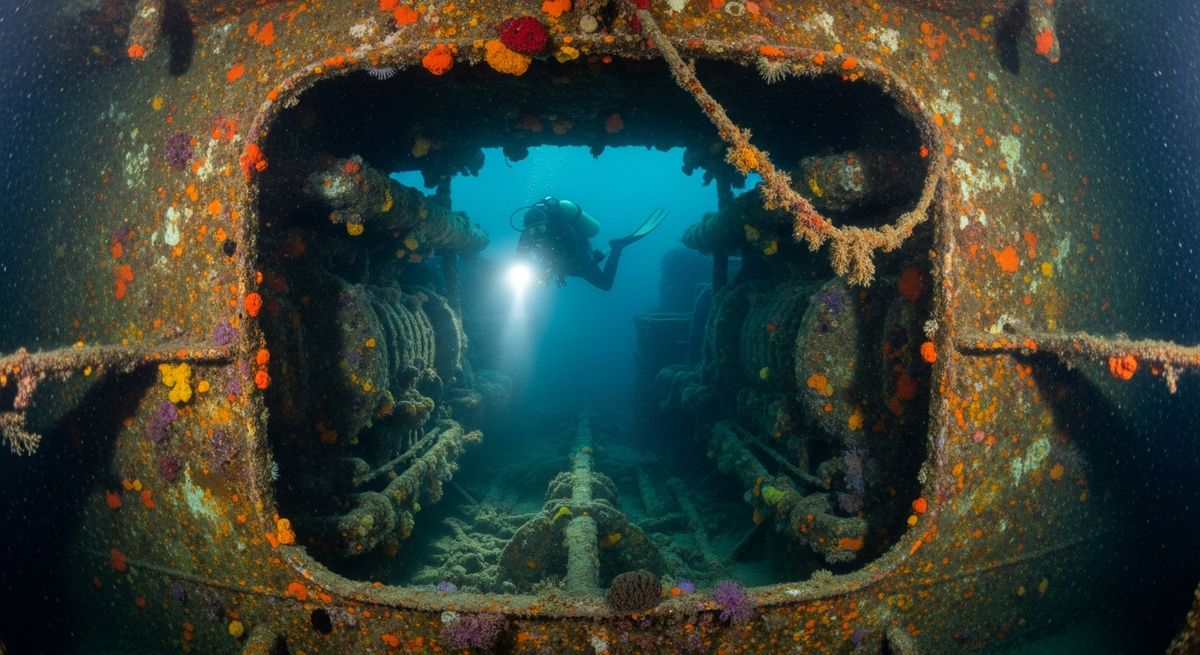
MILAS - Crete

The wreck of the *Milas* off Crete is a good, easy dive, particularly appealing if you’re into larger wrecks without the depth challenge. This 116-meter motor vessel ran aground back in 1985, and now sits in just ten meters of water. It means you get plenty of bottom time to explore the hull and superstructure, which are still quite intact. We’ve found barracuda often hang around the upper decks, and there are always plenty of smaller reef fish darting between the metalwork. It's a relaxed dive, suitable for almost any certification level, and offers a good sense of scale as you glide over such a large piece of history.

Location
Crete, Greece, Mediterranean & Europe
Coordinates
36.463833, 22.989610
Type
wreck
Maximum Depth
10m

Marine Protected Area: NISIDES KYTHIRON: PRASONISI, DRAGONERA, ANTIDRAGONERA

Best Time to Dive in Crete

The warmest water temperatures in Crete occur in August, averaging 25.1°C. The coolest conditions are in March at 16.4°C.

Monthly Water Temperatures

  • January: 17.3°C
  • February: 16.4°C
  • March: 16.4°C
  • April: 17.0°C
  • May: 19.2°C
  • June: 22.3°C
  • July: 24.1°C
  • August: 25.1°C
  • September: 24.6°C
  • October: 22.9°C
  • November: 20.9°C
  • December: 18.9°C

Nearby Dive Sites in Crete

Nearest Dive Centres to MILAS

Marine Life in Crete

Home to 11 recorded species including 5 reef fish, 1 other, 1 sea urchins, 1 worms, 1 seagrass & algae, 1 clams & mussels.

Notable Species

Recommended Packing List for MILAS

Based on average water temperature of 20.4°C, currents 5 cm/s.

  • Wetsuit (3-5mm) - comfortable for 20°C water
  • Mask - essential for every dive
  • Fins
  • BCD - buoyancy compensator
  • Regulator - your most safety-critical piece of gear
  • Dive Computer - tracks depth, time, and NDL
  • Surface Marker Buoy (SMB) - essential for boat pickups
  • Dive Torch - useful for crevices and colour at depth
  • Underwater Camera - capture your diving memories

Frequently Asked Questions

What are the typical depths for diving at MILAS (Punta Mila)?
The MILAS wreck, located off Crete, Greece, offers diving at a depth of 10 meters. This relatively shallow depth makes it accessible for many certified divers. It provides an excellent opportunity to explore a significant historical wreck.
What kind of marine life and underwater features can divers expect to encounter at MILAS (Punta Mila)?
The primary underwater feature at MILAS is the impressive wreck of a motor vessel, measuring 116.7m x 16.5m. Sunk in 1985, this substantial structure now serves as an artificial reef, attracting various marine species. While specific marine life details are not provided in the data, wrecks are generally vibrant ecosystems, offering fascinating exploration opportunities for divers interested in underwater wildlife.
What is the difficulty level for diving at MILAS (Punta Mila), especially considering its depth range and cave?
Diving at the MILAS wreck is classified as intermediate difficulty. With a depth of 10 meters, it presents a manageable challenge for divers with some experience. The provided data does not indicate the presence of a cave at this dive site, so no special certifications for cave diving are mentioned.
When is the best time of year to dive at MILAS (Punta Mila) for optimal conditions and marine life sightings?
The provided data for the MILAS wreck does not specify the best time of year for optimal diving conditions or marine life sightings. However, general information for diving in the Mediterranean often suggests warmer months for better visibility and calmer seas. We recommend consulting local dive operators in Crete for current conditions.
What scuba diving certifications are needed to dive at MILAS (Punta Mila), particularly for exploring the cave?
Given the MILAS wreck's intermediate difficulty and 10-meter depth, a standard Open Water Diver certification is generally sufficient for this site. It is always recommended to dive within your certification limits and comfort zone. The provided information does not indicate the presence of a cave at this dive site, so no specific cave diving certifications are required.
What are the typical current and visibility conditions at MILAS (Punta Mila)?
The provided data for the MILAS wreck does not include specific details on typical current or visibility conditions. Divers should always consult with local dive operators in Crete for the most up-to-date information regarding currents, visibility, and other environmental factors before planning their dive. This ensures a safe and enjoyable experience at this fascinating wreck site.