NAWARA
Protected Area
IMERI KAI AGRIA GRAMVOUSSA - TIGANI KAI FALASARNA - PONTIKONISI, ORMOS LIVADI - VIGLIA
Why dive here
NAWARA is a wreck dive where divers can encounter sea turtles. Water ranges 17-27°C, warmest July, August, September.
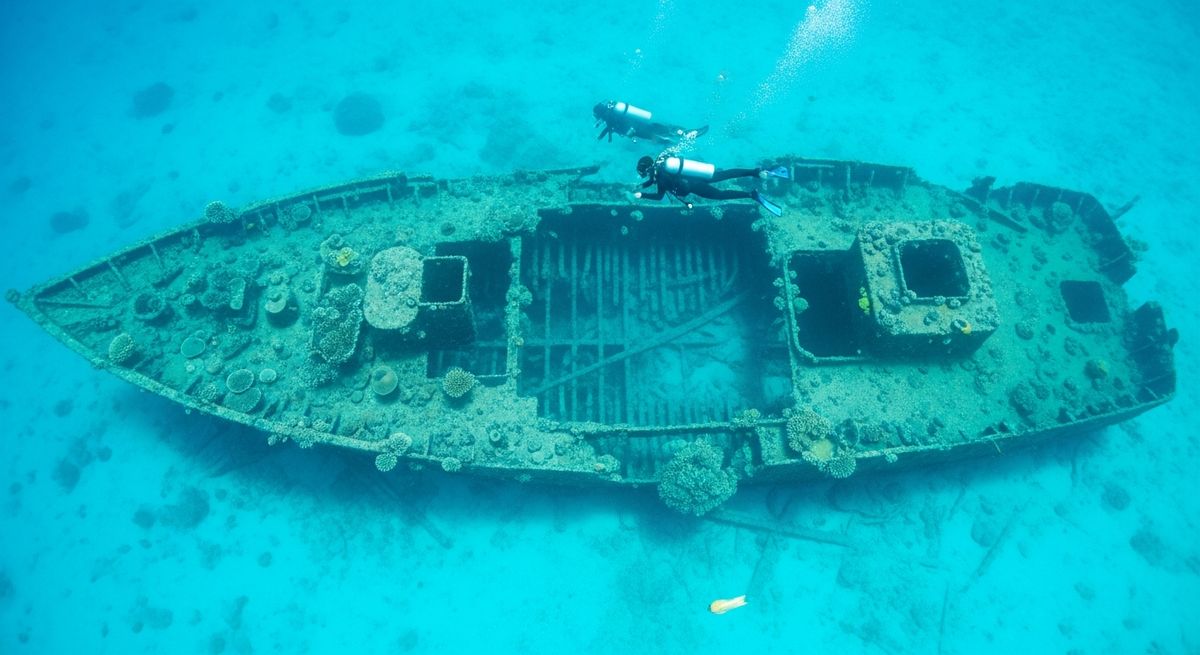
The Nawara, off Crete, isn't one of those ancient wrecks encrusted beyond recognition. She’s a relatively modern cargo ship, 70.5 meters long, that went aground in 1999. We love that she's still very much a ship, not just a pile of metal. You can see the cargo holds, the bridge area, even parts of the engine room if you’re careful and properly trained for wreck penetration. Our favorite part is the stern, where the prop is still visible, sitting on the sand at around 18 meters. Shoals of barracuda often hang motionless above the deck, and we've seen moray eels peeking from every nook. The light plays beautifully through the superstructure, creating these fantastic shafts of blue that just draw you deeper into the wreck's story. It's a proper adventure dive, especially if you like exploring rather than just admiring coral. We’d suggest going early in the morning for the best visibility and fewer other divers. Just be mindful of the currents; they can pick up, particularly around the bow.
Safety Notes
Wreck site - avoid penetration without wreck diving certification. Watch for sharp metal and entanglement hazards.
Nearest Dive Centres to NAWARA
Dive shops near NAWARA
Sapounakis Kissamos Diving Center
Fundive
FUN DIVE DIVING CENTER
Stalos Dive Center
NIREAS SCUBA DIVING
Chania Diving
Reviews for NAWARA
Conditions
Ocean conditions, forecast and tides for NAWARA
NAWARA Ocean Conditions
Monthly averages for NAWARA, sourced from Open-Meteo marine data + Copernicus Marine (EU) - nearest station: Open-Meteo marine grid (35.42, 24.79) (35km away)
October Averages
Sea Temperature
24°C
75°F · Range: 22.3–25.7°C
Current Speed
4 cm/s
Direction: S (180°)
Chlorophyll-a
0.086 mg/m³
Very clear (oligotrophic)
Salinity
39.3 PSU
Based on 4 years of monitoring data · Data sources: Open-Meteo marine data + Copernicus Marine (EU)
Plan & book
Ways to dive Crete, from day trips to liveaboards.
Day trips & courses
via GetYourGuideGuided dives, courses and snorkel trips with instant booking.
Find dive trips in CretePlaces to stay
via Booking.comHotels and dive resorts near Crete.
Search stays in CreteDive insurance
Most travel insurance excludes or limits scuba. Check what you need before you go.
Dive insurance explainedPartner links: we may earn a commission if you book, at no extra cost to you. How we make money
Where to Stay near NAWARA
Prices from Booking.com. We may earn a commission at no extra cost to you.