SYROS - Crete

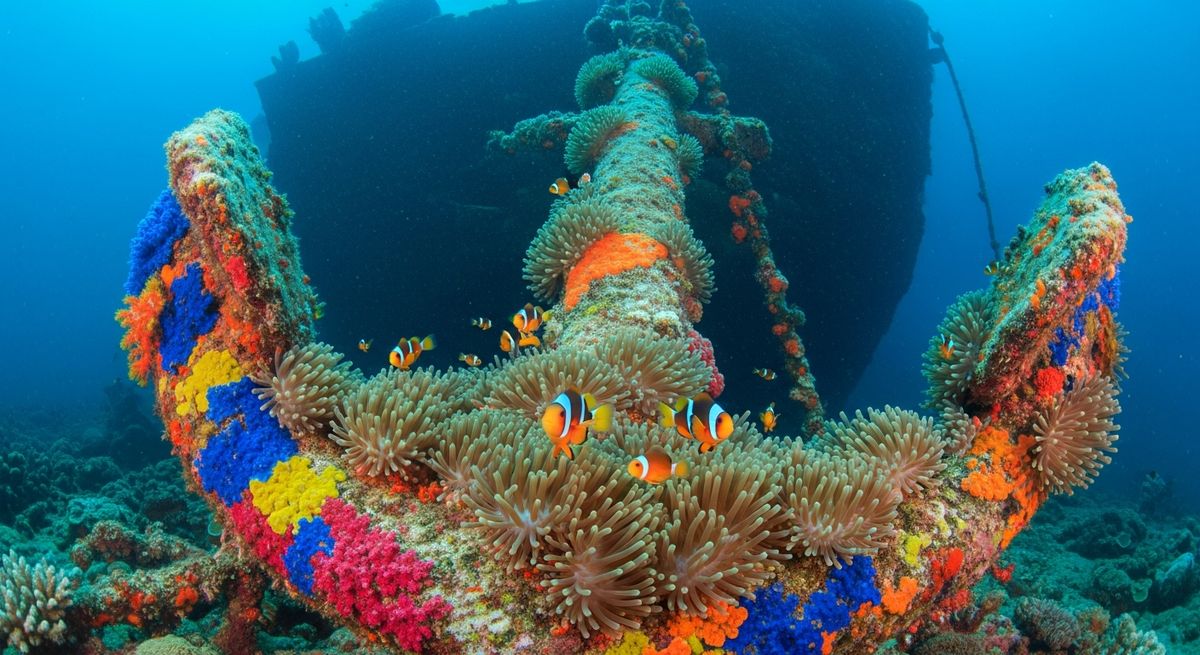
The Syros wreck, resting shallow off Crete, is a proper introduction to Mediterranean wreck diving, especially if you’re new to it. This 61-meter motor vessel went down in '83, driven onto the rocks by a gale, and now lies split in two. You'll find the bow section upright, still reasonably intact, with plenty of openings to peer inside at the cargo holds. Schools of small damselfish often hover over the decks, and we’ve spotted moray eels tucked into the shadowed recesses of the engine room. It’s a comfortable dive, maxing out at just 12 meters, making it good for those looking to hone their wreck skills without deep decompression worries.

Location
Crete, Greece, Mediterranean & Europe
Coordinates
36.465500, 22.974333
Type
wreck
Maximum Depth
1m

Marine Protected Area: NISIDES KYTHIRON: PRASONISI, DRAGONERA, ANTIDRAGONERA

Best Time to Dive in Crete

The warmest water temperatures in Crete occur in August, averaging 25.1°C. The coolest conditions are in March at 16.4°C.

Monthly Water Temperatures

  • January: 17.3°C
  • February: 16.4°C
  • March: 16.4°C
  • April: 17.0°C
  • May: 19.2°C
  • June: 22.3°C
  • July: 24.1°C
  • August: 25.1°C
  • September: 24.6°C
  • October: 22.9°C
  • November: 20.9°C
  • December: 18.9°C

Nearby Dive Sites in Crete

Nearest Dive Centres to SYROS

Marine Life in Crete

Home to 11 recorded species including 5 reef fish, 1 other, 1 sea urchins, 1 worms, 1 seagrass & algae, 1 clams & mussels.

Notable Species

Recommended Packing List for SYROS

Based on average water temperature of 20.4°C, currents 5 cm/s.

  • Wetsuit (3-5mm) - comfortable for 20°C water
  • Mask - essential for every dive
  • Fins
  • BCD - buoyancy compensator
  • Regulator - your most safety-critical piece of gear
  • Dive Computer - tracks depth, time, and NDL
  • Surface Marker Buoy (SMB) - essential for boat pickups
  • Dive Torch - useful for crevices and colour at depth
  • Underwater Camera - capture your diving memories

Frequently Asked Questions

What are the typical depths for scuba diving in Syros, and are there options for both shallow and deep dives?
The Syros dive site, a fascinating wreck, is found at a depth of 1m. This makes it an exceptionally shallow dive, ideal for those looking for an accessible underwater experience. Based on the provided data, options for deeper dives at this specific site are not indicated.
What kind of marine life, underwater topography, and historical artifacts can divers expect to see when diving in Syros?
Divers exploring the Syros dive site will encounter the impressive remains of a motor vessel, built in 1962 and sunk in 1983. This 61m x 10.1m wreck, classified as showing a portion of its hull or superstructure, offers a unique historical artifact to explore. The provided data does not specify details about marine life or other underwater topography beyond the wreck itself.
How challenging are the dive sites in Syros, and are there options suitable for beginner divers as well as experienced ones?
The Syros dive site is classified as having an intermediate difficulty level. While its shallow depth of 1m might appeal to many, the overall conditions or nature of the wreck dive contribute to this rating, making it more suitable for divers with some experience. Beginners might find it challenging, and experienced divers will appreciate the wreck exploration.
What is the best time of year to go scuba diving in Syros considering water temperature, visibility, and overall conditions?
Unfortunately, the provided data for the Syros dive site does not include specific information regarding the best time of year to dive, water temperature, typical visibility, or general seasonal conditions. For current conditions and optimal diving periods, we recommend checking local dive operators or our When to Dive section.
What scuba diving certifications are required to dive in Syros, and are there options for uncertified individuals?
The provided data for the Syros dive site does not specify particular scuba diving certifications required. However, given its intermediate difficulty rating, divers should possess appropriate certification and experience for wreck diving. Options for uncertified individuals are not indicated in the available information.
What are the typical underwater currents and visibility like at Syros dive sites, and how do surface conditions affect diving?
The provided data for the Syros dive site does not detail typical underwater currents or general visibility conditions. While the vessel ran aground during a gale with poor visibility, this describes the circumstances of its loss, not the usual diving environment. For current conditions, it's always best to consult local dive centers.