HMS BREDAH (POSSIBLY)
Protected Area
Cork Harbour SPA
Why dive here
With 185+ marine species recorded in the area - including blue sharks, dolphins, dwarf minke whales, humpback whales and ocean sunfish (mola mola) - HMS BREDAH (POSSIBLY) offers some of South Coast's richest wreck diving. Water ranges 9-15°C, warmest July, August, September.
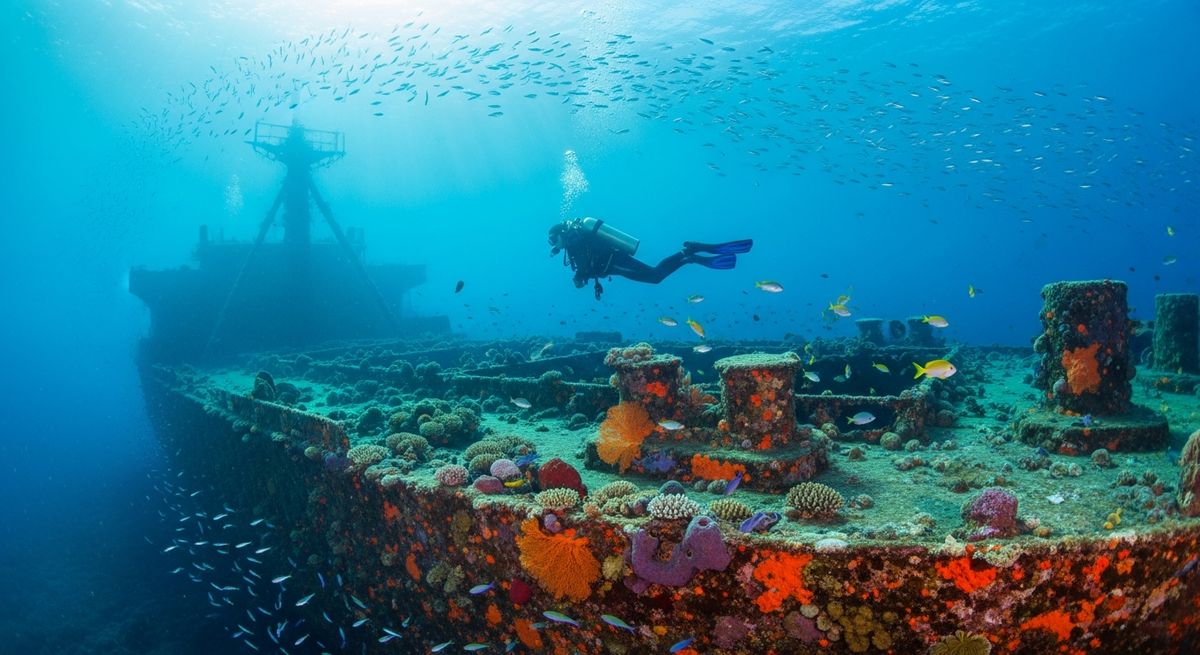
The HMS Bredah, or what we believe is the Bredah, is an interesting one. It’s shallow, only four metres, but that’s part of its charm. This isn't a dive for coral fanatics, obviously, but if you love history, this site hums with it. We’ve spent hours here, feeling the current tug, imagining the chaos back in 1690 when it blew up. It was a massive loss of life, a real tragedy. What's left is spread out, a scatter of timbers and cannons mostly, but there's a definite hull shape discernible. The wooden planks are dark, almost black, and completely encrusted with mussels and anenomes. Finding a cannon still bolted to the seabed, half-buried, is always a thrill. It's a dark dive, even in bright sunshine, the light struggling to penetrate the silty water, giving it a sombre, reflective mood. We’d suggest going on an incoming tide, as the visibility tends to be better before the current picks up too much. It’s a site that rewards patience, letting your eyes adjust, slowly picking out the details. We love finding the old pottery shards – a small, tangible link to the past.
Typical HMS BREDAH (POSSIBLY) Dive Profile
Illustrative profile based on site depth and type. Actual dive profiles vary - always follow your dive computer and training.
Safety Notes
Wreck site - avoid penetration without wreck diving certification. Watch for sharp metal and entanglement hazards.
Cold water this month (avg 14°C). Drysuit or thick wetsuit (7mm+) recommended.
Nearest Dive Centres to HMS BREDAH (POSSIBLY)
Dive shops near HMS BREDAH (POSSIBLY)
View all dive centres in South CoastReviews for HMS BREDAH (POSSIBLY)
Conditions
Ocean conditions, forecast and tides for HMS BREDAH (POSSIBLY)
HMS BREDAH (POSSIBLY) Ocean Conditions
Monthly averages for HMS BREDAH (POSSIBLY), sourced from Open-Meteo marine data - nearest station: Open-Meteo marine grid (51.71, -8.38) (9km away)
October Averages
Sea Temperature
14°C
57°F · Range: 12.3–14.8°C
Air Temperature
12°C
54°F
Wind Speed
7.84 m/s
15.2 knots
Atmospheric Pressure
1008.6 hPa
Based on 4 years of monitoring data · Data sources: Open-Meteo marine data
Plan & book
Ways to dive South Coast, from day trips to liveaboards.
Day trips & courses
via GetYourGuideGuided dives, courses and snorkel trips with instant booking.
Find dive trips in South CoastPlaces to stay
via Booking.comHotels and dive resorts near South Coast.
Search stays in South CoastDive insurance
Most travel insurance excludes or limits scuba. Check what you need before you go.
Dive insurance explainedPartner links: we may earn a commission if you book, at no extra cost to you. How we make money
Where to Stay near HMS BREDAH (POSSIBLY)
Prices from Booking.com. We may earn a commission at no extra cost to you.