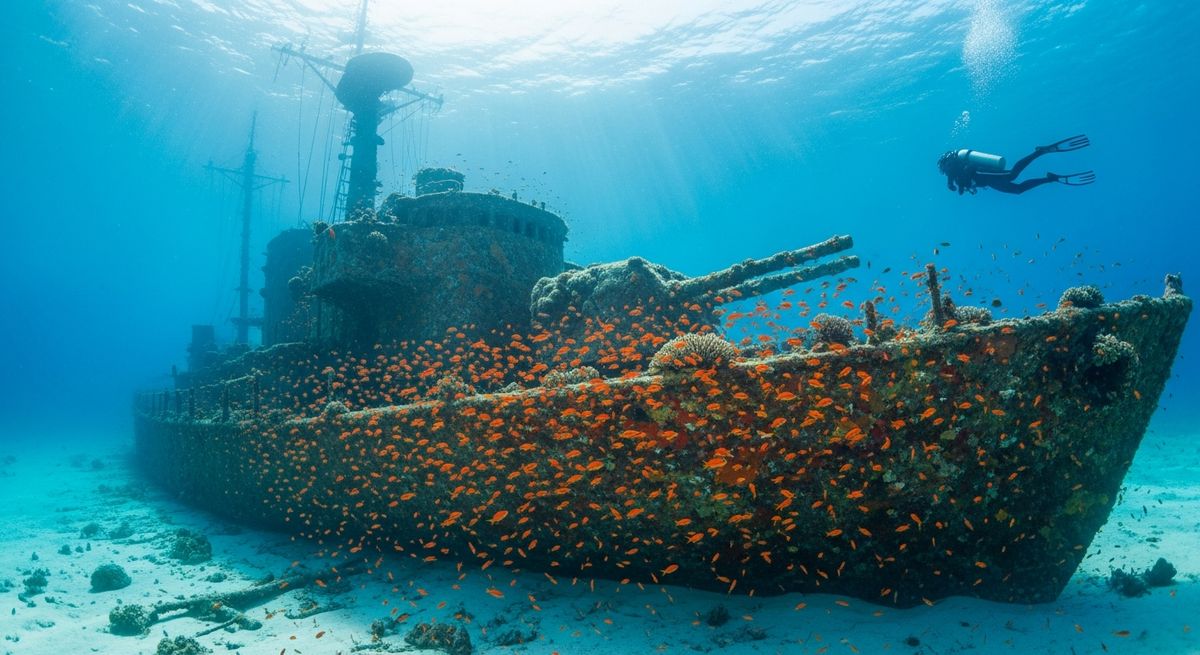
HMS SAFEGUARD
Protected Area
Puffin Island SPA
Why dive here
With 185+ marine species recorded in the area - including blue sharks, dolphins, dwarf minke whales, humpback whales and ocean sunfish (mola mola) - HMS SAFEGUARD offers some of South Coast's richest wreck diving. Water ranges 9-15°C, warmest July, August, September.
The HMS Safeguard is one of our favourite Irish wrecks to spend time with, though 'wreck' is almost a misnomer here. We’re talking about a salvage vessel that met its own end on the rocks at Portmagee in 1919. It was built in Southampton, a solid piece of kit at 48.8m long, and it's certainly had a life. What you get today isn't a pristine ship sitting upright, but a wonderfully broken-up collection of hull plates, ribs, and machinery parts scattered across the seafloor. It’s like a giant’s jigsaw puzzle, and the way the light filters through the gaps in the metal, catching the schooling pollack, is something we always appreciate. We love seeing how the kelp has started to take hold on the more exposed sections. Look for the nudibranchs clinging to the anenomes and the blennies darting into crevices. This site is less about penetration and more about exploring the nooks and crannies created by the collapse, making it a good choice for divers who like to take their time and observe the smaller details.
Safety Notes
Wreck site - avoid penetration without wreck diving certification. Watch for sharp metal and entanglement hazards.
Cold water this month (avg 14°C). Drysuit or thick wetsuit (7mm+) recommended.
Reviews for HMS SAFEGUARD
Conditions
Ocean conditions, forecast and tides for HMS SAFEGUARD
HMS SAFEGUARD Ocean Conditions
Monthly averages for HMS SAFEGUARD, sourced from Open-Meteo marine data - nearest station: Open-Meteo marine grid (51.71, -8.38) (9km away)
October Averages
Sea Temperature
14°C
57°F · Range: 12.3–14.8°C
Air Temperature
12°C
54°F
Wind Speed
7.84 m/s
15.2 knots
Atmospheric Pressure
1008.6 hPa
Based on 4 years of monitoring data · Data sources: Open-Meteo marine data
Plan & book
Ways to dive South Coast, from day trips to liveaboards.
Day trips & courses
via GetYourGuideGuided dives, courses and snorkel trips with instant booking.
Find dive trips in South CoastPlaces to stay
via Booking.comHotels and dive resorts near South Coast.
Search stays in South CoastDive insurance
Most travel insurance excludes or limits scuba. Check what you need before you go.
Dive insurance explainedPartner links: we may earn a commission if you book, at no extra cost to you. How we make money
Where to Stay near HMS SAFEGUARD
Prices from Booking.com. We may earn a commission at no extra cost to you.