HMS MARTIN (PROBABLY)
Protected Area
Carrowmore Dunes SAC
Why dive here
With 169+ marine species recorded in the area - including dolphins, dwarf minke whales, humpback whales, ocean sunfish (mola mola) and octopuses - HMS MARTIN (PROBABLY) offers some of West Coast's richest wreck diving. Water ranges 8-17°C, warmest July, August, September.
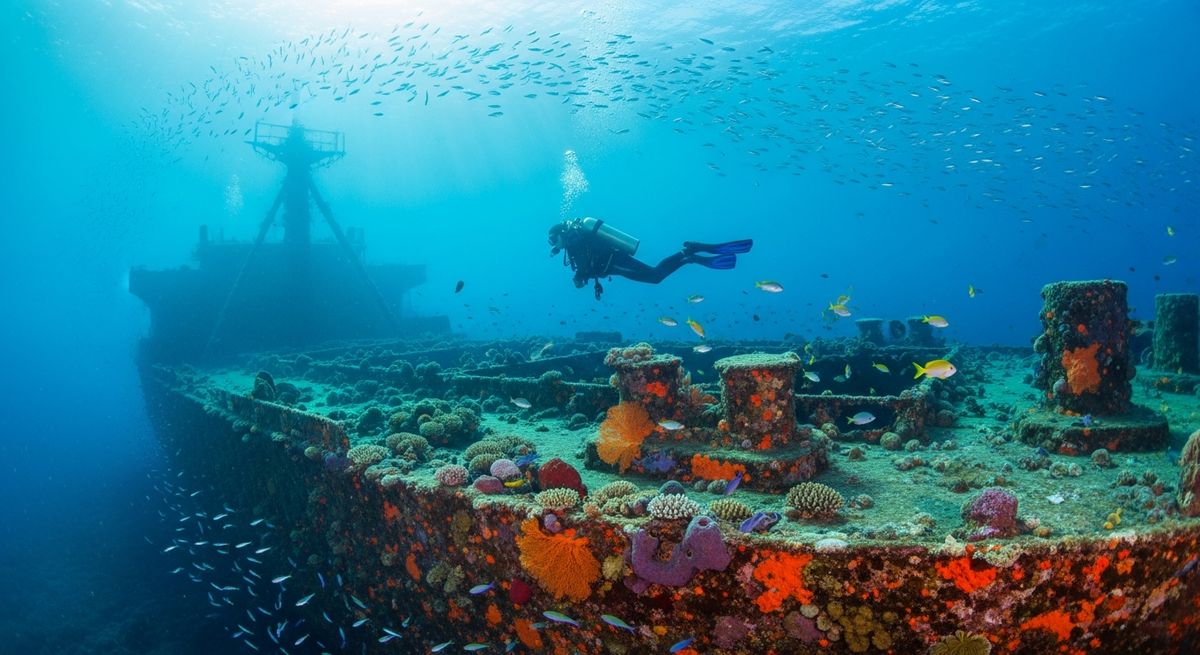
The HMS Martin (Probably) site, despite the hesitant name, is a real favourite of ours on Ireland's wild west coast. We love the backstory: an 1809 Bermudan-built brig-sloop, cruising for smugglers, then smashed ashore in a Force 12 gale in 1817. You’re diving history, raw and exposed. At a mere 5m, it’s a perfect shallow exploration. What you’ll find isn’t a pristine intact ship, but rather scattered timbers, heavy iron carronades, and the ghost of a hull outline, all wonderfully colonised by kelp and anenomes. You’ll weave through the skeletal remains of a wooden warship. Look closely and you might spot a shy crab tucked into a cannon barrel or the darting shadow of a pollock. We’d suggest going at high slack water for the best visibility, otherwise, the surge can really kick up the sand. It’s a site for those who appreciate the narrative behind the dive, rather than just marine abundance, though the resident critters add plenty of charm. It’s a tangible link to a rougher, older Ireland.
Typical HMS MARTIN (PROBABLY) Dive Profile
Illustrative profile based on site depth and type. Actual dive profiles vary - always follow your dive computer and training.
Safety Notes
Wreck site - avoid penetration without wreck diving certification. Watch for sharp metal and entanglement hazards.
Cold water this month (avg 14°C). Drysuit or thick wetsuit (7mm+) recommended.
Nearest Dive Centres to HMS MARTIN (PROBABLY)
Dive shops near HMS MARTIN (PROBABLY)
View all dive centres in West CoastReviews for HMS MARTIN (PROBABLY)
Conditions
Ocean conditions, forecast and tides for HMS MARTIN (PROBABLY)
HMS MARTIN (PROBABLY) Ocean Conditions
Monthly averages for HMS MARTIN (PROBABLY), sourced from Open-Meteo marine data - nearest station: Open-Meteo marine grid (53.32, -9.66) (22km away)
October Averages
Sea Temperature
14°C
56°F · Range: 11.7–15.4°C
Air Temperature
12°C
54°F
Wind Speed
8.2 m/s
15.9 knots
Atmospheric Pressure
1007.4 hPa
Based on 4 years of monitoring data · Data sources: Open-Meteo marine data
Plan & book
Ways to dive West Coast, from day trips to liveaboards.
Day trips & courses
via GetYourGuideGuided dives, courses and snorkel trips with instant booking.
Find dive trips in West CoastPlaces to stay
via Booking.comHotels and dive resorts near West Coast.
Search stays in West CoastDive insurance
Most travel insurance excludes or limits scuba. Check what you need before you go.
Dive insurance explainedPartner links: we may earn a commission if you book, at no extra cost to you. How we make money
Where to Stay near HMS MARTIN (PROBABLY)
Prices from Booking.com. We may earn a commission at no extra cost to you.