Alfred von Tirpitz
Protected Area
Håkøybotn
Why dive here
Alfred von Tirpitz is a wreck dive in Lofoten Islands, Norway. Water ranges 3-15°C, warmest July, August, September.
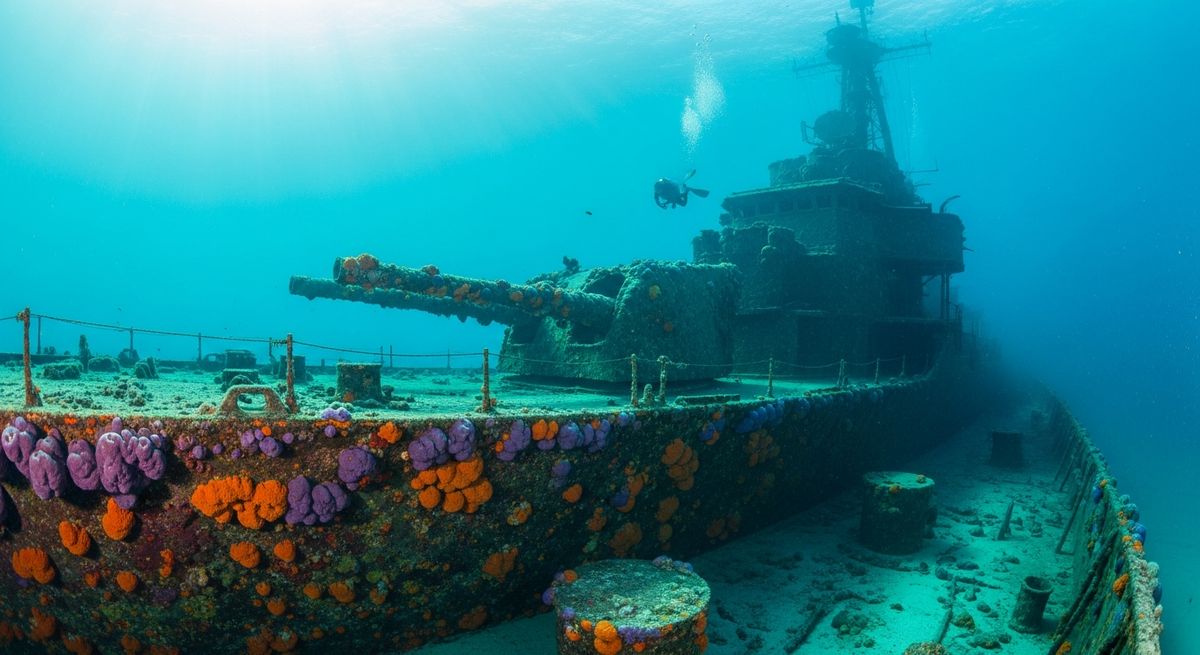
Diving the Tirpitz wreck in Lofoten isn't your typical colourful reef dive, but it’s an absolute standout for those who love history and a bit of a challenge. We've always been drawn to the stories these wrecks tell, and this one, a German battleship scuttled during WWII, has some tales to spin. The cold, clear Norwegian water often preserves these giants remarkably well. When you drop down, the sheer scale of it hits you. It’s huge, even though much of it was salvaged post-war. What's left, though, is dramatic. We love finning along the crumpled plating, seeing the massive rivets and thick steel that once formed a formidable warship. Visibility here can be surprisingly good, letting you appreciate the dark, imposing structure against the pale light filtering down. Our favourite part is exploring the twisted metal sections, imagining the chaos of its final moments. Anemones, often in bright oranges and purples, cling to the metal, and we’ve seen some decent-sized cod and pollock patrolling the deeper sections. This dive really suits those with some cold-water experience who appreciate historical wrecks over tropical fish.
Typical Alfred von Tirpitz Dive Profile
Illustrative profile based on site depth and type. Actual dive profiles vary - always follow your dive computer and training.
Safety Notes
Depth of 25m - Advanced Open Water certification recommended.
Wreck site - avoid penetration without wreck diving certification. Watch for sharp metal and entanglement hazards.
Cold water this month (avg 9°C). Drysuit or thick wetsuit (7mm+) recommended.
Always perform a 3-minute safety stop at 5m before surfacing.
Alfred von Tirpitz Wreck History
Year Sunk
1944
Vessel Type
warship
Cause
bombing
Tonnage
52,600 tonnes
The Tirpitz, sister ship to the infamous Bismarck, was the largest battleship ever built by a European navy. Named after Grand Admiral Alfred von Tirpitz, she spent most of her career in Norwegian fjords, acting as a 'fleet in being' - a constant, powerful threat that tied up significant Allied naval and air resources. The British launched numerous daring operations to neutralize her, including attacks by midget submarines and carrier-based aircraft, but the heavily defended behemoth survived them all.
The 'Lonely Queen of the North' finally met her end on 12 November 1944. In Operation Catechism, RAF Lancaster bombers, armed with massive 12,000-pound 'Tallboy' bombs, scored several direct hits. The mighty warship capsized and sank in the shallow waters of Håkøya, near Tromsø. After the war, the wreck was extensively salvaged, but what remains today is a unique dive site. Divers can explore a massive crater and the scattered, twisted metal of the once-mighty battleship, a powerful and historic underwater landscape testifying to the violence of her final moments.
Nearest Dive Centres to Alfred von Tirpitz
Dive shops near Alfred von Tirpitz
View all dive centres in Lofoten IslandsReviews for Alfred von Tirpitz
Conditions
Ocean conditions, forecast and tides for Alfred von Tirpitz
Alfred von Tirpitz Ocean Conditions
Monthly averages for Alfred von Tirpitz, sourced from Open-Meteo marine data - nearest station: Open-Meteo marine grid (68.33, 16.05) (9km away)
October Averages
Sea Temperature
9°C
49°F · Range: 5–12.3°C
Air Temperature
1°C
34°F
Wind Speed
4.09 m/s
8.0 knots
Atmospheric Pressure
1009.3 hPa
Based on 4 years of monitoring data · Data sources: Open-Meteo marine data
Plan & book
Ways to dive Lofoten Islands, from day trips to liveaboards.
Day trips & courses
via GetYourGuideGuided dives, courses and snorkel trips with instant booking.
Find dive trips in Lofoten IslandsPlaces to stay
via Booking.comHotels and dive resorts near Lofoten Islands.
Search stays in Lofoten IslandsDive insurance
Most travel insurance excludes or limits scuba. Check what you need before you go.
Dive insurance explainedPartner links: we may earn a commission if you book, at no extra cost to you. How we make money
Where to Stay near Alfred von Tirpitz
Prices from Booking.com. We may earn a commission at no extra cost to you.