ALICE ROBERT
Protected Area
Sistema de cañones submarinos occidentales del Golfo de León
Why dive here
With 44+ marine species recorded in the area - including dolphins, ocean sunfish (mola mola) and sea turtles - ALICE ROBERT offers some of Costa Brava's richest wreck diving. Water ranges 13-25°C, warmest July, August, September.
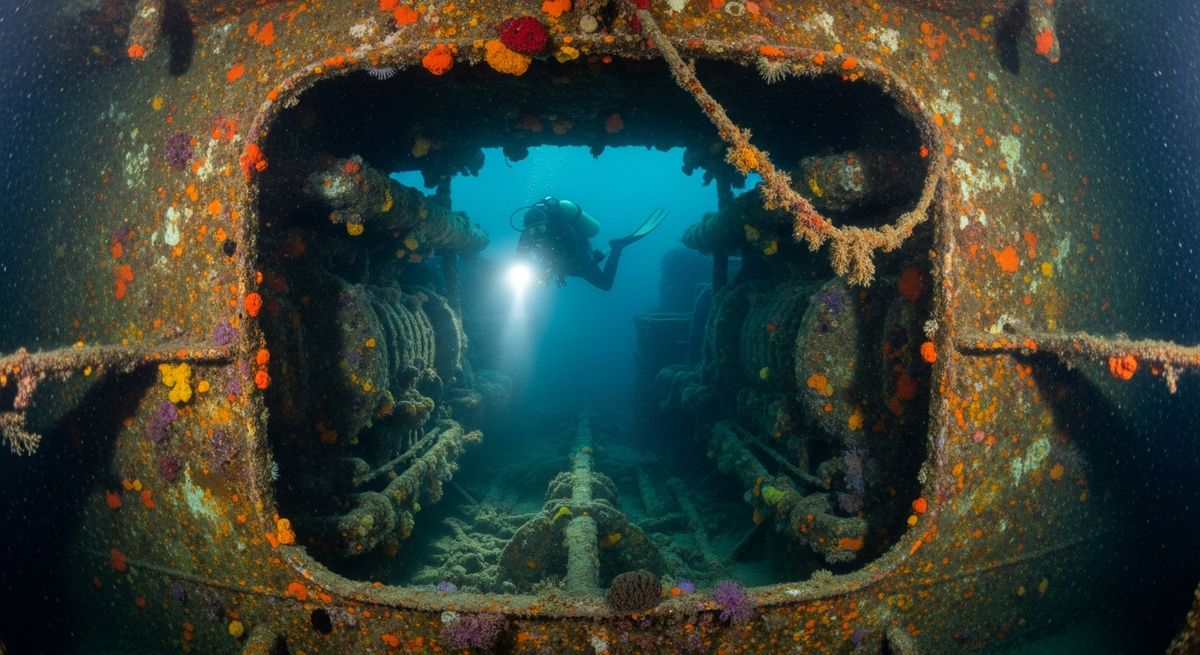
The Alice Robert, for us, is one of those wrecks that just hits right. Not too deep that it’s purely technical, but deep enough to feel like a real dive, sitting at 46 meters. She’s a motor vessel, split into two main sections, and that’s where the fun really begins. Descending, you first hit the stern section, often bathed in a slightly eerie, diffused light thanks to the depth. We love swimming along her deck, spotting the resident conger eels peeking out from every nook and cranny. Keep an eye out for lobsters too; they’re pretty bold here. The bow section, a short swim away, feels like a completely different wreck. It’s more broken up, more open, and feels a bit more dramatic. Shoals of barracuda often circle above the wreck, their silver scales flashing as they catch the light from above. We’d suggest saving your bottom time for really exploring the nooks here, checking for nudibranchs on the encrusted metal. It’s a dive for those who appreciate history and the slow creep of nature reclaiming something man-made. The visibility in summer can be really special, making the wreck appear almost suspended in the blue.
Typical ALICE ROBERT Dive Profile
Illustrative profile based on site depth and type. Actual dive profiles vary - always follow your dive computer and training.
Safety Notes
Maximum depth 46m exceeds recreational limits (40m). Technical diving certification and equipment required.
Wreck site - avoid penetration without wreck diving certification. Watch for sharp metal and entanglement hazards.
Always perform a 3-minute safety stop at 5m before surfacing.
ALICE ROBERT Wreck History
Year Sunk
1944
Vessel Type
cargo ship
Cause
scuttled
Tonnage
1,720 GRT
The Alice Robert was a French cargo ship with a dramatic end during the Second World War. In June 1944, fearing his vessel would be seized by German forces, the captain made the difficult decision to scuttle the ship. It was intentionally sunk and now rests perfectly upright on a sandy seabed off the coast of L'Estartit, making it one of the most iconic deep wrecks in the Costa Brava.
Sitting at a depth of 46 meters, the Alice Robert is a dive reserved for experienced and technical divers. The descent through the blue reveals the ship's impressive form, almost fully intact. Divers can explore the main deck, peer into the cargo holds which once carried cement, and admire the superstructure, now draped in colorful gorgonians. The wreck is a thriving artificial reef, attracting schools of fish, conger eels, and lobsters, offering a breathtaking glimpse into a moment frozen in wartime history.
Nearest Dive Centres to ALICE ROBERT
Dive shops near ALICE ROBERT
C.A.P. Port-Vendres
CIP Collioure
AIRHP24
LAGUNE PLONGEE
Archipel Plongée
ALOES PLONGEE
Reviews for ALICE ROBERT
Conditions
Ocean conditions, forecast and tides for ALICE ROBERT
ALICE ROBERT Ocean Conditions
Monthly averages for ALICE ROBERT, sourced from Open-Meteo marine data + Copernicus Marine (EU) - nearest station: Open-Meteo marine grid (42.12, 3.15) (24km away)
October Averages
Sea Temperature
20°C
68°F · Range: 18.2–22.8°C
Current Speed
1 cm/s
Direction: E (90°)
Salinity
37.91 PSU
Based on 4 years of monitoring data · Data sources: Open-Meteo marine data + Copernicus Marine (EU)
Plan & book
Ways to dive Costa Brava, from day trips to liveaboards.
Day trips & courses
via GetYourGuideGuided dives, courses and snorkel trips with instant booking.
Find dive trips in Costa BravaPlaces to stay
via Booking.comHotels and dive resorts near Costa Brava.
Search stays in Costa BravaDive insurance
Most travel insurance excludes or limits scuba. Check what you need before you go.
Dive insurance explainedPartner links: we may earn a commission if you book, at no extra cost to you. How we make money
Where to Stay near ALICE ROBERT
Prices from Booking.com. We may earn a commission at no extra cost to you.