BOREAS
Protected Area
Castell-Cap Roig
Why dive here
With 44+ marine species recorded in the area - including dolphins, ocean sunfish (mola mola) and sea turtles - BOREAS offers some of Costa Brava's richest wreck diving. Water ranges 13-25°C, warmest July, August, September.
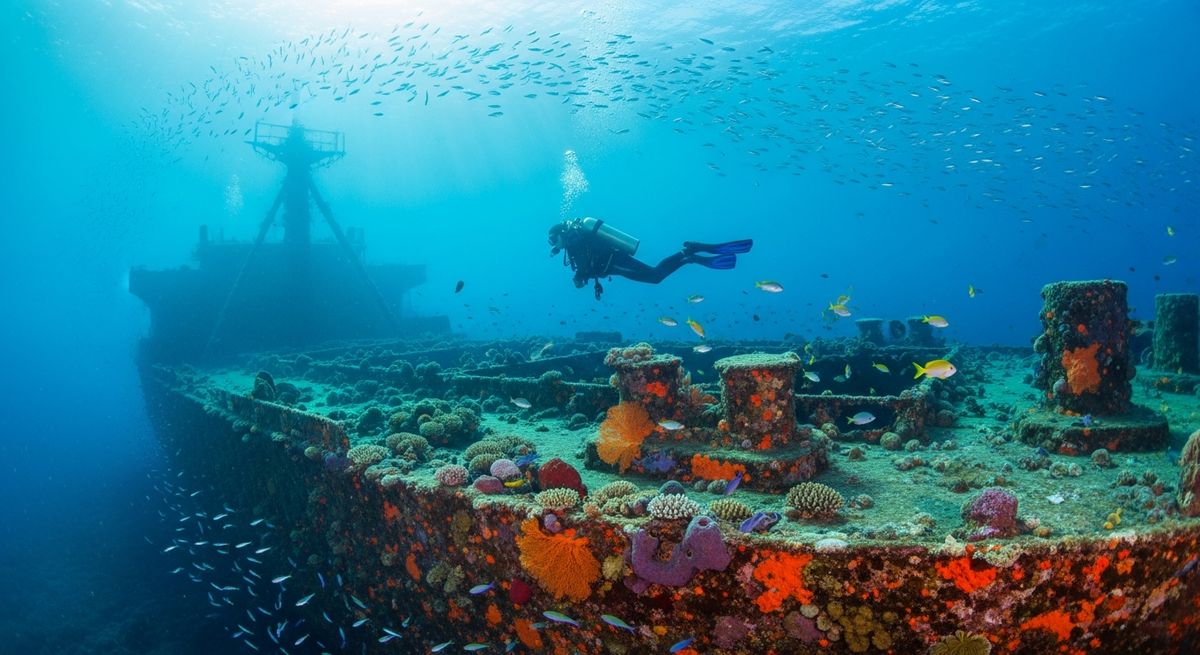
The Boreas is a real standout for us here in Costa Brava. She’s a trawler, sunk deliberately back in 1999 to become an artificial reef, and what a job she’s done. Sitting perfectly upright at 26 metres, her wheelhouse is the shallowest point, and you can still see the mast structure. What we really love is how light floods the interior sections, making for some fantastic swim-throughs without ever feeling claustrophobic. We’re talking schools of barracuda circling the bow and serious congregations of conger eels making the engine room their home. Her story is a bit dramatic, too; she was confiscated after a drug bust, which just adds to the mystique when you’re poking around her decks. The visibility here is usually great, often 20 metres plus, especially if you hit it on a calm morning before the winds pick up. For photographers, the way the light catches the encrusting corals and hydroids is just magic. We’d suggest anyone with a bit of wreck diving experience would absolutely love exploring her nooks and crannies. Just keep an eye on your bottom time; 26 metres can sneak up on you quicker than you think.
Typical BOREAS Dive Profile
Illustrative profile based on site depth and type. Actual dive profiles vary - always follow your dive computer and training.
Safety Notes
Depth of 26m - Advanced Open Water certification recommended.
Wreck site - avoid penetration without wreck diving certification. Watch for sharp metal and entanglement hazards.
Always perform a 3-minute safety stop at 5m before surfacing.
BOREAS Wreck History
Year Sunk
1986
Vessel Type
tugboat
Cause
scuttled
The vessel known to divers as the Boreas began its long life as the 'Pellworn,' an ocean-going tugboat built in Hamburg for the German Navy (Kriegsmarine) in 1938. It served throughout World War II and was later handed over to the United States as part of war reparations. After changing hands, it ended up with a Spanish shipping company, but its final years were shrouded in mystery and illicit activities, with persistent rumors of its use in smuggling operations.
After being seized by Spanish authorities, the ship was stripped of its engines and prepared for a new mission. In 1986, a consortium of local dive centers in Palamós purchased the vessel and, with official permission, scuttled it a mile off the coast. The goal was to create a new artificial reef, providing a fascinating destination for the growing diving community along Spain's Costa Brava.
Today, the Boreas rests upright on a sandy bottom at a maximum depth of around 30 meters. It has become one of the most popular wreck dives in the region, teeming with marine life. Divers can explore the bridge, the holds, and the various decks that are now home to conger eels, moray eels, scorpionfish, and large schools of damselfish. The wreck's clear naval profile and rich history make it a vibrant and compelling underwater adventure.
Nearest Dive Centres to BOREAS
Dive shops near BOREAS
Gi Dive Store
H2O DIVING CENTER
DIVERSUB
DOSSOTAIGUA DIVE CENTER
TRITON DIVING S.L
SubLimits
Reviews for BOREAS
Conditions
Ocean conditions, forecast and tides for BOREAS
BOREAS Ocean Conditions
Monthly averages for BOREAS, sourced from Open-Meteo marine data + Copernicus Marine (EU) - nearest station: Open-Meteo marine grid (42.12, 3.15) (24km away)
October Averages
Sea Temperature
20°C
68°F · Range: 18.2–22.8°C
Current Speed
1 cm/s
Direction: E (90°)
Salinity
37.91 PSU
Based on 4 years of monitoring data · Data sources: Open-Meteo marine data + Copernicus Marine (EU)
Plan & book
Ways to dive Costa Brava, from day trips to liveaboards.
Day trips & courses
via GetYourGuideGuided dives, courses and snorkel trips with instant booking.
Find dive trips in Costa BravaPlaces to stay
via Booking.comHotels and dive resorts near Costa Brava.
Search stays in Costa BravaDive insurance
Most travel insurance excludes or limits scuba. Check what you need before you go.
Dive insurance explainedPartner links: we may earn a commission if you book, at no extra cost to you. How we make money
Where to Stay near BOREAS
Prices from Booking.com. We may earn a commission at no extra cost to you.