BENSU
Protected Area
Castell-Cap Roig
Why dive here
With 44+ marine species recorded in the area - including dolphins, ocean sunfish (mola mola) and sea turtles - BENSU offers some of Costa Brava's richest wreck diving. Water ranges 13-25°C, warmest July, August, September.
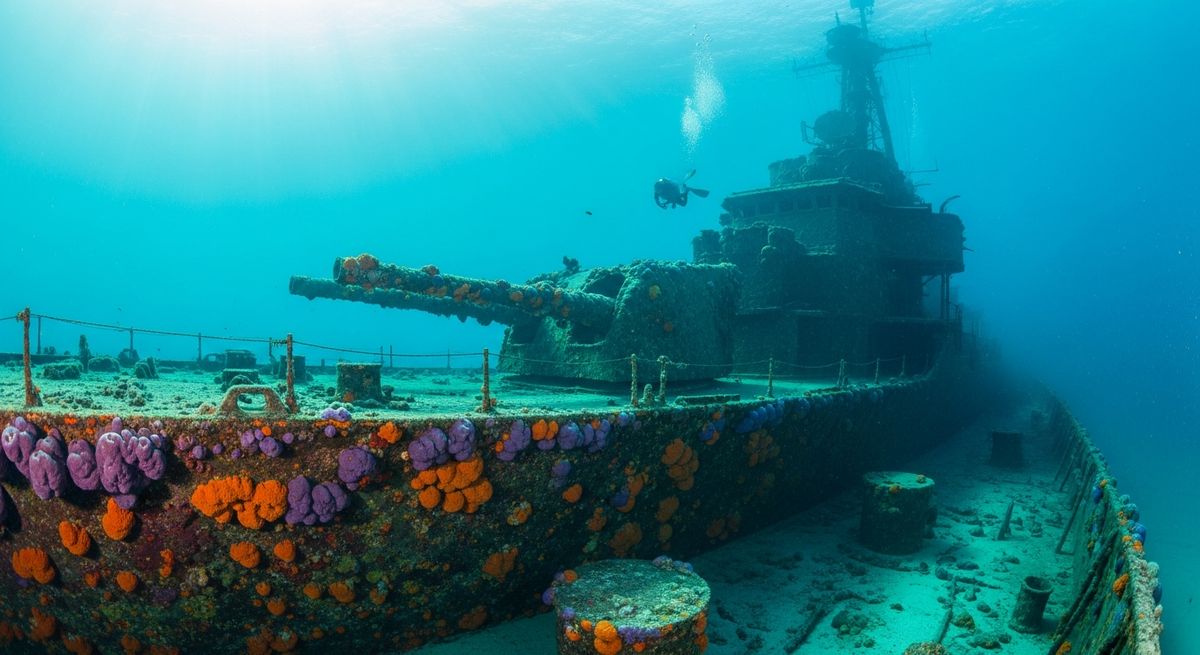
The Bensu, a sizeable steamship, ran aground in 1979 and now lies broken on a rocky slope in just 10 metres of water. We found it a fascinating site for its sheer accessibility; you can explore quite a bit of the wreckage, with sections of hull plates and machinery scattered across the seabed. It’s a great spot for newer divers, or anyone looking for a relaxed, longer dive, as the depth allows for extended bottom time. While it’s certainly not a coral reef, the wreck itself has become a home for various Mediterranean fish and invertebrates, giving it a lively feel amongst the metal.
Typical BENSU Dive Profile
Illustrative profile based on site depth and type. Actual dive profiles vary - always follow your dive computer and training.
Safety Notes
Wreck site - avoid penetration without wreck diving certification. Watch for sharp metal and entanglement hazards.
Nearest Dive Centres to BENSU
Dive shops near BENSU
Gi Dive Store
H2O DIVING CENTER
DIVERSUB
DOSSOTAIGUA DIVE CENTER
TRITON DIVING S.L
SubLimits
Reviews for BENSU
Conditions
Ocean conditions, forecast and tides for BENSU
BENSU Ocean Conditions
Monthly averages for BENSU, sourced from Open-Meteo marine data + Copernicus Marine (EU) - nearest station: Open-Meteo marine grid (42.12, 3.15) (24km away)
October Averages
Sea Temperature
20°C
68°F · Range: 18.2–22.8°C
Current Speed
1 cm/s
Direction: E (90°)
Salinity
37.91 PSU
Based on 4 years of monitoring data · Data sources: Open-Meteo marine data + Copernicus Marine (EU)
Plan & book
Ways to dive Costa Brava, from day trips to liveaboards.
Day trips & courses
via GetYourGuideGuided dives, courses and snorkel trips with instant booking.
Find dive trips in Costa BravaPlaces to stay
via Booking.comHotels and dive resorts near Costa Brava.
Search stays in Costa BravaDive insurance
Most travel insurance excludes or limits scuba. Check what you need before you go.
Dive insurance explainedPartner links: we may earn a commission if you book, at no extra cost to you. How we make money
Where to Stay near BENSU
Prices from Booking.com. We may earn a commission at no extra cost to you.