Altair
Why dive here
With 50+ marine species recorded in the area - including dwarf minke whales and jellyfish lake - Altair offers some of Baltic Coast's richest wreck diving. Water ranges 1-17°C, warmest July, August, September.
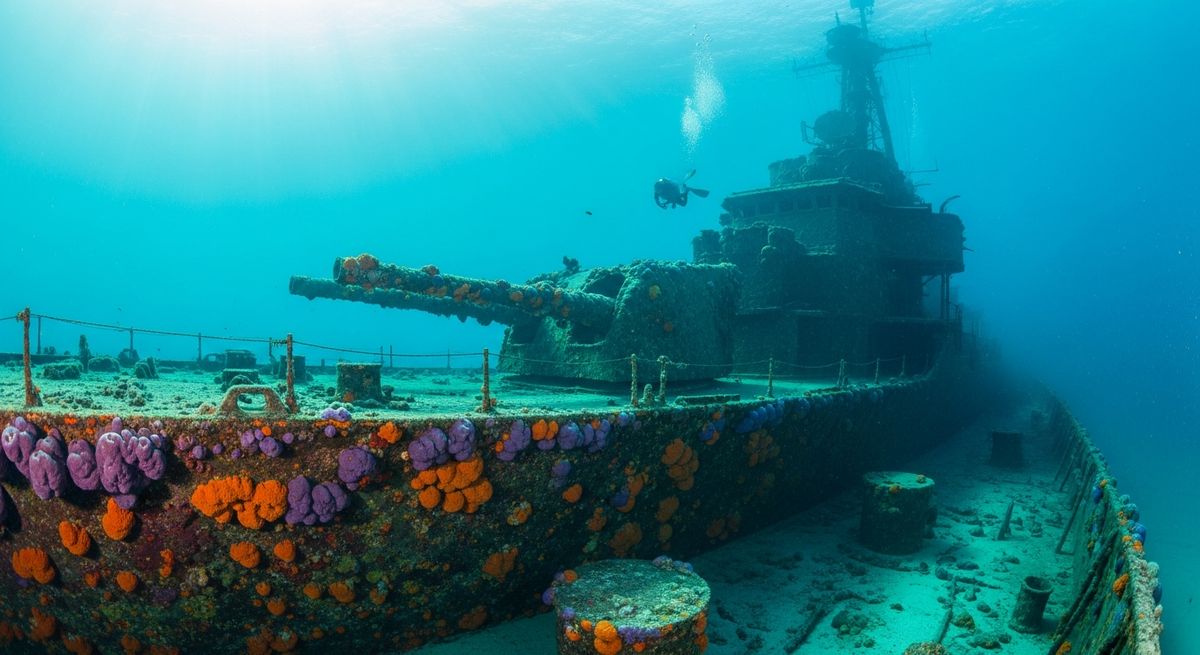
The Altair is one of our favourite wreck dives along the Baltic Coast, a non-dangerous site that really lets you settle in and explore. It sits upright at 25 metres, giving it a commanding presence on the seabed. We love the way the light filters down through the green water, illuminating the deck in ghostly shafts. You'll find schools of small fish, often cod and blennies, darting in and out of the superstructure, completely at home amongst the rusted steel. What makes Altair special is its accessibility and how intact it still feels. We'd suggest taking your time to penetrate the holds if you're comfortable with wreck diving; the antechambers are dark, but torches cut through the gloom to reveal the ship’s internal workings. The wreck’s historical context adds another layer, making you wonder about its journey and its final resting place. This is a dive for those who appreciate history and the slow reclamation of man-made objects by the ocean. It’s also a good spot for photographers looking for dramatic, moody shots. Visibility can vary, so check local reports, but even in moderate visibility, the Altair delivers.
Typical Altair Dive Profile
Illustrative profile based on site depth and type. Actual dive profiles vary - always follow your dive computer and training.
Safety Notes
Depth of 25m - Advanced Open Water certification recommended.
Wreck site - avoid penetration without wreck diving certification. Watch for sharp metal and entanglement hazards.
Cold water this month (avg 11°C). Drysuit or thick wetsuit (7mm+) recommended.
Always perform a 3-minute safety stop at 5m before surfacing.
Altair Wreck History
Year Sunk
1928
Vessel Type
cargo ship
Cause
collision
Tonnage
1,274 GRT
The cold, clear waters of the Baltic Sea hold the story of the Swedish steamship 'Altair', which met its end on a foggy day in 1928. While on a voyage from Luleå to Oxelösund laden with iron ore, the 'Altair' collided with the German steamer 'Arcturus'. The impact was severe, and despite efforts to save her, the 'Altair' succumbed to the sea, sinking to the seabed where she now rests.
Lying at a depth of 25 meters, the 'Altair' is an excellent dive for those with advanced training. The visibility in the Baltic can be superb, offering breathtaking views of the largely intact vessel. As a 'non-dangerous' wreck, it provides a relatively safe framework for exploration. Divers can glide along its decks, peer into cargo holds that once brimmed with ore, and admire the ship's classic early 20th-century lines. The wreck is a solemn memorial, preserved by the low salinity and cold temperatures of the Baltic, offering a silent testament to a maritime tragedy from nearly a century ago.
Reviews for Altair
Conditions
Ocean conditions, forecast and tides for Altair
Altair Ocean Conditions
Monthly averages for Altair, sourced from Open-Meteo marine data - nearest station: Open-Meteo marine grid (59.85, 20.79) (4km away)
October Averages
Sea Temperature
11°C
53°F · Range: 7.3–14.8°C
Air Temperature
8°C
47°F
Wind Speed
5.57 m/s
10.8 knots
Atmospheric Pressure
1010.6 hPa
Based on 4 years of monitoring data · Data sources: Open-Meteo marine data
Plan & book
Ways to dive Baltic Coast, from day trips to liveaboards.
Day trips & courses
via GetYourGuideGuided dives, courses and snorkel trips with instant booking.
Find dive trips in Baltic CoastPlaces to stay
via Booking.comHotels and dive resorts near Baltic Coast.
Search stays in Baltic CoastDive insurance
Most travel insurance excludes or limits scuba. Check what you need before you go.
Dive insurance explainedPartner links: we may earn a commission if you book, at no extra cost to you. How we make money
Where to Stay near Altair
Prices from Booking.com. We may earn a commission at no extra cost to you.