AFFLECK
Protected Area
The Manacles
Why dive here
With 176+ marine species recorded in the area - including blue sharks, dolphins, dwarf minke whales, humpback whales and ocean sunfish (mola mola) - AFFLECK offers some of Cornwall & Devon's richest wreck diving. Water ranges 10-18°C, warmest July, August, September.
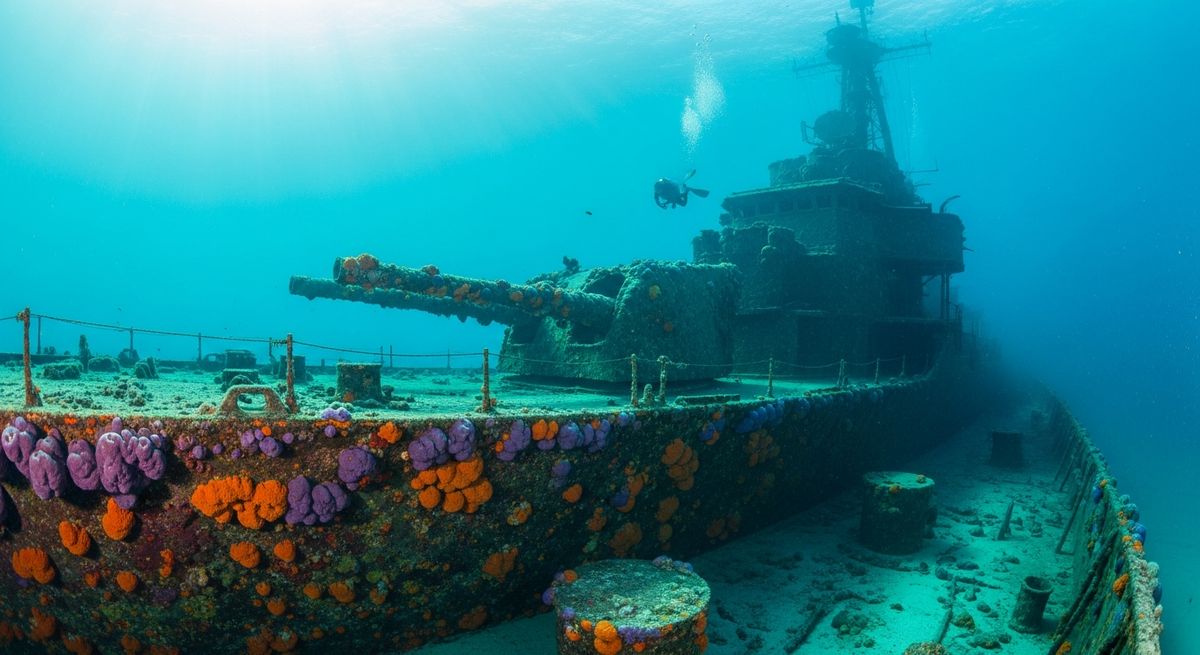
The *Affleck* isn’t about depth, it’s about history you can touch, right there in the shallows of The Manacles. This brigantine went down in 1838, and while you won't find a grand, intact hull, what you do get is a scatter of timbers and hull plating spread across the seabed. We love it because it's a genuine treasure hunt; you’re piecing together a story with every glimpse of a fastened beam or rusted plate. Visibility can be a real mixed bag here, but when it’s good, the light plays beautifully through the water, illuminating the kelp-covered debris. We’ve spent hours here, tracing the line of what might have been a keel, imagining the chaos of that September night. Conger eels sometimes peek out from under the larger plates, and the cracks in the old timbers are often packed with velvet swimming crabs. Our favourite moments are finding the old iron fastenings, solid and unyielding, still doing their job after almost two centuries underwater. It’s a site for those who appreciate maritime archaeology and don’t need dramatic drop-offs to feel connected to the past.
Typical AFFLECK Dive Profile
Illustrative profile based on site depth and type. Actual dive profiles vary - always follow your dive computer and training.
Safety Notes
Wreck site - avoid penetration without wreck diving certification. Watch for sharp metal and entanglement hazards.
AFFLECK Wreck History
Year Sunk
1838
Vessel Type
cargo ship
Cause
grounding
The 'Affleck' was a 19th-century brigantine, a two-masted sailing vessel common during the great age of sail. In September 1838, she met the same fate as hundreds of other ships when she ran afoul of The Manacles, a treacherous group of submerged rocks off the Lizard Peninsula in Cornwall. These reefs were a notorious shipping hazard, responsible for countless maritime tragedies. The 'Affleck' was wrecked upon the rocks and quickly broke apart, her cargo and timbers scattered by the relentless Cornish seas.
Today, the remains of the 'Affleck' lie in just 5 meters of water, making for an excellent and historically significant shallow dive or snorkel. Due to its age and the violent nature of its sinking, the wreck is heavily broken and dispersed. Divers can explore the wreckage, now completely encrusted with marine life, and hunt for small artifacts like pottery shards or copper pins. It's a dive that connects you directly to the perilous history of Britain's maritime trade, lying on a seabed that serves as a graveyard for centuries of lost ships.
Nearest Dive Centres to AFFLECK
Dive shops near AFFLECK
Porthkerris Divers
DiveUK
Seaways Diving
Karleyth Diving Ltd.
Viewpoint Diving Centre
Wavecrest Scuba
Reviews for AFFLECK
Conditions
Ocean conditions, forecast and tides for AFFLECK
AFFLECK Ocean Conditions
Monthly averages for AFFLECK, sourced from Open-Meteo marine data - nearest station: Open-Meteo marine grid (50.44, -2.73) (3km away)
October Averages
Sea Temperature
17°C
62°F · Range: 15.1–17.5°C
Air Temperature
13°C
56°F
Wind Speed
8.14 m/s
15.8 knots
Atmospheric Pressure
1011 hPa
Based on 4 years of monitoring data · Data sources: Open-Meteo marine data
Plan & book
Ways to dive Cornwall & Devon, from day trips to liveaboards.
Day trips & courses
via GetYourGuideGuided dives, courses and snorkel trips with instant booking.
Find dive trips in Cornwall & DevonPlaces to stay
via Booking.comHotels and dive resorts near Cornwall & Devon.
Search stays in Cornwall & DevonDive insurance
Most travel insurance excludes or limits scuba. Check what you need before you go.
Dive insurance explainedPartner links: we may earn a commission if you book, at no extra cost to you. How we make money
Where to Stay near AFFLECK
Prices from Booking.com. We may earn a commission at no extra cost to you.