AGENORIA
Protected Area
Gouliot Caves and Headland, Sark
Why dive here
With 176+ marine species recorded in the area - including blue sharks, dolphins, dwarf minke whales, humpback whales and ocean sunfish (mola mola) - AGENORIA offers some of Cornwall & Devon's richest wreck diving. Water ranges 10-18°C, warmest July, August, September.
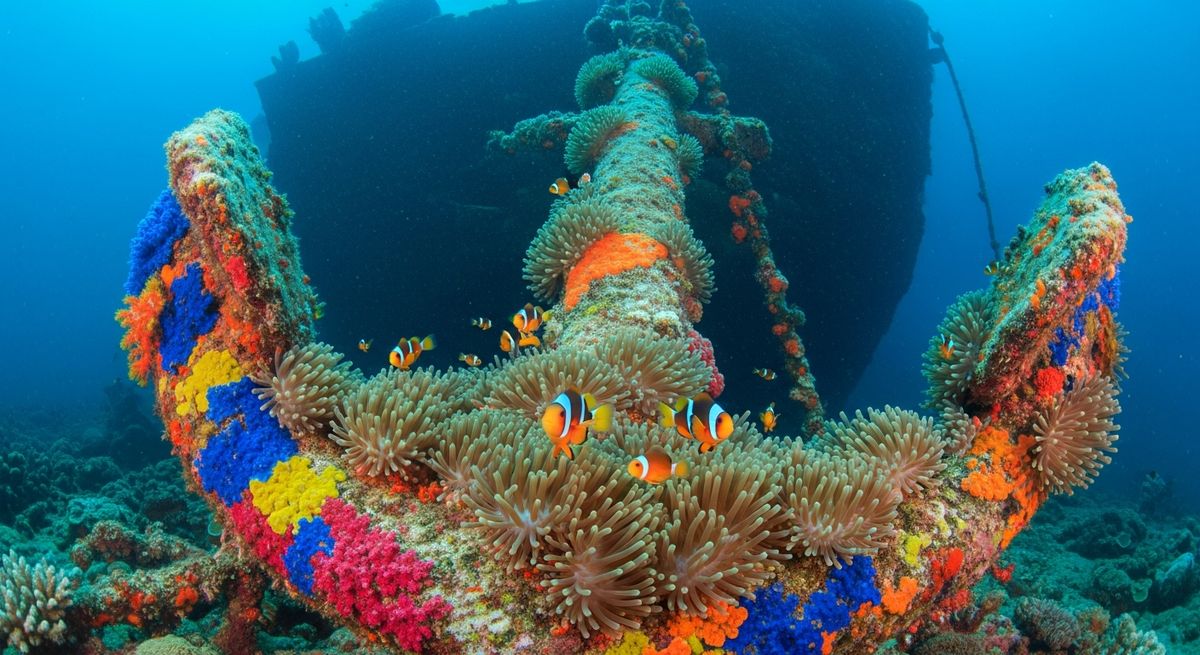
The *Agenoria* isn't one of those wrecks that instantly wows you with an intact bow or stern. She’s more of a scatter, really, broken up by over a century of Atlantic storms. But that’s precisely why we love her. You’ll find her spread across a rocky seabed near Platte Rock, the metal plates and ribs draped in dead man’s fingers and bright anemones, giving the whole site a riot of colour you might not expect from a Cornish wreck. What you get here is a chance for some proper forensic diving. Pick a section, drop down, and spend your bottom time tracing what’s left of her. We've seen conger eels poking out from beneath the larger plates, and the cracks in the surrounding rock are often home to crabs and lobsters. Visibility here can be a bit hit or miss, typical for the area, but when it’s good, the light plays beautifully through the kelp, illuminating the rusty ironwork. This is a dive for those who enjoy exploration, who like to piece together a story from fragments. Not a deep dive, making it perfect for divers who want to take their time and really soak in the history.
Typical AGENORIA Dive Profile
Illustrative profile based on site depth and type. Actual dive profiles vary - always follow your dive computer and training.
Safety Notes
Wreck site - avoid penetration without wreck diving certification. Watch for sharp metal and entanglement hazards.
Always perform a 3-minute safety stop at 5m before surfacing.
AGENORIA Wreck History
Year Sunk
1913
Vessel Type
schooner
Cause
grounding
The schooner Agenoria is one of hundreds of vessels claimed by the notoriously dangerous waters of the Channel Islands. In May 1913, she met her end near Platte Rock, falling victim to the region's formidable combination of massive tidal ranges, ferocious currents, and hidden granite reefs that have been a mariner's nightmare for centuries. Her sinking is a classic tale from an era of sail, a testament to the power of the sea that surrounds these islands.
Lying at a recreational depth of 15 meters, the remains of the Agenoria offer a poignant dive into history. While over a century of immersion has taken its toll, divers can still trace the outline of the wooden schooner and discover artifacts from her time. The site serves as a somber reminder of the area's rich maritime heritage, where every rock and reef tells a story. Exploring the Agenoria is not just about seeing a wreck; it's about connecting with the long history of those who sailed, and sometimes perished, in the Alderney Race and its surrounding channels.
Nearest Dive Centres to AGENORIA
Dive shops near AGENORIA
View all dive centres in Cornwall & DevonReviews for AGENORIA
Conditions
Ocean conditions, forecast and tides for AGENORIA
AGENORIA Ocean Conditions
Monthly averages for AGENORIA, sourced from Open-Meteo marine data - nearest station: Open-Meteo marine grid (50.44, -2.73) (3km away)
October Averages
Sea Temperature
17°C
62°F · Range: 15.1–17.5°C
Air Temperature
13°C
56°F
Wind Speed
8.14 m/s
15.8 knots
Atmospheric Pressure
1011 hPa
Based on 4 years of monitoring data · Data sources: Open-Meteo marine data
Plan & book
Ways to dive Cornwall & Devon, from day trips to liveaboards.
Day trips & courses
via GetYourGuideGuided dives, courses and snorkel trips with instant booking.
Find dive trips in Cornwall & DevonPlaces to stay
via Booking.comHotels and dive resorts near Cornwall & Devon.
Search stays in Cornwall & DevonDive insurance
Most travel insurance excludes or limits scuba. Check what you need before you go.
Dive insurance explainedPartner links: we may earn a commission if you book, at no extra cost to you. How we make money
Where to Stay near AGENORIA
Prices from Booking.com. We may earn a commission at no extra cost to you.