AGRION
Protected Area
Gouliot Caves and Headland, Sark
Why dive here
With 176+ marine species recorded in the area - including blue sharks, dolphins, dwarf minke whales, humpback whales and ocean sunfish (mola mola) - AGRION offers some of Cornwall & Devon's richest wreck diving. Water ranges 10-18°C, warmest July, August, September.
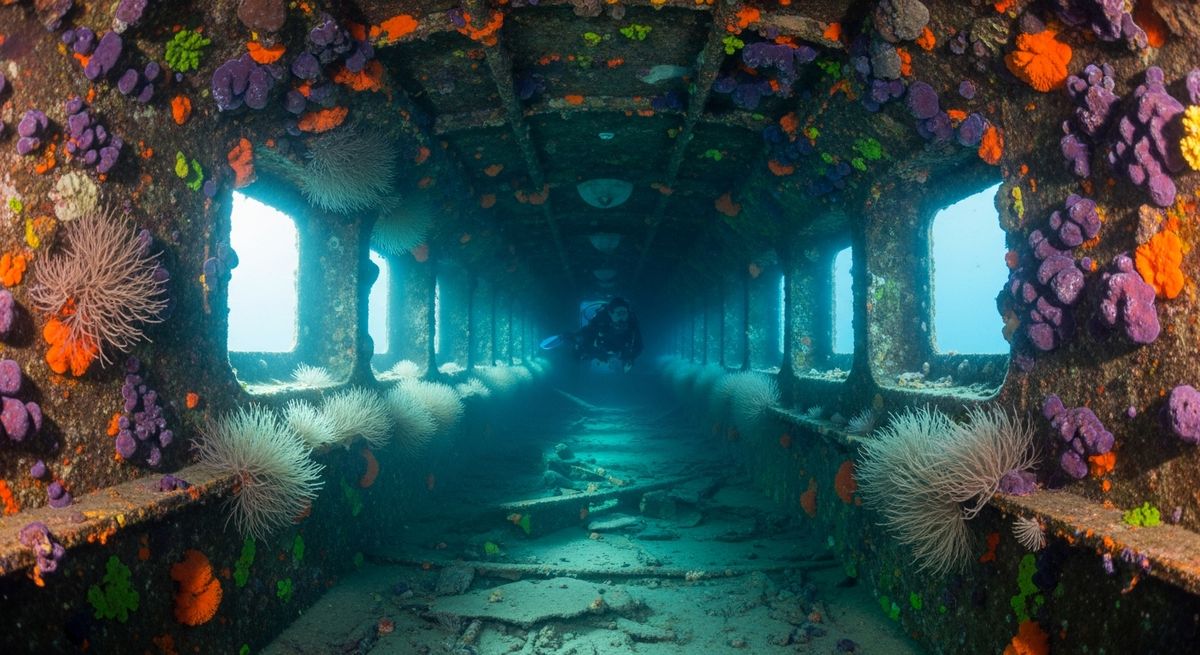
Okay, so a wreck at 2m? AGRION isn't your deep, dramatic plunge into history, but it's exactly why we love it. This trawler, aground on Les Etocs, is an exercise in accessible wreck diving, especially when the conditions are just right. We’re talking about a site that feels more like a living, breathing art installation than a typical wreck. Head out on a calm day, ideally on a neap tide, and you’ll find the AGRION’s crumpled form just beneath the surface. Sunlight slices through the water, illuminating the hull’s ripped plates and the skeletal superstructure. It’s shallow enough for even a keen snorkeller to appreciate, but divers get to spend time really poking around. Look for the glint of small blennies darting into crevices, or a feathery anemone waving from a shadowed corner. The whole site hums with the gentle surge, and we always find ourselves spotting something new – a cluster of jewel anenomes, or a velvet crab scuttling across rusted metal. It’s less about penetration and more about savouring the interaction between steel and the sea, perfect for an easy second dive or when you just want to soak up some underwater atmosphere without the pressure.
Typical AGRION Dive Profile
Illustrative profile based on site depth and type. Actual dive profiles vary - always follow your dive computer and training.
Safety Notes
Wreck site - avoid penetration without wreck diving certification. Watch for sharp metal and entanglement hazards.
AGRION Wreck History
Year Sunk
1975
Vessel Type
fishing vessel
Cause
grounding
The fishing trawler "AGRION" had a dramatic and final end to its career on February 9, 1975. While operating near the port of Guilvinec in France, not far from its home waters off Cornwall and Devon, the vessel ran hard aground on the notorious rocks of Les Etocs. This type of incident was a constant fear for mariners in these treacherous coastal waters, where submerged reefs and powerful currents could quickly spell disaster. The "AGRION" was lost to the sea, broken apart by the relentless force of the waves.
Lying in a mere 2 meters of water, the "AGRION" is less of a traditional scuba dive and more of a shallow-water exploration for snorkelers, freedivers, or divers looking for an interesting site during a surface interval. The wreck is so shallow that portions of its hull or superstructure remain visible above the water at low tide. Divers can explore the scattered wreckage field, which has been flattened and dispersed by decades of surge and storms. It serves as a stark, tangible reminder of the power of the sea.
Nearest Dive Centres to AGRION
Dive shops near AGRION
View all dive centres in Cornwall & DevonReviews for AGRION
Conditions
Ocean conditions, forecast and tides for AGRION
AGRION Ocean Conditions
Monthly averages for AGRION, sourced from Open-Meteo marine data - nearest station: Open-Meteo marine grid (50.44, -2.73) (3km away)
October Averages
Sea Temperature
17°C
62°F · Range: 15.1–17.5°C
Air Temperature
13°C
56°F
Wind Speed
8.14 m/s
15.8 knots
Atmospheric Pressure
1011 hPa
Based on 4 years of monitoring data · Data sources: Open-Meteo marine data
Plan & book
Ways to dive Cornwall & Devon, from day trips to liveaboards.
Day trips & courses
via GetYourGuideGuided dives, courses and snorkel trips with instant booking.
Find dive trips in Cornwall & DevonPlaces to stay
via Booking.comHotels and dive resorts near Cornwall & Devon.
Search stays in Cornwall & DevonDive insurance
Most travel insurance excludes or limits scuba. Check what you need before you go.
Dive insurance explainedPartner links: we may earn a commission if you book, at no extra cost to you. How we make money
Where to Stay near AGRION
Prices from Booking.com. We may earn a commission at no extra cost to you.