AILSA CRAIG (PROBABLY)
Protected Area
West Dorset
Why dive here
With 176+ marine species recorded in the area - including blue sharks, dolphins, dwarf minke whales, humpback whales and ocean sunfish (mola mola) - AILSA CRAIG (PROBABLY) offers some of Cornwall & Devon's richest wreck diving. Water ranges 10-18°C, warmest July, August, September.
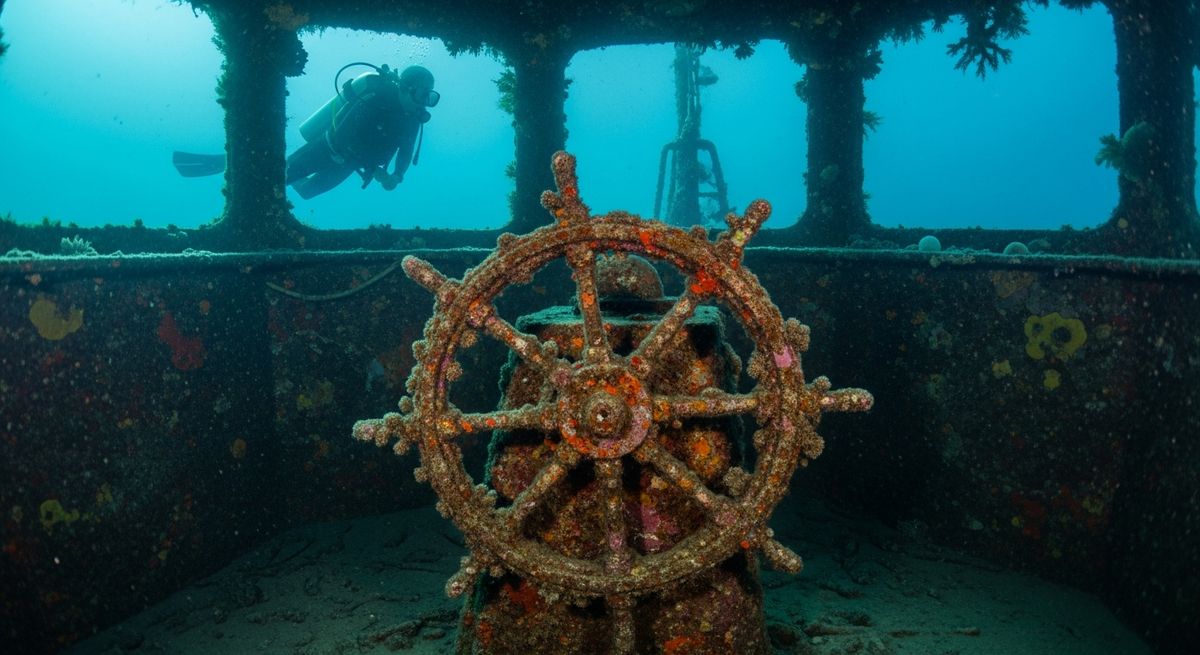
Alright, let’s talk about the *Ailsa Craig*. Or, as we usually call it, the *Ailsa Craig (Probably)*. Because that's the thing with these older wrecks in UK waters, sometimes the history is a little... murky. But who cares about the name when the diving is this good? We love this wreck for its sheer presence on the seabed. She sits upright, pretty much intact, resting at 33 metres. You’ll drop down and feel that structure emerge from the gloom, usually with that classic Cornish green tint. The *Ailsa Craig* is a proper steamship, torpedoed back in 1918. You can still make out the bow, which is often our favourite place to start. Swim along the deck, and you’ll see where the bridge once was. The hold is open, inviting you in, but check your experience and conditions first. The stern is also a highlight, with the rudder and propeller still in place, usually hosting some decent conger eels. Visibility can swing dramatically here, so pick a calm day with neap tides if you can. It’s a site that rewards multiple visits, revealing more of its secrets each time. You'll find plenty of bib and pollack darting through the superstructure, and the encrusting life is quite something – dead man's fingers and anemones in abundance. This is a dive for those who appreciate history and don't mind a bit of a current occasionally.
Typical AILSA CRAIG (PROBABLY) Dive Profile
Illustrative profile based on site depth and type. Actual dive profiles vary - always follow your dive computer and training.
Safety Notes
Deep dive (33m) - monitor air consumption closely. Advanced certification recommended.
Wreck site - avoid penetration without wreck diving certification. Watch for sharp metal and entanglement hazards.
Always perform a 3-minute safety stop at 5m before surfacing.
AILSA CRAIG (PROBABLY) Wreck History
Year Sunk
1918
Vessel Type
cargo ship
Cause
torpedo
Tonnage
608 GRT
The SS Ailsa Craig was a typical British coastal steamship built in 1906. A workhorse of her time, she spent her career transporting cargo around the British Isles, playing a vital role in the maritime commerce that was the lifeblood of the nation. Her service coincided with the First World War, a period of immense danger for merchant shipping due to Germany's campaign of unrestricted submarine warfare.
On April 15, 1918, during the final year of the war, the Ailsa Craig's luck ran out. While on a passage from Cardiff, she was targeted by the German U-boat UB-80 in the English Channel. A single torpedo strike was enough to sink the small steamer, sending her to the seabed and adding her name to the long list of merchant vessels lost during the conflict.
The wreck believed to be the Ailsa Craig now lies at a depth of 33 meters off the coast of Cornwall. For divers, it offers a poignant connection to WWI maritime history. While over a century on the seabed has taken its toll, the wreck's structure is still evident and provides a fantastic habitat for the region's diverse marine life, transforming a casualty of war into a thriving underwater ecosystem.
Nearest Dive Centres to AILSA CRAIG (PROBABLY)
Dive shops near AILSA CRAIG (PROBABLY)
Old Harbour Dive Centre
Dive Beyond Limited
Edge Watersports
Dive academy
Teign Diving Centre
Reviews for AILSA CRAIG (PROBABLY)
Conditions
Ocean conditions, forecast and tides for AILSA CRAIG (PROBABLY)
AILSA CRAIG (PROBABLY) Ocean Conditions
Monthly averages for AILSA CRAIG (PROBABLY), sourced from Open-Meteo marine data - nearest station: Open-Meteo marine grid (50.44, -2.73) (3km away)
October Averages
Sea Temperature
17°C
62°F · Range: 15.1–17.5°C
Air Temperature
13°C
56°F
Wind Speed
8.14 m/s
15.8 knots
Atmospheric Pressure
1011 hPa
Based on 4 years of monitoring data · Data sources: Open-Meteo marine data
Plan & book
Ways to dive Cornwall & Devon, from day trips to liveaboards.
Day trips & courses
via GetYourGuideGuided dives, courses and snorkel trips with instant booking.
Find dive trips in Cornwall & DevonPlaces to stay
via Booking.comHotels and dive resorts near Cornwall & Devon.
Search stays in Cornwall & DevonDive insurance
Most travel insurance excludes or limits scuba. Check what you need before you go.
Dive insurance explainedPartner links: we may earn a commission if you book, at no extra cost to you. How we make money
Where to Stay near AILSA CRAIG (PROBABLY)
Prices from Booking.com. We may earn a commission at no extra cost to you.