ALBATROS
Protected Area
Compton Chine to Steephill Cove
Why dive here
With 176+ marine species recorded in the area - including blue sharks, dolphins, dwarf minke whales, humpback whales and ocean sunfish (mola mola) - ALBATROS offers some of Cornwall & Devon's richest wreck diving. Water ranges 10-18°C, warmest July, August, September.
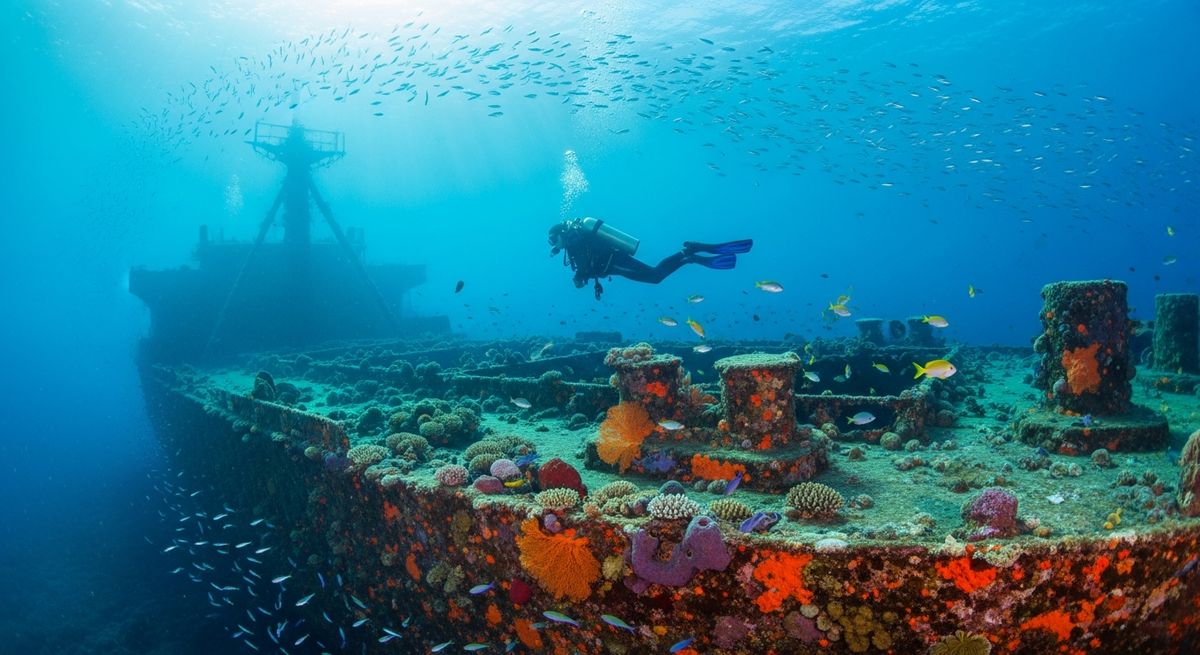
The Albatros, near Penzance, is one of those sites we always recommend for a relaxed, shallow dive. It’s a wooden motor vessel, dating back to 1913, and though she went down in '52, she’s still remarkably intact for a wreck at this depth. You’re only looking at 5m here, maximum, so it’s a brilliant second dive or a good introduction to wreck diving for those still building confidence. We love finning slowly over the remains of her hull, often finding conger eels peeking out from beneath the timbers. The wooden structure has softened and opened up over the years, making for easy swim-throughs where you can spot pollack darting between the frames. Keep an eye out for dogfish resting on the silty seabed nearby, perfectly camouflaged against the wood. The light here, even on an overcast day, filters beautifully through the kelp that sways gently over the wreck, giving it a peaceful, almost ethereal feel. It's a genuinely charming dive, never rushed, and always good for spotting something interesting without feeling like you're fighting the elements.
Typical ALBATROS Dive Profile
Illustrative profile based on site depth and type. Actual dive profiles vary - always follow your dive computer and training.
Safety Notes
Wreck site - avoid penetration without wreck diving certification. Watch for sharp metal and entanglement hazards.
ALBATROS Wreck History
Year Sunk
1952
Vessel Type
sailing vessel
Cause
grounding
The Albatros was a vessel with a unique history, beginning its life in 1913 as a wooden sailing ship built in Kinderdijk, Netherlands. As technology evolved, it was later converted into a motor-sailer, retrofitted with a two-cylinder, two-stroke oil engine to supplement its sails. At the time of her loss, she was under the ownership of H. Meertens NV.
On December 22, 1952, the Albatros was caught in a severe gale off the notoriously rugged coast of Cornwall. The storm proved too powerful for the vessel, and it was driven ashore, ultimately wrecking near Porthallow. Its demise is a classic story of the sea's power over the ships that sail it.
Because it wrecked so close to shore, the remains of the Albatros lie in just 5 meters of water. This makes it an incredibly accessible site, perfect for trainee divers, snorkelers, and anyone looking for a simple but rewarding shallow dive. While the wooden hull has long since been broken apart by the relentless surge, divers can still discover the ship's engine block, propeller shaft, and other metal components scattered across the seabed, now beautifully colonized by kelp and colorful anemones.
Nearest Dive Centres to ALBATROS
Dive shops near ALBATROS
In2 Diving
Andark Diving
TAL Scuba Ltd.
Sussex Diving & Leisure
Mulberry Marine Experiences CIC
Divers Down
Reviews for ALBATROS
Conditions
Ocean conditions, forecast and tides for ALBATROS
ALBATROS Ocean Conditions
Monthly averages for ALBATROS, sourced from Open-Meteo marine data - nearest station: Open-Meteo marine grid (50.44, -2.73) (3km away)
October Averages
Sea Temperature
17°C
62°F · Range: 15.1–17.5°C
Air Temperature
13°C
56°F
Wind Speed
8.14 m/s
15.8 knots
Atmospheric Pressure
1011 hPa
Based on 4 years of monitoring data · Data sources: Open-Meteo marine data
Plan & book
Ways to dive Cornwall & Devon, from day trips to liveaboards.
Day trips & courses
via GetYourGuideGuided dives, courses and snorkel trips with instant booking.
Find dive trips in Cornwall & DevonPlaces to stay
via Booking.comHotels and dive resorts near Cornwall & Devon.
Search stays in Cornwall & DevonDive insurance
Most travel insurance excludes or limits scuba. Check what you need before you go.
Dive insurance explainedPartner links: we may earn a commission if you book, at no extra cost to you. How we make money
Where to Stay near ALBATROS
Prices from Booking.com. We may earn a commission at no extra cost to you.