ALBERT
Protected Area
Dolphin Head Highly Protected Marine Area
Why dive here
With 176+ marine species recorded in the area - including blue sharks, dolphins, dwarf minke whales, humpback whales and ocean sunfish (mola mola) - ALBERT offers some of Cornwall & Devon's richest wreck diving. Water ranges 10-18°C, warmest July, August, September.
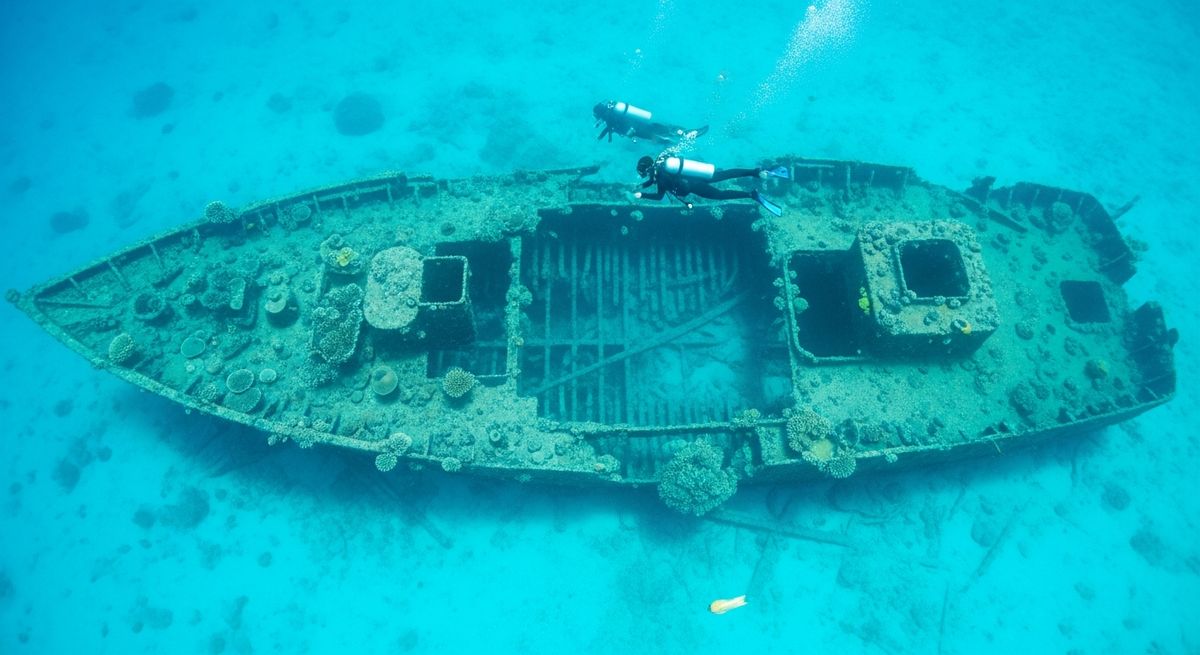
The ALBERT, sunk in 1899 off the Lizard, is one for the serious wreck heads. Forget your shallow, broken-up coastal wrecks; this is a proper deep dive, pushing the limits at 60 metres. We love the challenge here, the sense of descending into the unknown, knowing you're one of only a few to ever really see her. What you find at that depth is a surprisingly intact steamship, built in Brest way back in 1880. The superstructure is still distinct, and the bow points resolutely into the current, often hosting a cloud of bib and pollock. Drop onto the deck and you can make out the anchor chains, winches, and the ghostly outline of where her holds once were. Visibility can be a real lottery down here, but when it’s good, the light filtering down from above gives the whole scene an ethereal glow. Our pick for an ascent is to spend some time exploring the debris field around the main wreck, where we’ve found everything from ancient bottles to ceramic pieces, encrusted in jewel anemones. This dive suits experienced technical divers with decent bottom time on deco, eager for a deep, historical exploration rather than a quick look.
Typical ALBERT Dive Profile
Illustrative profile based on site depth and type. Actual dive profiles vary - always follow your dive computer and training.
Safety Notes
Maximum depth 60m exceeds recreational limits (40m). Technical diving certification and equipment required.
Wreck site - avoid penetration without wreck diving certification. Watch for sharp metal and entanglement hazards.
Always perform a 3-minute safety stop at 5m before surfacing.
ALBERT Wreck History
Vessel Type
cargo ship
Cause
unknown
The steamship Albert was a product of 19th-century French shipbuilding, constructed in the port of Brest in 1880. As a typical workhorse of the steam era, she would have plied the busy shipping lanes of the English Channel and beyond, carrying cargo between European ports. Unfortunately, the specific details of her career and the circumstances that led to her sinking have been lost to time, leaving only the silent wreckage to hint at the story of her final, fateful voyage.
Located in the deep waters off the coast of Cornwall and Devon, the Albert is a serious technical dive, resting at a challenging depth of 60 meters. This depth has helped preserve the wreck but places it firmly beyond the limits of recreational diving, demanding specialized training, equipment, and breathing gases. Those qualified to make the descent are rewarded with the rare sight of a largely intact late-Victorian steamship. Exploring its decaying decks, superstructure, and machinery offers a haunting journey back in time, all while navigating the deep, cool, and often dark waters of the Channel.
Reviews for ALBERT
Conditions
Ocean conditions, forecast and tides for ALBERT
ALBERT Ocean Conditions
Monthly averages for ALBERT, sourced from Open-Meteo marine data - nearest station: Open-Meteo marine grid (50.44, -2.73) (3km away)
October Averages
Sea Temperature
17°C
62°F · Range: 15.1–17.5°C
Air Temperature
13°C
56°F
Wind Speed
8.14 m/s
15.8 knots
Atmospheric Pressure
1011 hPa
Based on 4 years of monitoring data · Data sources: Open-Meteo marine data
Plan & book
Ways to dive Cornwall & Devon, from day trips to liveaboards.
Day trips & courses
via GetYourGuideGuided dives, courses and snorkel trips with instant booking.
Find dive trips in Cornwall & DevonPlaces to stay
via Booking.comHotels and dive resorts near Cornwall & Devon.
Search stays in Cornwall & DevonDive insurance
Most travel insurance excludes or limits scuba. Check what you need before you go.
Dive insurance explainedPartner links: we may earn a commission if you book, at no extra cost to you. How we make money
Where to Stay near ALBERT
Prices from Booking.com. We may earn a commission at no extra cost to you.