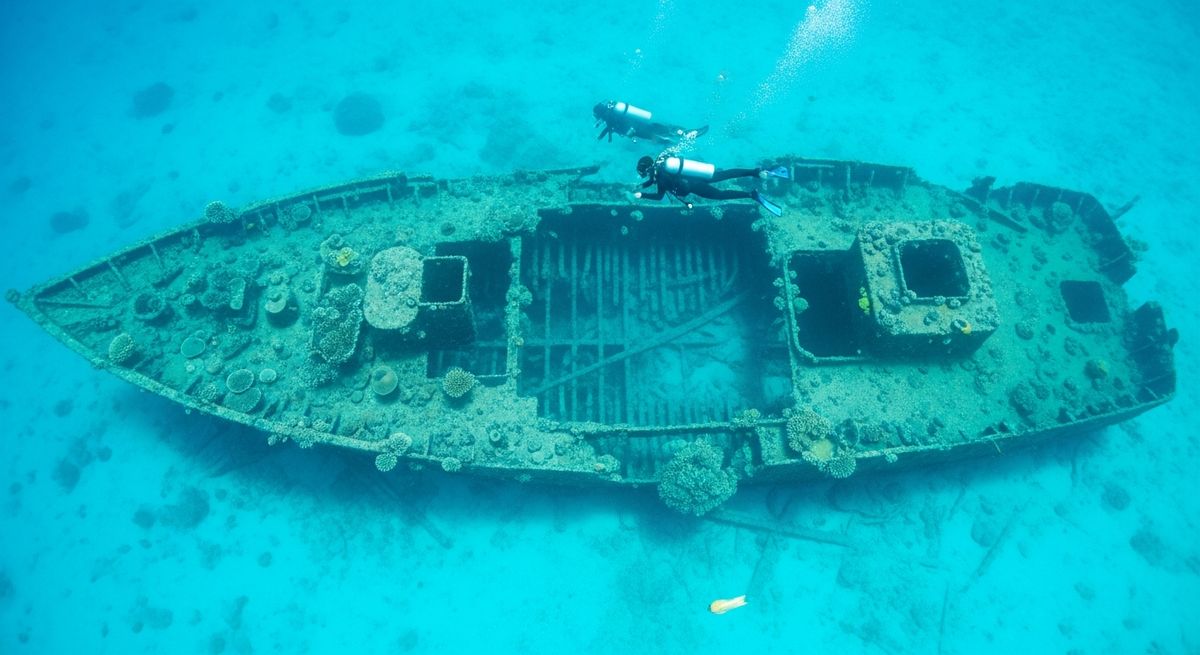
Alex Van Opstel (Wreck)
Protected Area
Studland to Portland
Why dive here
With 176+ marine species recorded in the area - including blue sharks, dolphins, dwarf minke whales, humpback whales and ocean sunfish (mola mola) - Alex Van Opstel (Wreck) offers some of Cornwall & Devon's richest wreck diving. Water ranges 10-18°C, warmest July, August, September.
The Alex Van Opstel isn't just another lump of metal on the seabed, it's a properly atmospheric dive. Lying in 28 metres, it’s an intermediate dive, really, because the currents can be quite frisky around here. What we love about this wreck is how intact it still feels. You can swim through the holds, which are surprisingly open, and poke around the engine room – just watch your buoyancy, the silt can kick up in a hurry. It’s been down since 1939, and the sea has done a fantastic job of turning it into a home for everything from wrasse to conger eels. We’ve seen some absolutely huge pollack hovering over the bow, almost like guardians. Visibility can vary wildly in this part of the world, but on a good day, when the sun filters through the green water, the scale of the wreck is quite something. Our tip: aim for a slack tide, otherwise you’ll be working hard. The bow is our favourite part; it feels like stepping back in time.
Typical Alex Van Opstel (Wreck) Dive Profile
Illustrative profile based on site depth and type. Actual dive profiles vary - always follow your dive computer and training.
Safety Notes
Depth of 28m - Advanced Open Water certification recommended.
Wreck site - avoid penetration without wreck diving certification. Watch for sharp metal and entanglement hazards.
Always perform a 3-minute safety stop at 5m before surfacing.
Alex Van Opstel (Wreck) Wreck History
Year Sunk
1939
Vessel Type
cargo ship
Cause
mine
The Belgian merchant ship *Alex Van Opstal* was a modern vessel, built in 1937 and owned by the prestigious Cie Maritime Belge. Her story is a poignant reminder of the sudden and far-reaching impact of World War II. In September 1939, with the war less than two weeks old, the neutral vessel was on a transatlantic passage from New York to her home port of Antwerp, carrying general cargo.
On September 15, 1939, while navigating the English Channel, the *Alex Van Opstal* struck a German-laid mine off the coast of Weymouth. The explosion was catastrophic, and the ship sank, becoming one of the very first neutral vessels lost in the conflict. Today, she lies at a depth of 28 meters, a popular and fascinating site for advanced recreational divers. Exploring her remains offers a direct connection to the opening days of the war and serves as an underwater memorial to a conflict that would soon engulf the world.
Nearest Dive Centres to Alex Van Opstel (Wreck)
Dive shops near Alex Van Opstel (Wreck)
Dive Beyond Limited
Old Harbour Dive Centre
Divers Down
Mayim Mermaid Academy
Dorset Diving Services
TAL Scuba Ltd.
Reviews for Alex Van Opstel (Wreck)
Conditions
Ocean conditions, forecast and tides for Alex Van Opstel (Wreck)
Alex Van Opstel (Wreck) Ocean Conditions
Monthly averages for Alex Van Opstel (Wreck), sourced from Open-Meteo marine data - nearest station: Open-Meteo marine grid (50.44, -2.73) (3km away)
October Averages
Sea Temperature
17°C
62°F · Range: 15.1–17.5°C
Air Temperature
13°C
56°F
Wind Speed
8.14 m/s
15.8 knots
Atmospheric Pressure
1011 hPa
Based on 4 years of monitoring data · Data sources: Open-Meteo marine data
Plan & book
Ways to dive Cornwall & Devon, from day trips to liveaboards.
Day trips & courses
via GetYourGuideGuided dives, courses and snorkel trips with instant booking.
Find dive trips in Cornwall & DevonPlaces to stay
via Booking.comHotels and dive resorts near Cornwall & Devon.
Search stays in Cornwall & DevonDive insurance
Most travel insurance excludes or limits scuba. Check what you need before you go.
Dive insurance explainedPartner links: we may earn a commission if you book, at no extra cost to you. How we make money
Where to Stay near Alex Van Opstel (Wreck)
Prices from Booking.com. We may earn a commission at no extra cost to you.