ALEXANDROVNA
Protected Area
Studland Cliffs
Why dive here
With 176+ marine species recorded in the area - including blue sharks, dolphins, dwarf minke whales, humpback whales and ocean sunfish (mola mola) - ALEXANDROVNA offers some of Cornwall & Devon's richest wreck diving. Water ranges 10-18°C, warmest July, August, September.
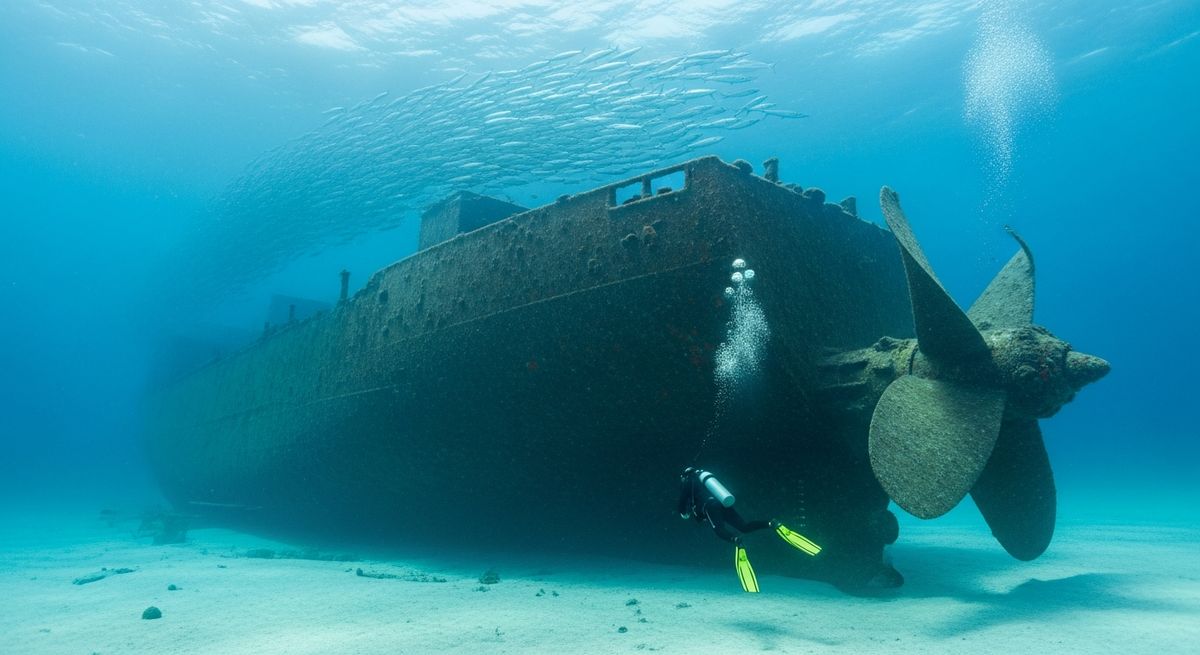
The *Alexandrovna* isn't your typical imposing wreck, and that's precisely why we love it. Instead of a single structure, you're looking at the scattered remains of an iron sailing ship, broken apart by a devastating storm in 1882. It sits shallow, just 7 metres deep, making it perfect for a long, relaxed dive, even if you’re newer to wreck diving. What you'll find here are plates of iron, ribs, and sections of hull spread across the seabed, now completely reclaimed by the ocean. It feels like an archaeological dig, discovering fragments of history. We’ve seen conger eels curled up in crevices, and the nooks between the twisted metal are always busy with crabs scuttling about. Look closely, and you’ll spot anemones clinging to the rust-coloured iron. It’s a poignant site, really, knowing the tragic story behind it. Our tip? Go at slack water for the best visibility; it can get a bit stirred up with any swell. It’s a thoughtful dive, less about penetration and more about appreciating the slow decay and reclamation by marine life.
Typical ALEXANDROVNA Dive Profile
Illustrative profile based on site depth and type. Actual dive profiles vary - always follow your dive computer and training.
Safety Notes
Wreck site - avoid penetration without wreck diving certification. Watch for sharp metal and entanglement hazards.
ALEXANDROVNA Wreck History
Year Sunk
1882
Vessel Type
sailing vessel
Cause
storm
The ALEXANDROVNA was a sturdy sailing vessel built in Liverpool in 1874. Her career was cut tragically short just eight years later. In April 1882, while on passage from Masluis to Cardiff, she was caught in a violent south-southwesterly gale described at the time as a 'hurricane' that battered the coast of Cornwall. The storm's fury was overwhelming; the ALEXANDROVNA was driven ashore and, in a testament to the sea's immense power, was reportedly broken into pieces in a mere ten minutes.
Today, the remains of the ALEXANDROVNA lie in just 7 meters of water, making it a fantastic and accessible dive for all levels, and an excellent site for a long, relaxed exploration or a second dive of the day. Due to the violent nature of its sinking, the wreck is completely broken up, with its remnants scattered across the seabed. Divers can explore the flattened hull sections and debris field, now heavily encrusted with marine life and home to crabs, lobsters, and various fish that thrive in the shallow, sunlit waters of the Cornish coast.
Nearest Dive Centres to ALEXANDROVNA
Dive shops near ALEXANDROVNA
Divers Down
Mayim Mermaid Academy
Dorset Diving Services
TAL Scuba Ltd.
Dive Beyond Limited
Old Harbour Dive Centre
Reviews for ALEXANDROVNA
Conditions
Ocean conditions, forecast and tides for ALEXANDROVNA
ALEXANDROVNA Ocean Conditions
Monthly averages for ALEXANDROVNA, sourced from Open-Meteo marine data - nearest station: Open-Meteo marine grid (50.44, -2.73) (3km away)
October Averages
Sea Temperature
17°C
62°F · Range: 15.1–17.5°C
Air Temperature
13°C
56°F
Wind Speed
8.14 m/s
15.8 knots
Atmospheric Pressure
1011 hPa
Based on 4 years of monitoring data · Data sources: Open-Meteo marine data
Plan & book
Ways to dive Cornwall & Devon, from day trips to liveaboards.
Day trips & courses
via GetYourGuideGuided dives, courses and snorkel trips with instant booking.
Find dive trips in Cornwall & DevonPlaces to stay
via Booking.comHotels and dive resorts near Cornwall & Devon.
Search stays in Cornwall & DevonDive insurance
Most travel insurance excludes or limits scuba. Check what you need before you go.
Dive insurance explainedPartner links: we may earn a commission if you book, at no extra cost to you. How we make money
Where to Stay near ALEXANDROVNA
Prices from Booking.com. We may earn a commission at no extra cost to you.