ALICE MARIE
Protected Area
Slapton Ley
Why dive here
With 176+ marine species recorded in the area - including blue sharks, dolphins, dwarf minke whales, humpback whales and ocean sunfish (mola mola) - ALICE MARIE offers some of Cornwall & Devon's richest wreck diving. Water ranges 10-18°C, warmest July, August, September.
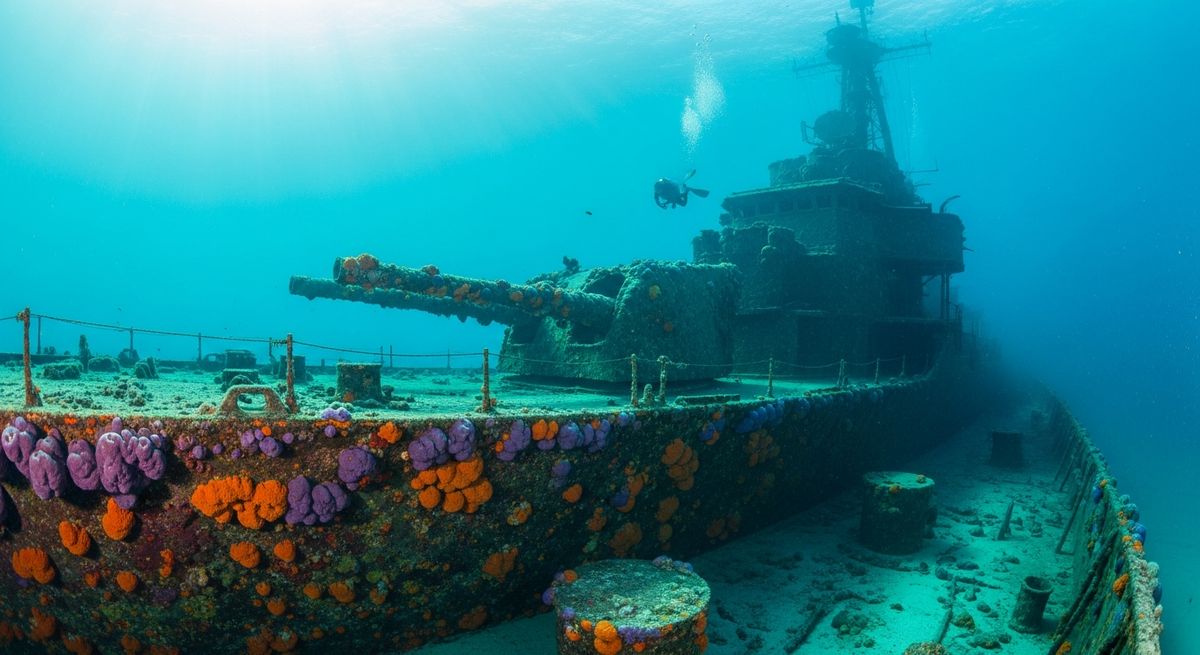
The *Alice Marie* is one of those wrecks that just keeps giving, particularly if you appreciate a bit of history beneath the waves. Lying at 31 metres, she’s a proper dive, best suited for those comfortable with deeper conditions and perhaps a bit of current. We often head here in late summer when the visibility can stretch to a decent 10-15 metres, making the huge boiler room a real highlight to explore. What we love about the *Alice Marie* is her intact structure. You can trace the lines of the triple-expansion engine, imagining the effort of her crew before she went down in 1917. Around the stern, we’ve often found conger eels poking their heads out, thick as a diver's thigh, and the deck plating is absolutely carpeted with jewel anemones, shimmering orange and pink in your torch beam. It’s a proper old girl, colonised beautifully by the sea, offering a tangible link to Cornwall’s maritime past.
Typical ALICE MARIE Dive Profile
Illustrative profile based on site depth and type. Actual dive profiles vary - always follow your dive computer and training.
Safety Notes
Deep dive (31m) - monitor air consumption closely. Advanced certification recommended.
Wreck site - avoid penetration without wreck diving certification. Watch for sharp metal and entanglement hazards.
Always perform a 3-minute safety stop at 5m before surfacing.
ALICE MARIE Wreck History
Year Sunk
1917
Vessel Type
cargo ship
Cause
torpedo
Tonnage
2,203 GRT
The SS Alice Marie was a 2,203-ton British steamship built in 1915, during the height of the First World War. She was put to work immediately, braving the perilous waters of the Atlantic to transport vital supplies. On December 19, 1917, while on a voyage from Bilbao, Spain, to Newport, Wales with a cargo of iron ore, her luck ran out. She was spotted by the German submarine UB-55, which was prowling the shipping lanes off the Cornish coast. A single torpedo struck the Alice Marie, sealing her fate and sending her and her valuable cargo to the bottom of the sea.
Lying at a depth of 31 meters, the wreck of the Alice Marie is a poignant reminder of the Great War's naval conflict. The dive is suited for advanced recreational divers, who are rewarded with the sight of a substantial early 20th-century freighter. Key features, such as her two large boilers and the triple-expansion engine, stand proud from the wreckage, now heavily colonized by marine life. Exploring the remains of the Alice Marie is a journey back in time, offering a direct, tangible connection to a critical moment in world history.
Nearest Dive Centres to ALICE MARIE
Dive shops near ALICE MARIE
Teign Diving Centre
Edge Watersports
Sound Diving Limited
Plymouth Diving Centre
Reviews for ALICE MARIE
Conditions
Ocean conditions, forecast and tides for ALICE MARIE
ALICE MARIE Ocean Conditions
Monthly averages for ALICE MARIE, sourced from Open-Meteo marine data - nearest station: Open-Meteo marine grid (50.44, -2.73) (3km away)
October Averages
Sea Temperature
17°C
62°F · Range: 15.1–17.5°C
Air Temperature
13°C
56°F
Wind Speed
8.14 m/s
15.8 knots
Atmospheric Pressure
1011 hPa
Based on 4 years of monitoring data · Data sources: Open-Meteo marine data
Plan & book
Ways to dive Cornwall & Devon, from day trips to liveaboards.
Day trips & courses
via GetYourGuideGuided dives, courses and snorkel trips with instant booking.
Find dive trips in Cornwall & DevonPlaces to stay
via Booking.comHotels and dive resorts near Cornwall & Devon.
Search stays in Cornwall & DevonDive insurance
Most travel insurance excludes or limits scuba. Check what you need before you go.
Dive insurance explainedPartner links: we may earn a commission if you book, at no extra cost to you. How we make money
Where to Stay near ALICE MARIE
Prices from Booking.com. We may earn a commission at no extra cost to you.