ALISON (POSSIBLY)
Protected Area
Kingmere
Why dive here
With 176+ marine species recorded in the area - including blue sharks, dolphins, dwarf minke whales, humpback whales and ocean sunfish (mola mola) - ALISON (POSSIBLY) offers some of Cornwall & Devon's richest wreck diving. Water ranges 10-18°C, warmest July, August, September.
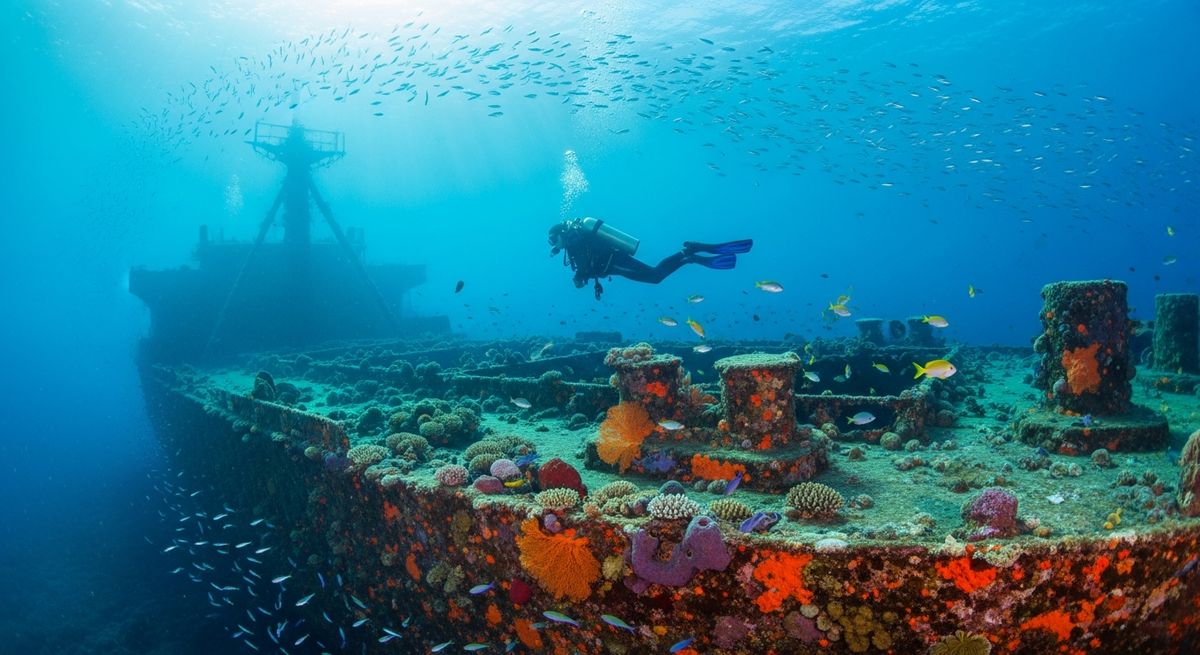
The Alison, or possibly the Ethel as some charts suggest, is a proper technical dive, and one we’ve spent a few decent bottom times exploring. Sitting upright at 60 metres, this isn't a site for the faint-hearted or those without the training, but for wreck enthusiasts, it’s a beautiful piece of history. You'll find the entire structure largely intact, and the visibility down there often surprises us – sometimes pushing 15 metres on a good day. Dropping down, the first thing you notice is the way the light fades, leaving the wreck in a permanent twilight. The hull is draped in dead man's fingers, orange and white, with the occasional lobster peeking out from a shadowed crevice. We love navigating the deck, picking out the boiler and the compound expansion engine, imagining the life on board before she went down in 1916. Our favourite is exploring the bow, where the anchor chain still runs out, disappearing into the seabed, a stark reminder of her final moments. It’s a quiet, contemplative dive, and one that rewards patience and a good torch beam, revealing the wreck’s secrets in the cold embrace of the deep.
Typical ALISON (POSSIBLY) Dive Profile
Illustrative profile based on site depth and type. Actual dive profiles vary - always follow your dive computer and training.
Safety Notes
Maximum depth 60m exceeds recreational limits (40m). Technical diving certification and equipment required.
Wreck site - avoid penetration without wreck diving certification. Watch for sharp metal and entanglement hazards.
Always perform a 3-minute safety stop at 5m before surfacing.
ALISON (POSSIBLY) Wreck History
Year Sunk
1916
Vessel Type
cargo ship
Cause
unknown
The vessel tentatively identified as the SS Alison was a small steamship built in 1908 by W.J. Yarwood & Sons for the Northwich Carrying Co. Ltd. This modest coastal trader served for eight years before meeting its end on November 28, 1916. While the exact cause of its sinking remains unconfirmed, its loss during the height of World War I, in the heavily patrolled waters off the English coast, suggests it may have been a casualty of enemy action, possibly striking a mine or falling victim to a U-boat.
Resting at a depth of 60 meters, the wreck of the Alison is a challenging dive reserved for experienced technical and rebreather divers. The depth means short bottom times and a demanding decompression schedule. Those who make the descent are rewarded with the sight of a small, largely intact early 20th-century steamship. The boiler and compound expansion engine are key features, offering a fascinating glimpse into the technology of the era. Visibility can be variable, but on a clear day, the wreck materializes from the deep green, a silent monument to its final, mysterious voyage.
Nearest Dive Centres to ALISON (POSSIBLY)
Dive shops near ALISON (POSSIBLY)
Abyss Scuba School
Ocean View
Sussex Diving & Leisure
Mulberry Marine Experiences CIC
In2 Diving
Reviews for ALISON (POSSIBLY)
Conditions
Ocean conditions, forecast and tides for ALISON (POSSIBLY)
ALISON (POSSIBLY) Ocean Conditions
Monthly averages for ALISON (POSSIBLY), sourced from Open-Meteo marine data - nearest station: Open-Meteo marine grid (50.44, -2.73) (3km away)
October Averages
Sea Temperature
17°C
62°F · Range: 15.1–17.5°C
Air Temperature
13°C
56°F
Wind Speed
8.14 m/s
15.8 knots
Atmospheric Pressure
1011 hPa
Based on 4 years of monitoring data · Data sources: Open-Meteo marine data
Plan & book
Ways to dive Cornwall & Devon, from day trips to liveaboards.
Day trips & courses
via GetYourGuideGuided dives, courses and snorkel trips with instant booking.
Find dive trips in Cornwall & DevonPlaces to stay
via Booking.comHotels and dive resorts near Cornwall & Devon.
Search stays in Cornwall & DevonDive insurance
Most travel insurance excludes or limits scuba. Check what you need before you go.
Dive insurance explainedPartner links: we may earn a commission if you book, at no extra cost to you. How we make money
Where to Stay near ALISON (POSSIBLY)
Prices from Booking.com. We may earn a commission at no extra cost to you.