ALLEGRITY
Protected Area
Cuckoo Rock to Turbot Point
Why dive here
With 176+ marine species recorded in the area - including blue sharks, dolphins, dwarf minke whales, humpback whales and ocean sunfish (mola mola) - ALLEGRITY offers some of Cornwall & Devon's richest wreck diving. Water ranges 10-18°C, warmest July, August, September.
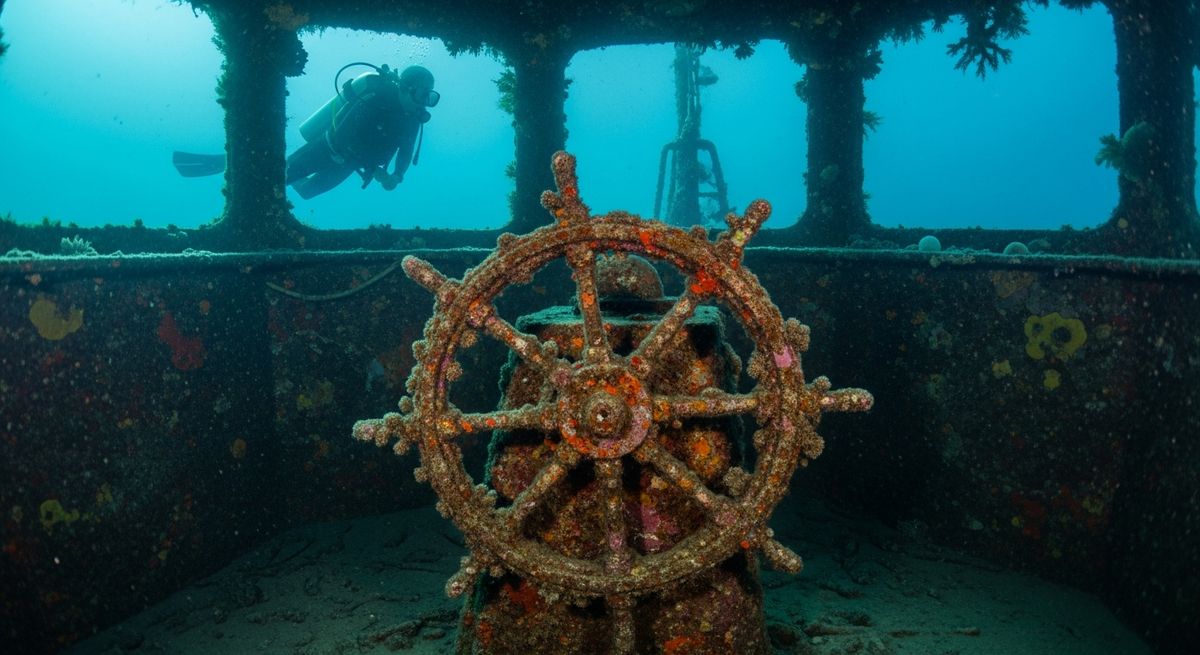
Alright, the *Allegreity*. We love a shallow wreck, especially when it’s one you can really get to grips with, and this old tanker fits the bill perfectly. She hit Greeb Point back in '61, then drifted into Caerhays. The stern section is what you're after here, largely intact and sitting in just a couple of metres of water. It means you can spend ages poking around without rushing, feeling the surge pull you gently over the ribs of the deck. Head out at low tide for the best visibility; the sandy bottom here can kick up a bit if there's any swell. The metalwork is completely encrusted with mussels and anemones, which pulse gently in the current. Look closely in the nooks and crannies – we’ve often seen blennies peering out and even small conger eels tucked into the darker spaces. It’s not about big pelagics here, it’s about the intricate life that’s made a home of this old girl. It’s a great spot for newer wreck divers or anyone who just wants a really relaxed explore, a proper chill-out dive.
Typical ALLEGRITY Dive Profile
Illustrative profile based on site depth and type. Actual dive profiles vary - always follow your dive computer and training.
Safety Notes
Wreck site - avoid penetration without wreck diving certification. Watch for sharp metal and entanglement hazards.
ALLEGRITY Wreck History
Year Sunk
1961
Vessel Type
tanker
Cause
grounding
The tanker Allegrity began its life in 1945 as the Empire Tavistock, built in Grangemouth, Scotland, as part of the United Kingdom's massive wartime shipbuilding program. These 'Empire' ships were the backbone of the merchant fleet, designed for durability and utility. After the war, it was sold into commercial service and renamed Allegrity. Its career ended on December 13, 1961, when it struck Greeb Point in heavy weather. The damaged vessel drifted off the rocks before finally coming ashore and breaking up at Caerhays, Cornwall.
Lying in just 2 meters of water, the remains of the Allegrity offer an exciting shore dive or snorkel, accessible in calm sea conditions. The wreck is heavily broken and scattered due to decades of relentless wave action against the rugged Cornish coast. Divers can explore the twisted plates, girders, and sections of machinery that are now part of the seabed. The shallow depth and proximity to the shore make it an excellent site for novice divers looking for their first wreck experience. The wreckage is now well-colonized by the local marine life, with kelp, anemones, and crabs making their homes among the steel remnants of this former wartime workhorse.
Nearest Dive Centres to ALLEGRITY
Dive shops near ALLEGRITY
Karleyth Diving Ltd.
Viewpoint Diving Centre
DiveUK
Scuba 2000
Seaways Diving
Wavecrest Scuba
Reviews for ALLEGRITY
Conditions
Ocean conditions, forecast and tides for ALLEGRITY
ALLEGRITY Ocean Conditions
Monthly averages for ALLEGRITY, sourced from Open-Meteo marine data - nearest station: Open-Meteo marine grid (50.44, -2.73) (3km away)
October Averages
Sea Temperature
17°C
62°F · Range: 15.1–17.5°C
Air Temperature
13°C
56°F
Wind Speed
8.14 m/s
15.8 knots
Atmospheric Pressure
1011 hPa
Based on 4 years of monitoring data · Data sources: Open-Meteo marine data
Plan & book
Ways to dive Cornwall & Devon, from day trips to liveaboards.
Day trips & courses
via GetYourGuideGuided dives, courses and snorkel trips with instant booking.
Find dive trips in Cornwall & DevonPlaces to stay
via Booking.comHotels and dive resorts near Cornwall & Devon.
Search stays in Cornwall & DevonDive insurance
Most travel insurance excludes or limits scuba. Check what you need before you go.
Dive insurance explainedPartner links: we may earn a commission if you book, at no extra cost to you. How we make money
Where to Stay near ALLEGRITY
Prices from Booking.com. We may earn a commission at no extra cost to you.