ALLY MARIE
Protected Area
Berry Head to Sharkham Point
Why dive here
With 176+ marine species recorded in the area - including blue sharks, dolphins, dwarf minke whales, humpback whales and ocean sunfish (mola mola) - ALLY MARIE offers some of Cornwall & Devon's richest wreck diving. Water ranges 10-18°C, warmest July, August, September.
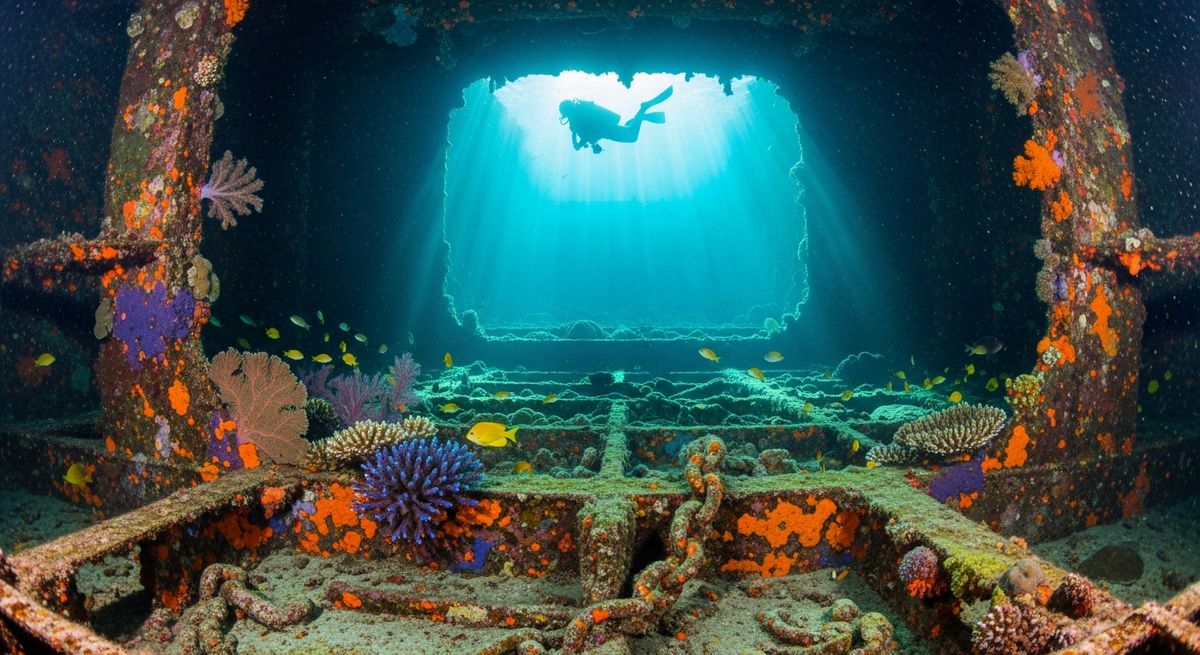
The Ally Marie is one of those sweet little wrecks we keep coming back to. Sitting upright in just 9 metres, this 9.1-metre wooden fishing boat went down in 1986, reportedly taking on water. You can still make out the general shape of the hull, though time and the Channel have done their work. What we love most about it is the sheer volume of life that’s made a home here. The wreck acts like an apartment block on an otherwise flat seabed. You'll find edible crabs tucked into crevices, velvet swimming crabs scuttling across the timbers, and if you look closely, plenty of nudibranchs munching away. The visibility can be a bit hit or miss, typical for the UK, but on a good day, the light filters down beautifully, highlighting the green and brown algae coating the wood. It’s a gentle dive, perfect for newer wreck divers or anyone who just wants to potter about and watch the resident blennies dart in and out. Go at slack water, obviously.
Typical ALLY MARIE Dive Profile
Illustrative profile based on site depth and type. Actual dive profiles vary - always follow your dive computer and training.
Safety Notes
Wreck site - avoid penetration without wreck diving certification. Watch for sharp metal and entanglement hazards.
ALLY MARIE Wreck History
Year Sunk
1986
Vessel Type
fishing vessel
Cause
unknown
The Ally Marie, a small 9-meter wooden fishing vessel, foundered on September 9, 1986. The Brixham Coastguard received a report that the boat was taking on water for reasons that remain unclear. Despite efforts to save her, the ingress of water was too great, and she eventually slipped beneath the waves off the coast of Cornwall. Her sinking is a common story among small fishing boats, a testament to the challenging conditions they often face.
Lying at a depth of just 9 meters, the Ally Marie is an excellent dive for beginners and a great option for a relaxed shallow dive. Being a wooden vessel that sank in the 1980s, the main structure has likely disintegrated over time, leaving behind a debris field. Divers can enjoy a treasure hunt of sorts, searching the seabed for the boat's engine block, winch, propeller, and other metallic fixtures that have survived the years. These remnants are often colonized by a surprising amount of marine life, from colorful wrasse to shy crabs hiding in the wreckage. The "Dangerous Wreck" classification is a good reminder to be mindful of potential entanglement from old ropes or nets.
Nearest Dive Centres to ALLY MARIE
Dive shops near ALLY MARIE
Teign Diving Centre
Edge Watersports
Sound Diving Limited
Plymouth Diving Centre
Reviews for ALLY MARIE
Conditions
Ocean conditions, forecast and tides for ALLY MARIE
ALLY MARIE Ocean Conditions
Monthly averages for ALLY MARIE, sourced from Open-Meteo marine data - nearest station: Open-Meteo marine grid (50.44, -2.73) (3km away)
October Averages
Sea Temperature
17°C
62°F · Range: 15.1–17.5°C
Air Temperature
13°C
56°F
Wind Speed
8.14 m/s
15.8 knots
Atmospheric Pressure
1011 hPa
Based on 4 years of monitoring data · Data sources: Open-Meteo marine data
Plan & book
Ways to dive Cornwall & Devon, from day trips to liveaboards.
Day trips & courses
via GetYourGuideGuided dives, courses and snorkel trips with instant booking.
Find dive trips in Cornwall & DevonPlaces to stay
via Booking.comHotels and dive resorts near Cornwall & Devon.
Search stays in Cornwall & DevonDive insurance
Most travel insurance excludes or limits scuba. Check what you need before you go.
Dive insurance explainedPartner links: we may earn a commission if you book, at no extra cost to you. How we make money
Where to Stay near ALLY MARIE
Prices from Booking.com. We may earn a commission at no extra cost to you.