ALMOND BRANCH (POSSIBLY)
Protected Area
Cuckoo Rock to Turbot Point
Why dive here
With 176+ marine species recorded in the area - including blue sharks, dolphins, dwarf minke whales, humpback whales and ocean sunfish (mola mola) - ALMOND BRANCH (POSSIBLY) offers some of Cornwall & Devon's richest wreck diving. Water ranges 10-18°C, warmest July, August, September.
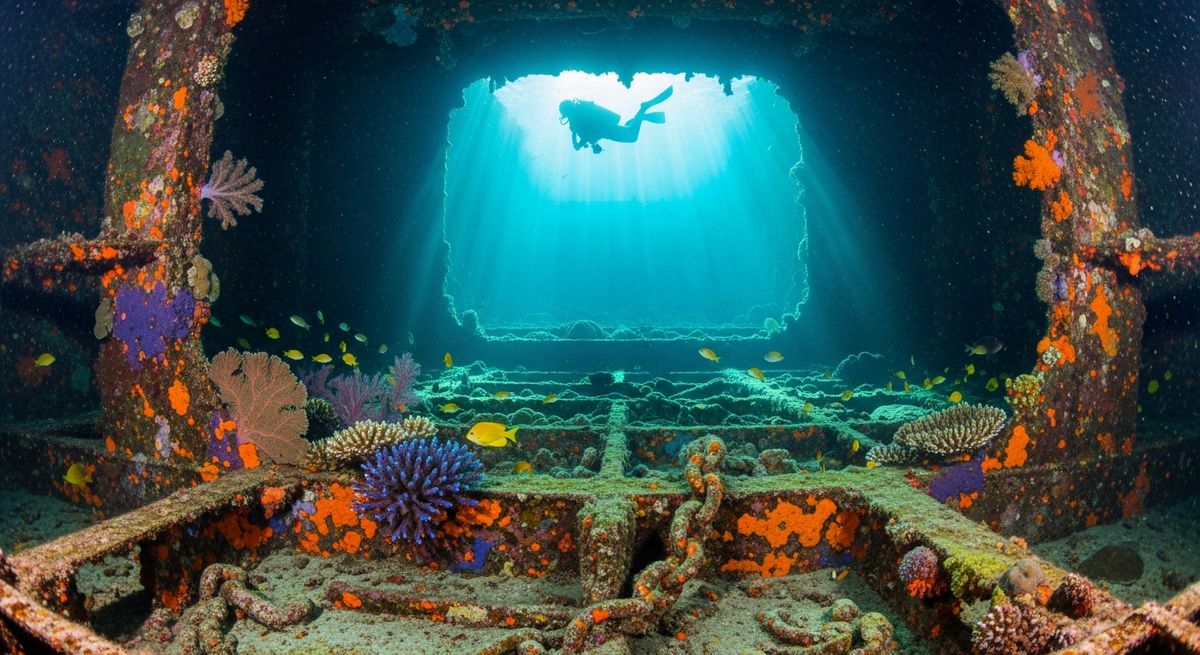
The Almond Branch is a deep dive, a proper expedition down into the cold, dark English Channel. This steamship, torpedoed in 1917, now rests upright at 54 metres, a colossal steel skeleton on the seabed. We love the sheer scale of it, and the way the light, even on a sunny day, barely penetrates to this depth, giving the whole scene a ghostly, reverent feel. You’re looking at a huge wreck here, over 100 metres long, which means you’ll want multiple dives to properly appreciate it. The bow section is particularly impressive, rising from the sand, often draped in fishing nets like tattered shrouds. Visibility can be a challenge in this part of the world, but when it’s good, say 10-15 metres, the sheer structure of the Almond Branch is breathtaking. Keep an eye out for conger eels in the deeper holds and massive pollack that patrol the upper decks. Our favourite part has to be the stern, where the propeller still sits, an imposing testament to the ship’s original purpose. This is a dive for experienced wreck enthusiasts, certainly, those comfortable with deco obligations and the inherent chill of deep UK water. It’s an adventure, a genuine journey into history.
Typical ALMOND BRANCH (POSSIBLY) Dive Profile
Illustrative profile based on site depth and type. Actual dive profiles vary - always follow your dive computer and training.
Safety Notes
Maximum depth 54m exceeds recreational limits (40m). Technical diving certification and equipment required.
Wreck site - avoid penetration without wreck diving certification. Watch for sharp metal and entanglement hazards.
Always perform a 3-minute safety stop at 5m before surfacing.
ALMOND BRANCH (POSSIBLY) Wreck History
Year Sunk
1917
Vessel Type
cargo ship
Cause
torpedo
The Almond Branch was a British steamship built in 1896, serving for over two decades before becoming a casualty of the Great War. In late November 1917, while on a voyage from Port Talbot in Wales to South America, she was stalked by the German submarine UB-57. On November 27th, the U-boat's torpedo found its mark, and the Almond Branch was sent to the bottom of the English Channel, another victim of Germany's unrestricted submarine warfare campaign.
Today, the wreck of the Almond Branch rests at a depth of 54 meters, placing it firmly in the realm of technical diving. This is a challenging but rewarding dive for experienced and suitably qualified divers. The depth has helped preserve the wreck from the worst of the currents and storm surges, but its steel structure is slowly surrendering to the sea. Divers can explore a vessel steeped in WWI history, a silent testament to the conflict that raged in the waters off the British coast.
Nearest Dive Centres to ALMOND BRANCH (POSSIBLY)
Dive shops near ALMOND BRANCH (POSSIBLY)
Viewpoint Diving Centre
Karleyth Diving Ltd.
Scuba 2000
DiveUK
Seaways Diving
Dive Looe
Reviews for ALMOND BRANCH (POSSIBLY)
Conditions
Ocean conditions, forecast and tides for ALMOND BRANCH (POSSIBLY)
ALMOND BRANCH (POSSIBLY) Ocean Conditions
Monthly averages for ALMOND BRANCH (POSSIBLY), sourced from Open-Meteo marine data - nearest station: Open-Meteo marine grid (50.44, -2.73) (3km away)
October Averages
Sea Temperature
17°C
62°F · Range: 15.1–17.5°C
Air Temperature
13°C
56°F
Wind Speed
8.14 m/s
15.8 knots
Atmospheric Pressure
1011 hPa
Based on 4 years of monitoring data · Data sources: Open-Meteo marine data
Plan & book
Ways to dive Cornwall & Devon, from day trips to liveaboards.
Day trips & courses
via GetYourGuideGuided dives, courses and snorkel trips with instant booking.
Find dive trips in Cornwall & DevonPlaces to stay
via Booking.comHotels and dive resorts near Cornwall & Devon.
Search stays in Cornwall & DevonDive insurance
Most travel insurance excludes or limits scuba. Check what you need before you go.
Dive insurance explainedPartner links: we may earn a commission if you book, at no extra cost to you. How we make money
Where to Stay near ALMOND BRANCH (POSSIBLY)
Prices from Booking.com. We may earn a commission at no extra cost to you.