AMBIORIX
Protected Area
Dolphin Head Highly Protected Marine Area
Why dive here
With 176+ marine species recorded in the area - including blue sharks, dolphins, dwarf minke whales, humpback whales and ocean sunfish (mola mola) - AMBIORIX offers some of Cornwall & Devon's richest wreck diving. Water ranges 10-18°C, warmest July, August, September.
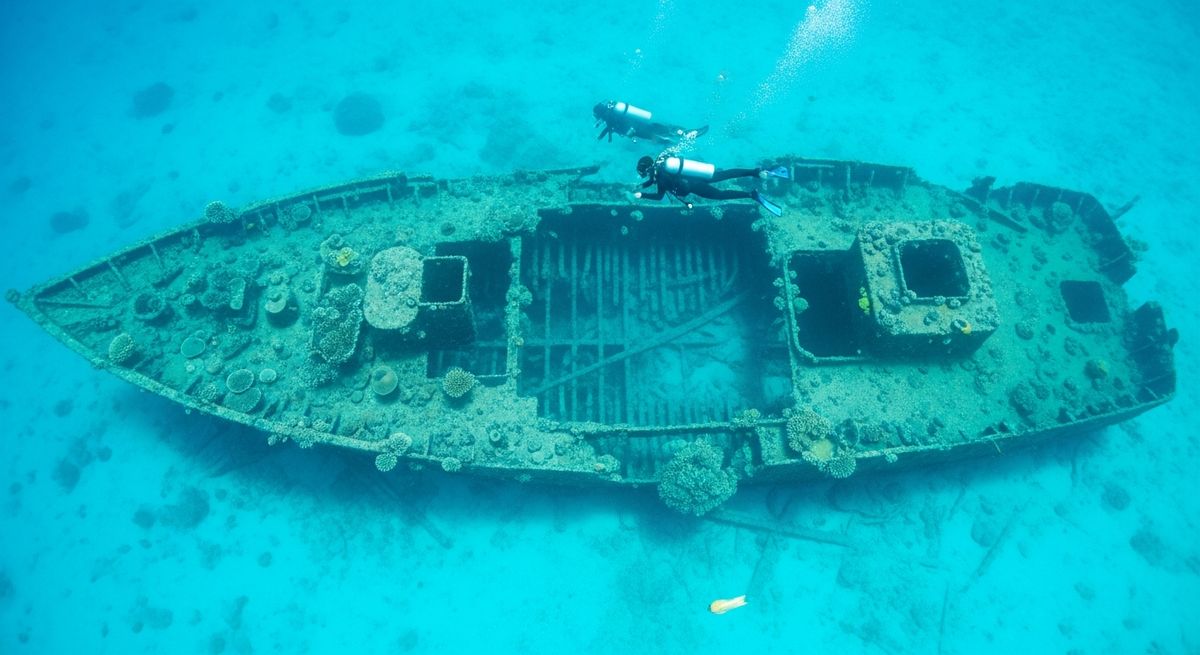
The Ambiorix, she’s a proper deep dive, sitting at 55 metres off the Cornish coast. We’re talking about a steamship that went down after a collision in 1917, so there’s a real sense of history here. Drop down, and the wreck emerges from the gloom, a dark silhouette on the seabed. The ship itself, 76 metres long, is largely intact. You can really get a feel for her lines, the bow and stern still well-defined. We love tracing the deck, imagining the crew on board just before she went down. The main draw for us is the penetration opportunities – there are some accessible holds and engine room sections that offer a fantastic delve into the past, provided you’re experienced and properly equipped, of course. What always surprises us is the sheer number of conger eels that call her home. They peer out from every nook and cranny, their heads like thick grey ropes. Lobsters scuttle across the plates, and the entire structure is a tapestry of jewel anemones and dead man’s fingers, glowing under the torch beam. Visibility can be hit or miss, but on a good day, it’s an incredible, haunting dive for technical divers who appreciate a deep, historical wreck with plenty to explore.
Typical AMBIORIX Dive Profile
Illustrative profile based on site depth and type. Actual dive profiles vary - always follow your dive computer and training.
Safety Notes
Maximum depth 55m exceeds recreational limits (40m). Technical diving certification and equipment required.
Wreck site - avoid penetration without wreck diving certification. Watch for sharp metal and entanglement hazards.
Always perform a 3-minute safety stop at 5m before surfacing.
AMBIORIX Wreck History
Year Sunk
1917
Vessel Type
cargo ship
Cause
collision
The S.S. Ambiorix was a 76-meter Belgian steamship lost during the height of the First World War. Unlike many of her contemporaries, her demise was not the result of enemy action from a U-boat or naval mine. Instead, she sank in the busy shipping lanes off the English coast in December 1917 following a simple but fatal collision. Her loss is a stark reminder of the everyday maritime perils that were magnified by the difficult conditions of wartime, such as sailing in convoys and with restricted lights.
Resting at a depth of 55 meters, the Ambiorix is a deep dive that lies firmly in the realm of technical diving. Requiring trimix and meticulous planning, a visit to this wreck is a serious undertaking rewarded with a view of a largely intact early 20th-century steamship. Divers descending through the deep, often dark, water will find a vessel sitting on the seabed, its holds, superstructure, and engine areas waiting to be explored. The depth and quiet solitude create an atmospheric dive, with the wreck now home to large deep-water species like ling, conger eels, and shoaling pollack.
Reviews for AMBIORIX
Conditions
Ocean conditions, forecast and tides for AMBIORIX
AMBIORIX Ocean Conditions
Monthly averages for AMBIORIX, sourced from Open-Meteo marine data - nearest station: Open-Meteo marine grid (50.44, -2.73) (3km away)
October Averages
Sea Temperature
17°C
62°F · Range: 15.1–17.5°C
Air Temperature
13°C
56°F
Wind Speed
8.14 m/s
15.8 knots
Atmospheric Pressure
1011 hPa
Based on 4 years of monitoring data · Data sources: Open-Meteo marine data
Plan & book
Ways to dive Cornwall & Devon, from day trips to liveaboards.
Day trips & courses
via GetYourGuideGuided dives, courses and snorkel trips with instant booking.
Find dive trips in Cornwall & DevonPlaces to stay
via Booking.comHotels and dive resorts near Cornwall & Devon.
Search stays in Cornwall & DevonDive insurance
Most travel insurance excludes or limits scuba. Check what you need before you go.
Dive insurance explainedPartner links: we may earn a commission if you book, at no extra cost to you. How we make money
Where to Stay near AMBIORIX
Prices from Booking.com. We may earn a commission at no extra cost to you.