AMIRAL ZEDE
Protected Area
Morte Platform
Why dive here
With 176+ marine species recorded in the area - including blue sharks, dolphins, dwarf minke whales, humpback whales and ocean sunfish (mola mola) - AMIRAL ZEDE offers some of Cornwall & Devon's richest wreck diving. Water ranges 10-18°C, warmest July, August, September.
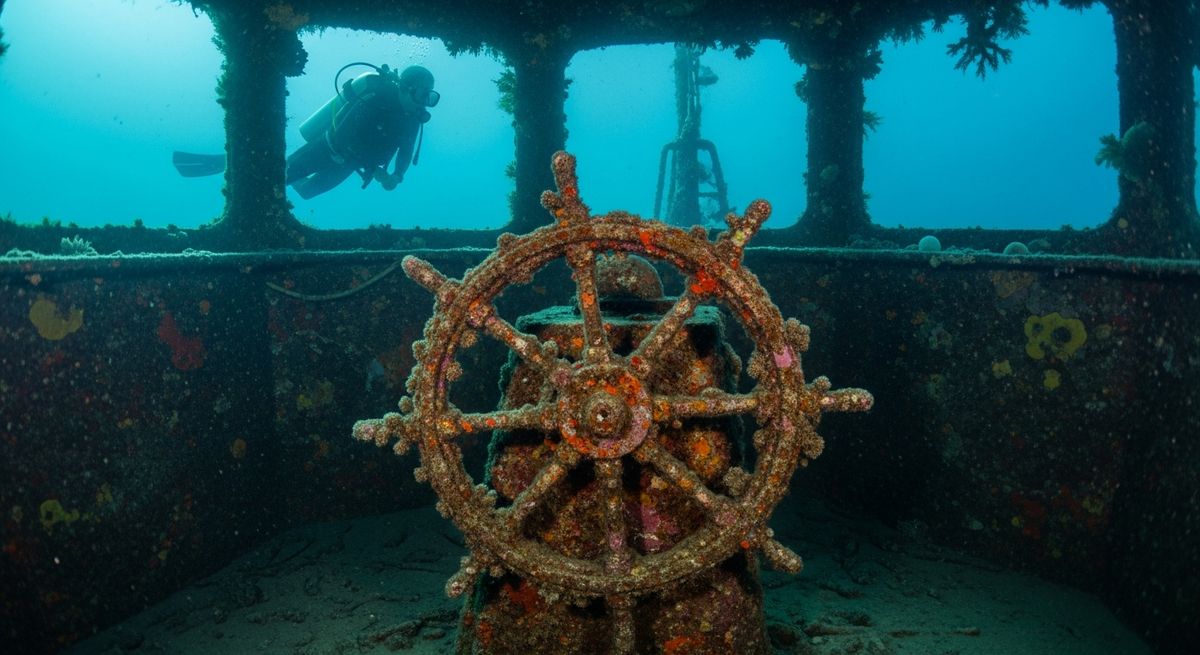
The Amiral Zede is a deep one, a proper expedition dive, but for us, absolutely worth the commitment. Dropping onto her takes you to 46 metres, so this isn't for the faint-hearted or new deep divers. What you find down there, though, is a huge steamship, over 120 metres long, upright and largely intact, a real marvel considering she’s been down since 1917. We love exploring her vast holds, peering into the gloom, and tracing the outline of her collapsed mast. Visibility here can swing, but on a good day, the scale of the Zede is breathtaking, the sheer bulk of her silhouetted against the lighter water above. Conger eels the size of your thigh lurk in every dark crevice, and plumose anemones, often in vibrant pinks and oranges, carpet sections of the superstructure. Our favourite tip? Go on slack water. The currents here can be fierce, making the descent and ascent a real challenge, but get it right and you’ve got time to really soak in this magnificent wreck. It's a dive that stays with you, a truly memorable deep wreck experience.
Typical AMIRAL ZEDE Dive Profile
Illustrative profile based on site depth and type. Actual dive profiles vary - always follow your dive computer and training.
Safety Notes
Maximum depth 46m exceeds recreational limits (40m). Technical diving certification and equipment required.
Wreck site - avoid penetration without wreck diving certification. Watch for sharp metal and entanglement hazards.
Always perform a 3-minute safety stop at 5m before surfacing.
AMIRAL ZEDE Wreck History
Year Sunk
1917
Vessel Type
cargo ship
Cause
torpedo
Built in 1912 at the renowned French shipyard Chantiers et Ateliers de St. Nazaire, the AMIRAL ZEDE was a steamship owned by the Chargeurs Reunis shipping line. For five years, she plied the trade routes, a workhorse of the seas. However, her service coincided with the height of World War I, a time of immense peril for merchant shipping. On November 19, 1917, while on a voyage from Newport, her luck ran out. Like so many other vessels in the English Channel during this period, she was attacked and sunk by a German U-boat, becoming another casualty of the unrestricted submarine warfare campaign.
Lying at a depth of 46 meters in the waters between Cornwall and Devon, the AMIRAL ZEDE is now a classic WWI wreck dive for experienced technical divers. The depth and challenging conditions of the English Channel mean that a visit to this wreck requires careful planning. Those who make the descent are rewarded with a view of a vessel steeped in history, its decaying form a silent testament to the Great War. The wreck is a substantial and fascinating site, offering a glimpse into a pivotal moment in 20th-century history.
Nearest Dive Centres to AMIRAL ZEDE
Dive shops near AMIRAL ZEDE
View all dive centres in Cornwall & DevonReviews for AMIRAL ZEDE
Conditions
Ocean conditions, forecast and tides for AMIRAL ZEDE
AMIRAL ZEDE Ocean Conditions
Monthly averages for AMIRAL ZEDE, sourced from Open-Meteo marine data - nearest station: Open-Meteo marine grid (50.44, -2.73) (3km away)
October Averages
Sea Temperature
17°C
62°F · Range: 15.1–17.5°C
Air Temperature
13°C
56°F
Wind Speed
8.14 m/s
15.8 knots
Atmospheric Pressure
1011 hPa
Based on 4 years of monitoring data · Data sources: Open-Meteo marine data
Plan & book
Ways to dive Cornwall & Devon, from day trips to liveaboards.
Day trips & courses
via GetYourGuideGuided dives, courses and snorkel trips with instant booking.
Find dive trips in Cornwall & DevonPlaces to stay
via Booking.comHotels and dive resorts near Cornwall & Devon.
Search stays in Cornwall & DevonDive insurance
Most travel insurance excludes or limits scuba. Check what you need before you go.
Dive insurance explainedPartner links: we may earn a commission if you book, at no extra cost to you. How we make money
Where to Stay near AMIRAL ZEDE
Prices from Booking.com. We may earn a commission at no extra cost to you.