ANDROMEDA
Protected Area
Carricknath Point to Porthbean Beach
Why dive here
With 176+ marine species recorded in the area - including blue sharks, dolphins, dwarf minke whales, humpback whales and ocean sunfish (mola mola) - ANDROMEDA offers some of Cornwall & Devon's richest wreck diving. Water ranges 10-18°C, warmest July, August, September.
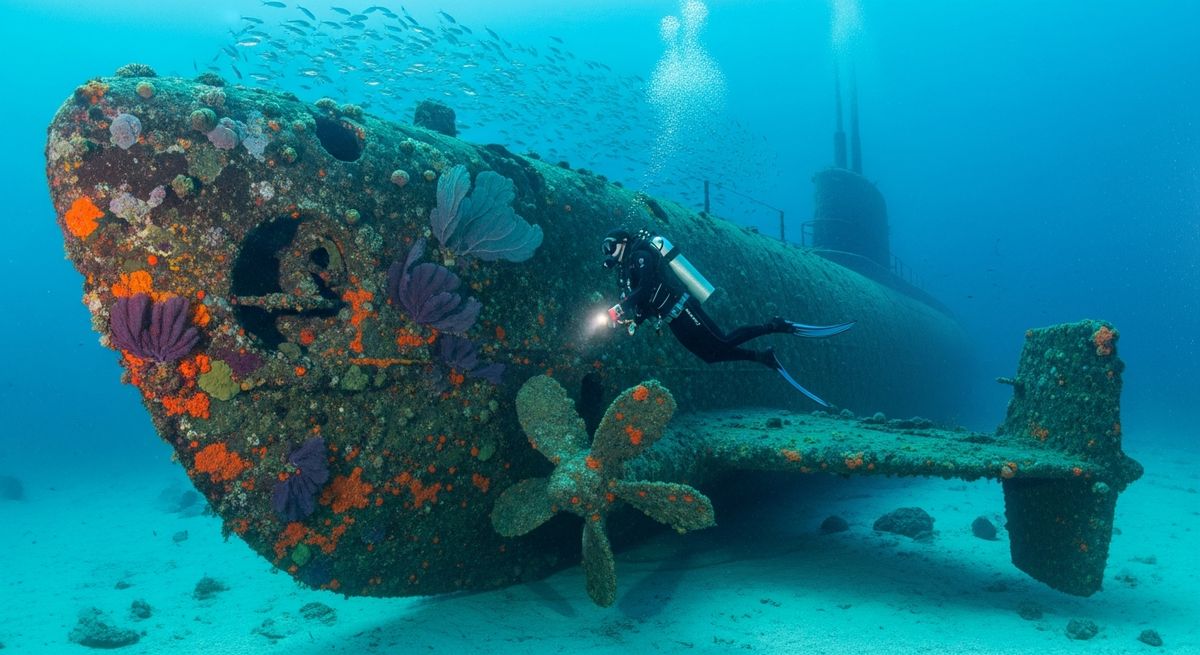
The Andromeda is a wreck that really shows its age, and that’s what we love about it. Sunk in 1915, this sailing vessel is less about pristine structure and more about a scatter of history. You'll find it well broken up on the seabed near Killigerran Head, a sprawling field of ribs, plates, and timbers. It’s a shallow dive, maxing out at 6m, which means plenty of bottom time to really soak it all in. Our favourite part is poking around the twisted metalwork, imagining the sheer scale of the ship it once was. The remains are well colonised by seaweeds, and you’ll see plenty of crabs scuttling over the debris, with blennies darting into crevices. We’d suggest a calm day for this one; visibility can be a bit challenging if there’s much swell running. It's a fantastic site for newer wreck divers or anyone who appreciates the quiet dignity of an older wreck being reclaimed by the sea.
Typical ANDROMEDA Dive Profile
Illustrative profile based on site depth and type. Actual dive profiles vary - always follow your dive computer and training.
Safety Notes
Wreck site - avoid penetration without wreck diving certification. Watch for sharp metal and entanglement hazards.
ANDROMEDA Wreck History
Year Sunk
1915
Vessel Type
sailing vessel
Cause
storm
Tonnage
2,888 GRT
The ANDROMEDA was a majestic four-masted steel barque, a powerful relic from the golden age of sail. Built in 1890 in Port Glasgow, she represented the pinnacle of commercial sailing vessel design, capable of carrying huge cargoes across the globe. Her final voyage was a testament to her purpose, having sailed all the way from Tacoma, Washington, laden with a cargo of wheat, and bound for the historic port of Falmouth in Cornwall.
After months at sea and having successfully navigated thousands of miles, the ANDROMEDA was tantalizingly close to her destination. On February 13, 1915, while awaiting the pilot to guide her into Falmouth's safe harbor, a sudden and ferocious southerly gale struck. The wind and waves drove the huge vessel helplessly towards the shore, and she was wrecked upon the rocks of Killigerran Head. In a dramatic rescue, the Falmouth lifeboat battled the storm to save the entire crew from the doomed ship.
Lying in just 6 meters of water, the ANDROMEDA is now one of the most accessible wreck sites in Cornwall. Its shallow depth makes it an ideal location for novice divers, trainees, and even snorkelers. The force of the storm and over a century of wave action have left the wreck completely broken up. Divers can spend a long, relaxed dive exploring the scattered steel plates, ribs, and other remnants of the once-proud ship, which are now encrusted with marine life and provide a home for wrasse, crabs, and lobsters. The ample sunlight at this depth makes it a bright and fascinating introduction to wreck diving.
Nearest Dive Centres to ANDROMEDA
Dive shops near ANDROMEDA
DiveUK
Seaways Diving
Porthkerris Divers
Karleyth Diving Ltd.
Viewpoint Diving Centre
Wavecrest Scuba
Reviews for ANDROMEDA
Conditions
Ocean conditions, forecast and tides for ANDROMEDA
ANDROMEDA Ocean Conditions
Monthly averages for ANDROMEDA, sourced from Open-Meteo marine data - nearest station: Open-Meteo marine grid (50.44, -2.73) (3km away)
October Averages
Sea Temperature
17°C
62°F · Range: 15.1–17.5°C
Air Temperature
13°C
56°F
Wind Speed
8.14 m/s
15.8 knots
Atmospheric Pressure
1011 hPa
Based on 4 years of monitoring data · Data sources: Open-Meteo marine data
Plan & book
Ways to dive Cornwall & Devon, from day trips to liveaboards.
Day trips & courses
via GetYourGuideGuided dives, courses and snorkel trips with instant booking.
Find dive trips in Cornwall & DevonPlaces to stay
via Booking.comHotels and dive resorts near Cornwall & Devon.
Search stays in Cornwall & DevonDive insurance
Most travel insurance excludes or limits scuba. Check what you need before you go.
Dive insurance explainedPartner links: we may earn a commission if you book, at no extra cost to you. How we make money
Where to Stay near ANDROMEDA
Prices from Booking.com. We may earn a commission at no extra cost to you.