ANNA LOUISE
Protected Area
Hele, Samson's and Combe Martin Bays
Why dive here
With 176+ marine species recorded in the area - including blue sharks, dolphins, dwarf minke whales, humpback whales and ocean sunfish (mola mola) - ANNA LOUISE offers some of Cornwall & Devon's richest wreck diving. Water ranges 10-18°C, warmest July, August, September.
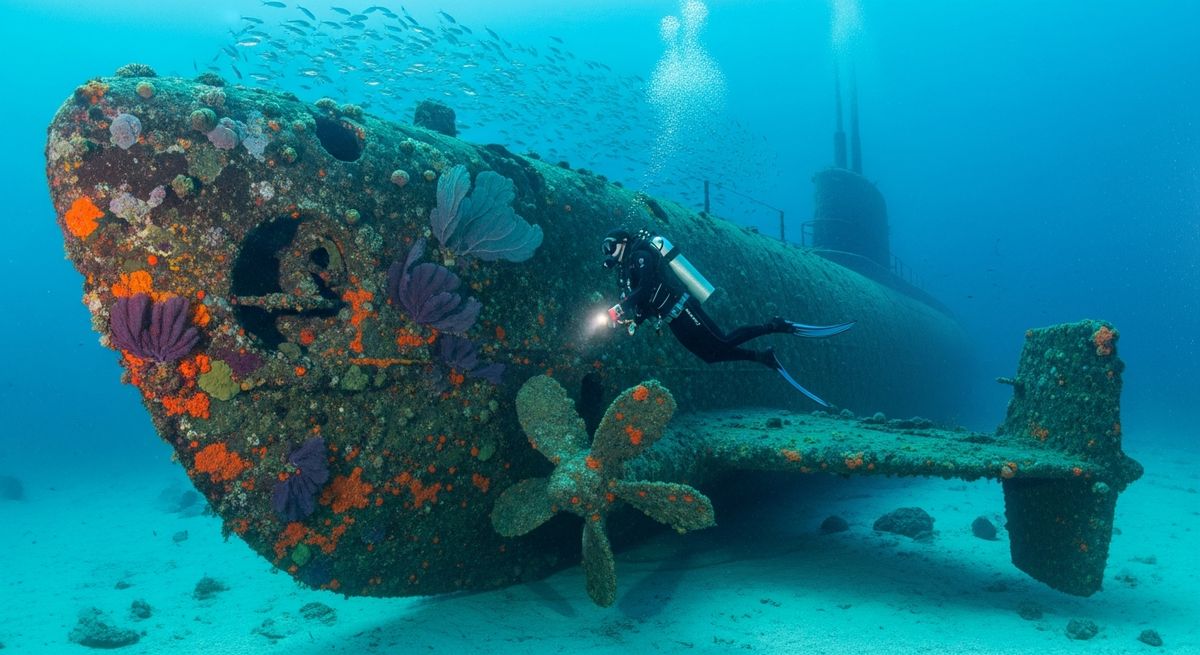
The Anna Louise is a wreck that just hits differently. Sunk in 1986, this 9.8m fishing vessel sits upright and largely intact on the seabed at 25m, making it a fantastic deep dive without needing specialist tech training. What we love about her is the immediate sense of scale; she’s small enough to properly explore in a single dive, yet big enough to feel like a proper wreck. The wheelhouse is often our first port of call, usually swarming with juvenile pollack. From there, you can trace the stern and bow, checking out the prop and the winch gear, all heavily encrusted with plumose anemones and dead man’s fingers. The soft corals are prolific here, lending the whole wreck a shaggy, colourful appearance. Look closely and you’ll find squat lobsters hiding in crevices, and often a grumpy conger eel peering out from under the bow. Visibility can be a typical Cornish affair, anywhere from 5m to a glorious 15m on a good day, but even in murkier conditions, her compact size makes her an accessible and rewarding dive. This is a classic UK wreck, great for experienced divers looking for an intimate historical encounter.
Typical ANNA LOUISE Dive Profile
Illustrative profile based on site depth and type. Actual dive profiles vary - always follow your dive computer and training.
Safety Notes
Depth of 25m - Advanced Open Water certification recommended.
Wreck site - avoid penetration without wreck diving certification. Watch for sharp metal and entanglement hazards.
Always perform a 3-minute safety stop at 5m before surfacing.
ANNA LOUISE Wreck History
Year Sunk
1986
Vessel Type
fishing vessel
Cause
unknown
The MFV Anna Louise was a small, 9.8-meter fishing vessel whose career ended on September 8, 1986. While dredging for scallops off Dodman Point in Cornwall, the boat suddenly sprang a leak and began to sink. Fortunately, its two crew members were quickly rescued by a nearby vessel before the Anna Louise slipped beneath the waves for the last time. The cause of the leak was never definitively determined, but the boat was lost to the sea.
Now resting at a depth of 25 meters, the Anna Louise is a popular dive for those with Advanced Open Water certification or higher. The wreck is small, allowing divers to explore it thoroughly on a single dive. Over the decades, it has transformed into a thriving artificial reef. The structure is often patrolled by schools of bib and pollack, while conger eels have taken up residence within the hull. As with many Cornish wrecks, its 'dangerous' classification warrants a careful approach, but it remains a fantastic site to experience the rich marine life of the English Channel.
Nearest Dive Centres to ANNA LOUISE
Dive shops near ANNA LOUISE
View all dive centres in Cornwall & DevonReviews for ANNA LOUISE
Conditions
Ocean conditions, forecast and tides for ANNA LOUISE
ANNA LOUISE Ocean Conditions
Monthly averages for ANNA LOUISE, sourced from Open-Meteo marine data - nearest station: Open-Meteo marine grid (50.44, -2.73) (3km away)
October Averages
Sea Temperature
17°C
62°F · Range: 15.1–17.5°C
Air Temperature
13°C
56°F
Wind Speed
8.14 m/s
15.8 knots
Atmospheric Pressure
1011 hPa
Based on 4 years of monitoring data · Data sources: Open-Meteo marine data
Plan & book
Ways to dive Cornwall & Devon, from day trips to liveaboards.
Day trips & courses
via GetYourGuideGuided dives, courses and snorkel trips with instant booking.
Find dive trips in Cornwall & DevonPlaces to stay
via Booking.comHotels and dive resorts near Cornwall & Devon.
Search stays in Cornwall & DevonDive insurance
Most travel insurance excludes or limits scuba. Check what you need before you go.
Dive insurance explainedPartner links: we may earn a commission if you book, at no extra cost to you. How we make money
Where to Stay near ANNA LOUISE
Prices from Booking.com. We may earn a commission at no extra cost to you.