APOTEK
Protected Area
Skerries Bank and Surrounds
Why dive here
With 176+ marine species recorded in the area - including blue sharks, dolphins, dwarf minke whales, humpback whales and ocean sunfish (mola mola) - APOTEK offers some of Cornwall & Devon's richest wreck diving. Water ranges 10-18°C, warmest July, August, September.
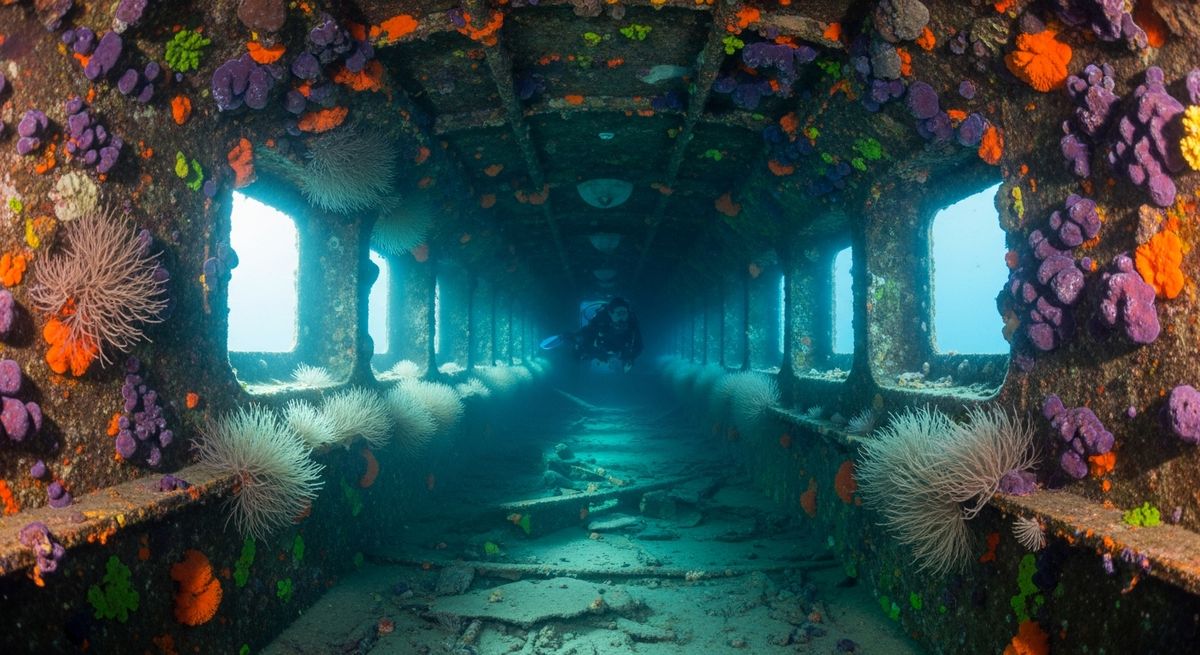
Forget your deep, dark wrecks for a minute. The Apotek is something else entirely – a delightful little ketch, sun-dappled and sitting in a mere two metres of water near Bolt Tail. We absolutely love this site for its sheer accessibility and the way it brings a proper wreck experience to even the newest diver. Sunk in 1981, the 11-metre hull is now a skeleton of its former self, draped in kelp and alive with small crabs scuttling over the timbers. You can easily swim the length of it, poking your head into the ghostly cabin where the light filters through the gaps. It’s our favourite place to take a camera and practice macro shots; the anemones here are particularly photogenic. Look closely, and you’ll spot blennies peeking from crevices, and the occasional dogfish tucked away. The best time to visit is on a calm, sunny day at high tide, when the visibility often opens right up, making the whole site glow. It’s not about depth or danger here, it’s about slow exploration and the simple joy of an accessible wreck.
Typical APOTEK Dive Profile
Illustrative profile based on site depth and type. Actual dive profiles vary - always follow your dive computer and training.
Safety Notes
Wreck site - avoid penetration without wreck diving certification. Watch for sharp metal and entanglement hazards.
APOTEK Wreck History
Year Sunk
1981
Vessel Type
yacht
Cause
grounding
The Apotek was a small, 11-metre sailing ketch that met a tragic end on the rugged coast of Cornwall in June 1981. The vessel struck rocks near the famous Porthcurno beach, a coastline known for its beauty and its unforgiving nature. While the crew were safely rescued, the yacht itself could not be saved. Deemed a hazard to navigation in such a shallow and popular area, the wreck was later dispersed with explosives, scattering its remains across the seabed.
Diving the Apotek today is less about exploring a complete vessel and more about a shallow-water treasure hunt. Lying at just 2 metres, the site is perfect for a snorkel or a leisurely shore dive on a calm day. Divers can scour the rocky gullies and kelp beds for remnants of the ketch-pieces of timber, metal fittings, and other debris that tell the story of its final moments. It's a unique opportunity to connect with a piece of local maritime history in the crystal-clear waters of the Cornish coast.
Nearest Dive Centres to APOTEK
Dive shops near APOTEK
Teign Diving Centre
Sound Diving Limited
Plymouth Diving Centre
Edge Watersports
Reviews for APOTEK
Conditions
Ocean conditions, forecast and tides for APOTEK
APOTEK Ocean Conditions
Monthly averages for APOTEK, sourced from Open-Meteo marine data - nearest station: Open-Meteo marine grid (50.44, -2.73) (3km away)
October Averages
Sea Temperature
17°C
62°F · Range: 15.1–17.5°C
Air Temperature
13°C
56°F
Wind Speed
8.14 m/s
15.8 knots
Atmospheric Pressure
1011 hPa
Based on 4 years of monitoring data · Data sources: Open-Meteo marine data
Plan & book
Ways to dive Cornwall & Devon, from day trips to liveaboards.
Day trips & courses
via GetYourGuideGuided dives, courses and snorkel trips with instant booking.
Find dive trips in Cornwall & DevonPlaces to stay
via Booking.comHotels and dive resorts near Cornwall & Devon.
Search stays in Cornwall & DevonDive insurance
Most travel insurance excludes or limits scuba. Check what you need before you go.
Dive insurance explainedPartner links: we may earn a commission if you book, at no extra cost to you. How we make money
Where to Stay near APOTEK
Prices from Booking.com. We may earn a commission at no extra cost to you.