ARANDORA STAR
Protected Area
Wembury Point
Why dive here
With 176+ marine species recorded in the area - including blue sharks, dolphins, dwarf minke whales, humpback whales and ocean sunfish (mola mola) - ARANDORA STAR offers some of Cornwall & Devon's richest wreck diving. Water ranges 10-18°C, warmest July, August, September.
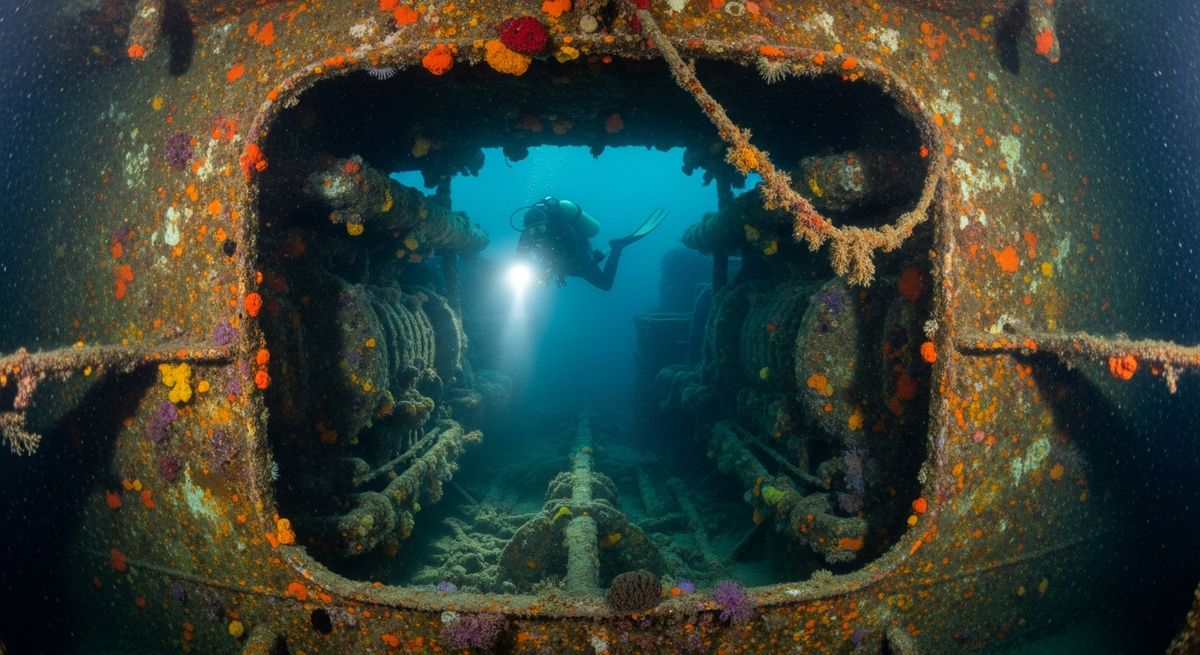
The Arandora Star isn't what most divers picture when they think of a wreck dive. Forget huge ships; this is an 8.5-meter wooden fishing vessel, sunk in 2012. We love it because it’s a brilliant example of how quickly a relatively small structure can become a hub for local marine life. Dropping down to 45 meters, you'll find her sitting upright, largely intact, and absolutely smothered in plumose anemones – the white, feathery kind that wave gently in the current, making the whole wreck look soft and otherworldly. It's a surprisingly pretty dive, not for penetration, but for appreciating the transformation from working boat to artificial reef. The wheelhouse is still there, and you can peer into the small compartments where crabs scuttle. Look closely amongst the anemones and you’ll often spot squat lobsters tucked into crevices, and sometimes a conger eel coiled up in the deeper shadows. We’d suggest this one for experienced divers comfortable at depth, who appreciate the beauty of a smaller wreck and the vibrant life it now supports, rather than grand historical narratives. Dive it on a calm day; the visibility can be excellent, making those white anemones really pop against the dark wood.
Typical ARANDORA STAR Dive Profile
Illustrative profile based on site depth and type. Actual dive profiles vary - always follow your dive computer and training.
Safety Notes
Maximum depth 45m exceeds recreational limits (40m). Technical diving certification and equipment required.
Wreck site - avoid penetration without wreck diving certification. Watch for sharp metal and entanglement hazards.
Always perform a 3-minute safety stop at 5m before surfacing.
ARANDORA STAR Wreck History
Year Sunk
2012
Vessel Type
fishing vessel
Cause
unknown
Unlike the famous World War II liner of the same name, this Arandora Star is a much more modern and intimate wreck. This small, 8.5-meter wooden fishing vessel was built in 1976 and met its end on March 10, 2012. While out at sea, it began to take on water and sank very quickly. Fortunately, its single crew member was safely recovered. Today, the wreck sits upright on the seabed at a depth of 45 meters, making it a challenging but rewarding dive reserved for experienced technical or deep-certified divers. Its wooden structure remains largely intact, offering a ghostly silhouette in the deep blue waters off the coast of Cornwall and Devon. Over the past decade, it has begun to attract marine life, transforming from a maritime tragedy into a small, artificial reef.
Nearest Dive Centres to ARANDORA STAR
Dive shops near ARANDORA STAR
Sound Diving Limited
Plymouth Diving Centre
Dive Looe
Reviews for ARANDORA STAR
Conditions
Ocean conditions, forecast and tides for ARANDORA STAR
ARANDORA STAR Ocean Conditions
Monthly averages for ARANDORA STAR, sourced from Open-Meteo marine data - nearest station: Open-Meteo marine grid (50.44, -2.73) (3km away)
October Averages
Sea Temperature
17°C
62°F · Range: 15.1–17.5°C
Air Temperature
13°C
56°F
Wind Speed
8.14 m/s
15.8 knots
Atmospheric Pressure
1011 hPa
Based on 4 years of monitoring data · Data sources: Open-Meteo marine data
Plan & book
Ways to dive Cornwall & Devon, from day trips to liveaboards.
Day trips & courses
via GetYourGuideGuided dives, courses and snorkel trips with instant booking.
Find dive trips in Cornwall & DevonPlaces to stay
via Booking.comHotels and dive resorts near Cornwall & Devon.
Search stays in Cornwall & DevonDive insurance
Most travel insurance excludes or limits scuba. Check what you need before you go.
Dive insurance explainedPartner links: we may earn a commission if you book, at no extra cost to you. How we make money
Where to Stay near ARANDORA STAR
Prices from Booking.com. We may earn a commission at no extra cost to you.